6 Best Spanish Learning Apps for Kids in 2026: A Parent’s Guide
Learning Spanish can open up a world of opportunities for children. From communicating with Spanish-speaking friends and family to discovering new cultures, learning a second language is a valuable skill.
Fortunately, children don’t need to sit through long lessons or memorize vocabulary lists to get started. Today’s Spanish-learning apps use colorful animations, interactive games, songs, and stories to make learning enjoyable.
But with so many options available, which Spanish learning app is best for your child?
We’ve compared six popular Spanish-learning programs for kids, highlighting their features, strengths, and learning approaches to help parents find the right fit.
Quick Comparison: Best Spanish Learning Apps for Kids
| App | Best For | Learning Style |
|---|---|---|
| Dinolingo | Ages 2–12, Pre-K–5 | Videos, games, songs, stories, worksheets |
| Studycat Spanish | Preschoolers and young beginners | Interactive games and speaking activities |
| Gus on the Go: Spanish | Young children learning first words | Vocabulary games and illustrations |
| Endless Spanish | Preschoolers and early readers | Animated word puzzles |
| Duolingo | Older children and teens | Short lessons and daily challenges |
| FabuLingua | Children who enjoy stories | Interactive storytelling and reading |
1. Dinolingo – Best All-in-One Spanish Learning Program for Kids
Best for: Ages 2–12, Grades Pre-K–5
Platforms: Web, iOS, Android
Free trial: 7 days
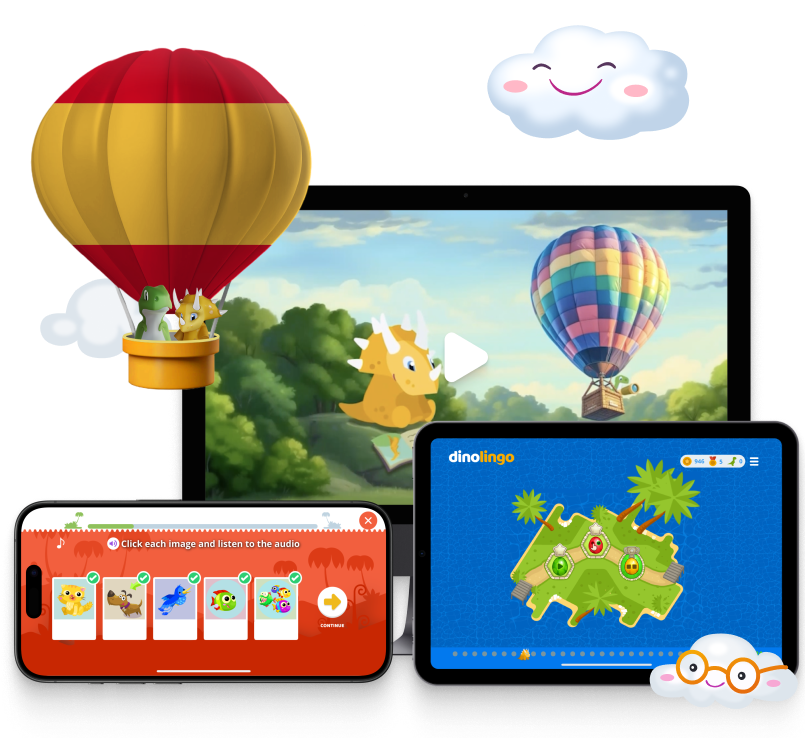
Founded in 2010, Dinolingo helps children learn Spanish through animated videos, interactive games, songs, stories, quizzes, and printable activities.
Unlike traditional language courses that rely heavily on memorization and written exercises, Dinolingo uses an immersion-based approach that introduces Spanish naturally through pictures, sounds, and repetition.
Children can begin learning Spanish even before they know how to read.
Key Features
- Age-appropriate learning: Activities designed for toddlers, preschoolers, and elementary school children.
- 40,000+ educational activities: Videos, games, songs, stories, audiobooks, quizzes, and printable worksheets across 50 languages.
- Fun rewards: Children earn points, stars, and dinosaurs as they complete learning activities.
- Parent dashboard: Parents can monitor progress and manage their children’s learning.
- Up to 6 children: One family subscription supports six child profiles.
- 50 languages included: Families can explore Spanish alongside French, German, Italian, Japanese, Chinese, and many more.
- Safe and ad-free: A child-friendly environment without third-party advertisements or public chat rooms.
What Makes Dinolingo Different?
Dinolingo combines online learning with printable materials, allowing children to practice Spanish both on and off the screen.
Younger children can focus on videos, songs, and listening activities, while older children can explore games, quizzes, reading exercises, and more structured lessons.
Parents don’t need to speak Spanish themselves to help their children get started.
Things to consider: Dinolingo requires a paid subscription after the free trial. Children who need regular conversational practice will also benefit from speaking with Spanish speakers.
Explore: Dinolingo Spanish for Kids
2. Studycat Spanish – Best for Interactive Games
Best for: Ages 3–8
<Entity category=”software” value=”Studycat” disambig=”children’s language learning apps”/> offers a Spanish-learning app designed for young children who enjoy playing games.
The program introduces everyday Spanish vocabulary through interactive activities, songs, and listening exercises.
Key Features
- Interactive Spanish vocabulary games
- Songs and listening activities
- Speaking and pronunciation practice
- Colorful, child-friendly illustrations
- Activities suitable for children who cannot yet read
Things to consider: Studycat focuses primarily on younger children. Families seeking a broader program with extensive videos, printable materials, and activities for older children may prefer another option.
Best choice for: Preschoolers who enjoy short, game-based learning sessions.
3. Gus on the Go: Spanish – Best for First Spanish Words
Best for: Ages 3–7
<Entity category=”software” value=”Gus on the Go” disambig=”children’s vocabulary learning app”/> introduces Spanish through colorful illustrations and simple vocabulary games.
Children follow Gus the Owl through themed lessons featuring animals, food, colors, numbers, and other everyday topics.
Key Features
- Beginner Spanish vocabulary
- Interactive games
- Colorful illustrations
- Simple navigation for young children
- One-time purchase option
Things to consider: Gus on the Go focuses mainly on introductory vocabulary and does not offer the same range of activities as a comprehensive language-learning program.
Best choice for: Families looking for a simple introduction to Spanish words.
4. Endless Spanish – Best for Learning Through Animated Puzzles
Best for: Ages 3–8
<Entity category=”software” value=”Endless Spanish” disambig=”children’s Spanish vocabulary puzzle app”/> uses animated characters and playful word puzzles to introduce Spanish vocabulary.
Children drag letters into place, hear words pronounced, and watch entertaining animations that reinforce their meaning.
Key Features
- Animated Spanish vocabulary puzzles
- Word and sentence activities
- Spanish-only and Spanish-English learning modes
- Entertaining characters
- Simple interactions for young learners
Things to consider: Endless Spanish focuses on a smaller selection of words and sentences rather than a complete language curriculum.
Best choice for: Preschoolers and early readers who enjoy puzzles and animated characters.
5. Duolingo – Best for Older Kids and Teens
Best for: Older children who can read independently
<Entity category=”software” value=”Duolingo” disambig=”language learning app”/> is one of the most widely recognized language-learning apps.
Its Spanish course introduces vocabulary, grammar, listening, and sentence construction through short, interactive lessons.
Key Features
- Short Spanish lessons
- Vocabulary and grammar exercises
- Listening and reading practice
- Daily goals and progress tracking
- Free learning option with paid upgrades
Things to consider: Duolingo’s main language-learning app is not specifically designed for preschoolers. Many exercises require reading skills, and the free version may include advertisements.
Best choice for: Older children and teenagers who enjoy structured lessons and daily challenges.
6. FabuLingua – Best for Learning Spanish Through Stories
Best for: Ages 4–9
<Entity category=”software” value=”FabuLingua” disambig=”children’s language learning storytelling app”/> teaches Spanish through interactive stories and imaginative adventures.
Children listen to stories, explore illustrations, and participate in activities that introduce vocabulary in context.
Key Features
- Interactive Spanish stories
- Story-based vocabulary learning
- Listening and reading activities
- Voice recording and speaking practice
- Colorful illustrations and characters
Things to consider: FabuLingua emphasizes storytelling, so children who prefer a wider variety of games, videos, and printable activities may want additional resources.
Best choice for: Children who love stories and imaginative learning.
How to Choose the Best Spanish App for Your Child
The best Spanish-learning app depends on your child’s age, interests, reading ability, and learning goals.
Ages 2–5: Start With Songs, Pictures, and Videos
Toddlers and preschoolers learn best through playful activities and repetition.
Look for programs with colorful visuals, simple games, songs, and short educational videos.
At this age, children can begin recognizing Spanish words without needing to read or write.
Ages 6–8: Introduce Games and Simple Sentences
Elementary school children can begin learning basic Spanish phrases, recognizing written words, and completing interactive exercises.
Combining videos, games, stories, and printable worksheets can help reinforce vocabulary.
Ages 9–12: Encourage More Independent Learning
Older children may enjoy quizzes, reading activities, sentence-building exercises, and progress challenges.
At this stage, it’s helpful to combine app-based learning with Spanish books, videos, and real conversations.
Why Learning Spanish at a Young Age Can Be Beneficial
Spanish is one of the most widely spoken languages in the world, making it a practical language for children to learn.
Starting early gives children more opportunities to become familiar with Spanish pronunciation, vocabulary, and everyday expressions.
Learning Spanish can also help children:
- Communicate with Spanish-speaking friends and family members.
- Discover different cultures, traditions, and communities.
- Develop an interest in languages and international travel.
- Build confidence when communicating in another language.
- Prepare for future language studies at school.
Children don’t need to become fluent immediately. The goal is to build familiarity, confidence, and a positive attitude toward learning.
Tips for Helping Your Child Learn Spanish at Home
Learning Spanish doesn’t have to feel like homework. A few minutes of enjoyable practice each day can help children develop a consistent learning habit.
- Practice for 10–15 minutes daily. Short, regular sessions are often easier for young children.
- Listen to Spanish songs. Music introduces pronunciation, rhythm, and familiar vocabulary.
- Use everyday Spanish words. Practice greetings, colors, animals, foods, and numbers.
- Watch educational Spanish videos. Visual learning helps children connect words with meaning.
- Read Spanish stories together. Picture books and audiobooks can reinforce vocabulary.
- Repeat favorite activities. Repetition helps children remember words and expressions.
- Celebrate small achievements. Encourage progress without putting pressure on children to become fluent quickly.
Frequently Asked Questions
What is the best Spanish learning app for toddlers?
For toddlers, look for apps that use colorful pictures, songs, simple games, and short videos. Dinolingo, Studycat, and Gus on the Go offer learning experiences suitable for young beginners.
Can a 3-year-old start learning Spanish?
Yes. Three-year-olds can begin becoming familiar with Spanish through songs, pictures, stories, and playful listening activities. Formal reading and writing lessons are not necessary at this stage.
What is the best Spanish app for elementary school students?
For elementary school children, look for programs that combine vocabulary, listening, reading, games, and progress tracking. Dinolingo offers activities for Grades Pre-K–5, while Duolingo may appeal to older children who can read independently.
Are there free Spanish learning apps for kids?
Yes. Duolingo offers free Spanish lessons, while some children’s apps provide free introductory activities or limited content. Dinolingo offers a 7-day free trial.
Can children learn Spanish without their parents speaking Spanish?
Yes. Children can begin learning Spanish through educational videos, songs, games, and stories featuring Spanish audio.
Parents can support their children by encouraging regular practice and learning a few words alongside them.
Can a child become fluent in Spanish using only an app?
Language-learning apps can help children develop vocabulary, listening comprehension, reading skills, and pronunciation.
However, becoming fluent also requires regular opportunities to communicate with Spanish speakers in meaningful situations.
How long should children practice Spanish each day?
For young children, 10–15 minutes of enjoyable daily practice can be a good starting point. Older children may gradually spend more time depending on their interests and attention spans.
Start Learning Spanish With Dinolingo
Learning Spanish can be a fun and rewarding experience for children of all ages.
With Dinolingo, children can explore Spanish through animated videos, interactive games, songs, stories, quizzes, and printable worksheets—all in one safe, child-friendly learning environment.
Why families choose Dinolingo:
- 50 languages and 40,000+ educational activities
- Designed for ages 2–12, Grades Pre-K–5
- Up to 6 children per family subscription
- Progress tracking for parents
- Safe, ad-free learning environment
- Available on computers, tablets, and smartphones
- 7-day free trial
Help your child discover the joy of speaking Spanish with Dinolingo!