Haiti’s Brave Words: What Creole Means to the People
Haitian Creole isn’t just a way to talk it’s a symbol of strength, identity, and hope. It is also a lively, warm, and rhythmic language spoken by millions of people, and it is full of words that feel good to say. For kids learning the language, it’s important to know how deeply it matters to the people who speak it, where it came from, and why it sounds the way it does. This guide brings all of that together: the history, the beautiful words, the surprising twists, and the playful activities that help children connect with it.
A Language of Freedom
Haitian Creole was born from resistance. During the fight for independence, enslaved Africans in Haiti used Creole to speak to one another. It became the voice of a revolution, the first Black republic in the world.
While French remained the official language for years, Creole was what people spoke at home, in the streets, and in everyday life. It united them.
Pride in Every Word
Today, Haitian Creole represents pride. It’s the language of storytelling, singing, praying, and joking. Families pass it down to their children as a reminder of who they are and where they come from.
When kids learn Haitian Creole, they’re not just learning a language they’re joining in a history of bravery and belonging.
A Language Born from Many Worlds
That sense of pride is rooted in a remarkable history. Haitian Creole may sound a little like French, but it has its own personality, history, and heart. It is a language shaped by many voices, and that is exactly what makes it special. Creole was born during a time when people from Africa, Europe, and the Caribbean had to find ways to understand each other. It began as a way to communicate, but over time, it became a full language on its own.
Haitian Creole combines:
- French vocabulary
- African grammar patterns
- Taino and Spanish influences
That mix gives it a warm rhythm and a sound that’s fun and easy for kids to pronounce. Creole isn’t just spoken in school or on TV, it’s the language of stories, laughter, and love in Haitian homes. It’s how people express their feelings, share jokes, and connect with others. For kids, that makes it perfect: it’s expressive, colorful, and meant to be spoken out loud.
Beautiful Words That Will Make You Smile
Some words just feel good to say, and Haitian Creole is full of them. The language is filled with expressions of joy, kindness, and community. Here are a few beautiful and useful words kids will enjoy practicing:
- Bonjou – Good morning
- Kijan ou ye? – How are you?
- Mesi – Thank you
- Zanmi – Friend
- Bèl – Beautiful
Each word is easy to say and can help kids connect with others in a kind and cheerful way. Haitian Creole has a playful rhythm and clear pronunciation, which makes it easy for children to pick up and use in songs, games, and conversation.
Creole Words That Surprise French Speakers
Because Creole shares so many roots with French, it might look familiar to French speakers, but watch out. Many words sound or look the same yet mean something totally different. For kids, this can be really fun and surprising. Here are a few Creole words that can confuse even fluent French speakers:
- Lakay – Home (not “lacquer”)
- Sal – Dirty (not “room” like French salle)
- Gate – Spoiled or broken (not a gate you walk through!)
These fun differences make Creole extra engaging. Kids love the idea that a word they thought they knew can suddenly mean something new. The reason is simple: Haitian Creole uses many French roots, but over time, meanings changed. Creole also has influences from West African languages and native Caribbean words, giving it a life of its own. This makes the language rich in meaning and full of surprises, especially when French is in the mix.
Hands-On Activities
The best way to feel how special Creole is comes from playing with it out loud. These activities mix history, vocabulary, and the surprising twists into hands-on fun.
Creole Courage Poster
Invite your child to draw or collage a poster that includes Creole words like libète (freedom), fanmi (family), and fò (strong).
Hero Storytime
Tell or read a short version of Haiti’s independence story. Highlight how Creole helped bring people together.
Creole Compliment Cards
Make small cards with cheerful Creole words like “zanmi” and “bèl.” Kids can decorate and give them to family or friends.
Smile and Say It Game
Say a Creole word aloud. If it makes your child smile, they win! Try “bonjou” or “mesi” and see what happens.
Language Treasure Hunt
Hide cards with simple Creole words around the house. When your child finds one, say the word out loud together and use it in a sentence.
Creole Sound Collage
Play audio clips of Creole phrases and make a collage with the words, pictures, or sounds they describe.
Guess That Word!
Say a word in Creole and ask your child to guess what it means. Try ones like “sal” or “gate” and explain the twist.
French vs. Creole Challenge
Write simple words in both French and Creole and compare. Which are the same? Which are different?
Learning Creole with Purpose
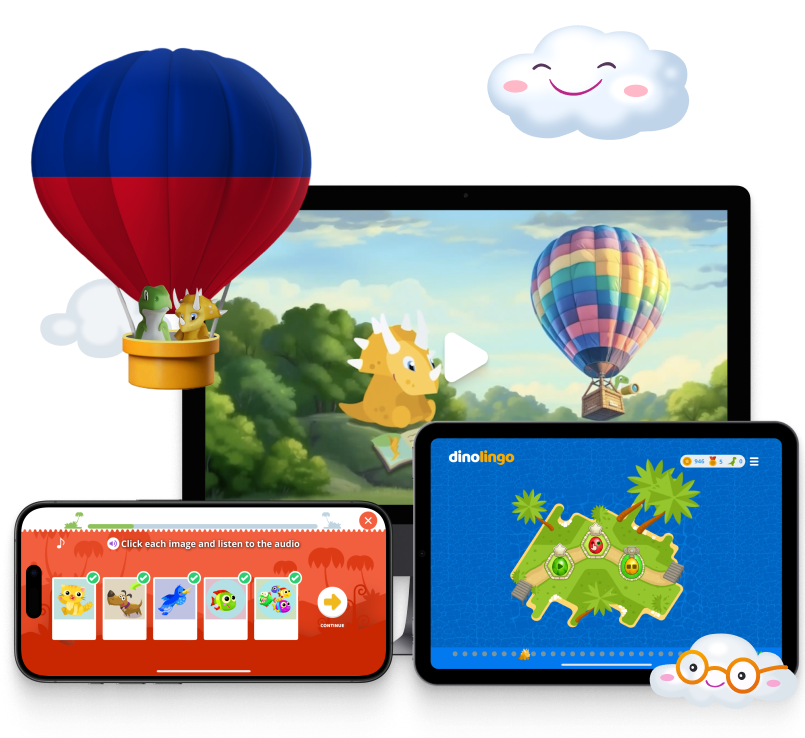
With Dinolingo, children ages 2–14 can learn Haitian Creole through music, games, and interactive videos, while also understanding the rich culture it represents. Kids explore Creole through colorful animations, interactive games, and catchy songs, hearing real Creole, speaking along, and learning while they play. The platform helps learners build vocabulary naturally, without pressure or memorization, and builds confidence with native pronunciation.
The platform works on web, iOS, and Android, and supports offline learning too. Dinolingo also provides printable worksheets, flashcards, stories, and activity guides that help kids explore Creole step by step. Whether your child is just starting out, building on what they’ve heard at home, or comparing Creole with French, it offers a warm and engaging path to learning. You can also see what families think on the reviews page or learn more about how it works.
Creole is more than words, it’s a blend of stories and songs, history and heart. Every new word is a step into a world of courage, connection, and celebration, and once kids start learning, they’ll feel just how special it is.
Sources