Popular Slovakian Names for Boys and Girls
Slovakian names carry a rich history and cultural meaning. Many of them come from Slavic, Latin, or Biblical origins and are shared with neighboring countries like the Czech Republic and Poland. Some names reflect family traditions, religious heritage, or even stories passed down through generations.
In Slovakia, children often receive names that honor grandparents or saints, and name days (similar to birthdays) are widely celebrated across the country. Names are also just the beginning. They open a door into the whole world of Slovak life: its language, its food, its music, its legends, and the beautiful country where it all began. This guide takes a closer look at some of the most loved names in Slovakia, then travels through everything that makes Slovak culture so special for children to explore.
What Are the Most Common Slovakian Boy Names?
Boys in Slovakia are often given names that are classic, strong, and have religious or historical meanings. Many of these names are also used in other Slavic countries but may have different spellings or pronunciations.
Here are some of the most popular Slovak names for boys:
Jakub – A name with Hebrew roots, meaning “supplanter”
Samuel – Meaning “God has heard”
Tomas – A timeless name meaning “twin”
Martin – A strong name linked to Mars, the Roman god of war
Lukas – A name that means “from Lucania”
Michal – The Slovak form of Michael, meaning “Who is like God?”
Adam – One of the oldest names in history, meaning “man”
Filip – A cheerful name meaning “lover of horses”
Matus – A Slovak version of Matthew, meaning “gift of God”
Patrik – A noble name meaning “nobleman” or “patrician”
These names are not only meaningful but also easy to pronounce in many languages, which makes them great choices for families living abroad.
What Are the Most Common Slovakian Girl Names?
Names for girls in Slovakia often carry soft, melodic sounds and beautiful meanings. Many of them are linked to nature, emotions, or virtues. Some are short and sweet, while others have elegant and graceful endings like -ia or -ina.
Here are some of the most loved names for Slovak girls:
Sofia – A name of Greek origin, meaning “wisdom”
Viktoria – A powerful name meaning “victory”
Natalia – A graceful name that means “Christmas Day”
Nela – A short form of Antonela or Cornelia, now popular on its own
Laura – A name linked to laurel trees, a symbol of honor
Ema – A simple and sweet name meaning “universal”
Nina – A name with many meanings, from “dreamer” to “little girl”
Kristina – A traditional name meaning “follower of Christ”
Michaela – A feminine form of Michael, meaning “Who is like God?”
Sara – A timeless name meaning “princess”
These names are frequently chosen for their beauty, meaning, and cultural connection.
The Tradition of Name Days in Slovakia
In Slovakia, name days are just as important as birthdays. Each day of the year is associated with one or more names, and children celebrate their name day by receiving small gifts, greeting cards, or sweets. Families gather to honor the child whose name appears on the calendar, and teachers at school often recognize the celebration too.
For example, if your name is Tomas, you celebrate your name day on July 3rd. If your name is Ema, you might celebrate on January 30th. These traditions help children feel special and connected to their cultural roots.
How Do Slovak Names Reflect Language and Identity?
Slovak names are closely tied to the language itself. Slovak uses diacritical marks, such as accents or carons, that affect pronunciation. Names like Matuš or Ľubomír show how the Slovak alphabet makes names unique and expressive.
Boys’ names often end in consonants or -r, while girls’ names usually end in -a or -ia, making them easy to recognize. This structure also helps children learn grammar rules more easily as they grow up.
Where in the World Do People Speak Slovak?
Most people know that Slovak is spoken in Slovakia, but it does not stop there. Thanks to history and travel, you can hear Slovak in many corners of the world. For kids learning Slovak, it is fun and exciting to find out where this language can take them.
Slovakia is the heart of Slovak. It is a small but beautiful country in Central Europe, surrounded by Austria, Hungary, Poland, Ukraine, and the Czech Republic. It is the main home of the language, where Slovak is spoken in schools, homes, shops, and everywhere in daily life. Due to migration and family roots, you can also hear Slovak in:
- The United States, especially in cities like Pittsburgh and Cleveland
- Canada, where Slovak communities exist in Ontario and Alberta
- The Czech Republic, where many Slovak speakers live and work
- Serbia and Romania, where small Slovak-speaking villages still exist
- The UK, Australia, and Germany, home to growing Slovak-speaking families
This global spread helps children see how language connects people across continents. They might discover they have neighbors, classmates, or relatives who speak it too. A fun way to explore this is the Slovak Speaker Map: print a world map and mark every place where Slovak is spoken, then add photos or flags to make it interactive. You can also play a “Guess the Country” game, sharing facts about Slovak-speaking communities and letting kids guess which country you are describing.
A Colorful Look at the Slovak Republic
The Slovak Republic, commonly known as Slovakia, is a small but vibrant country located in Central Europe. It shares borders with five other countries: the Czech Republic and Austria to the west, Poland to the north, Ukraine to the east, and Hungary to the south. Even though it is not a very large country, it has a population of around 5.5 million people, more than some other European countries like Ireland, Norway, and Denmark.
Mountains, Forests, and Hidden Caves
Slovakia’s landscape is a mix of towering mountains, deep forests, flowing rivers, and green pastures. The Carpathian Mountains cover the northern half of the country and include the famous Tatras mountain range. These mountains have 29 peaks taller than 2,500 meters and offer stunning views and exciting adventures.
Beneath these mountains are hundreds of caves and caverns, 15 of which are open to the public. Many caves are decorated with tall stalagmites growing from the ground and sharp stalactites hanging from above. One of the most popular caves is the Dobsinska Ice Cave, where frozen formations sparkle like crystals.
The country also has many rivers, including the longest one called the Vah, which stretches over 400 kilometers. The Danube River, one of the most important rivers in Europe, flows through the capital city, Bratislava.
Climate and Nature
Slovakia experiences all four seasons. Summers are warm, while winters can be very cold and snowy, especially in the mountains. The weather can change depending on where you are: it is colder and wetter in the north and drier and warmer in the south.
The country takes great care of its natural beauty. There are nine national parks filled with hiking trails, waterfalls, and wildlife. Kids who enjoy exploring the outdoors will love Slovakia’s forests and fresh mountain air.
What Makes the Slovak Language Special?
Slovak is often described as soft and flowing, and once you hear it, you will understand why. With gentle sounds and easy rhythms, Slovak can be surprisingly fun and soothing for children to learn. So what makes it sound so smooth? Slovak avoids harsh sounds and blends letters in a way that makes words roll off the tongue. It has:
- Lots of vowels, which create open, smooth syllables
- Gentle consonants like ľ, ň, and ť
- Balanced word stress, usually on the first syllable, making it easy to follow
Words like mama, dúha (rainbow), or slnko (sun) are fun for kids to say and feel soft when spoken aloud. Children enjoy languages that sound musical or cozy, and Slovak fits the bill. The repeating rhythms and vowel-heavy words make it feel like a song. To practice, try a Smooth Sound Challenge: say a Slovak word slowly and let kids repeat it like a mini echo, adding hand movements or clapping to match the rhythm. You can also make word cards and have kids sort them into “soft” and “sharp” sounds.
Unlock the Magic of Ľ, Š, and Č
Slovak has some awesome letters you will not find in English, like Ľ, Š, and Č. These special characters may look a little strange at first, but kids love how they sound and feel once they get the hang of them. Each one makes a unique sound:
- Ľ ľ – a soft “ly” sound, like in ľad (ice)
- Š š – sounds like “sh” in shoe, as in šaty (dress)
- Č č – like “ch” in chocolate, as in čo (what)
These sounds are common in everyday words, so learning them helps kids speak naturally and clearly right from the start. They also show up in songs, games, and names, so they feel familiar fast. Try a Magic Letter Echo, where kids echo each special letter with a silly voice like a robot or a bird, or some Letter Art Time, where they write Slovak words with Ľ, Š, or Č and turn the letters into little cartoons or creatures.
Grammar Secrets for Curious Kids
Slovak might look simple at first, but hidden behind its soft sounds are grammar rules that twist, change, and surprise. For curious kids who love puzzles and patterns, Slovak grammar can actually be a lot of fun to explore. Here is what makes it tricky:
- Cases: Slovak has seven grammatical cases, which means nouns and pronouns change depending on how they are used in a sentence.
- Endings: Adjectives and verbs change their endings based on gender, number, and tense.
- Word Order: Sentences can shift around depending on what is being emphasized.
It sounds like a challenge, but it is also like solving a language puzzle. Kids love mastering challenges, and Slovak gives plenty of chances to “crack the code.” As they notice patterns and rules, they grow confident and excited, and the grammar starts to feel like a game they are getting better at every day. Try a Case Race Game with flashcards where kids change noun endings to match silly sentence prompts, or play Endings Detective, spotting what changed in a sentence and why.
Secrets of Slovak Sentences for Beginners
Every language has its own sentence rhythm, and Slovak is no different. The good news is that Slovak sentence structure is beginner-friendly and full of patterns that make it easier for kids to understand, build, and speak. Slovak usually follows the Subject–Verb–Object order, just like English:
- Ja jem jablko. – I eat an apple.
However, Slovak is flexible. Since the words change depending on their role (thanks to those cases), word order can shift for style or emphasis:
- Jablko jem ja. – It is me who is eating the apple.
This flexibility gives kids room to play with sentence building while still being understood. A few helpful sentence starters make it easy for young learners to begin speaking Slovak right away:
- Ja som… – I am…
- Mám rád/rada… – I like…
- Toto je… – This is…
- Chcem… – I want…
- Kde je…? – Where is…?
To make practice playful, try a Sentence Shuffle: write simple Slovak nouns, verbs, and objects on cards, then mix and match them into new, silly sentences. Or play Who Said That?, giving animals or toys speech bubbles with basic Slovak sentences for kids to match to the right speaker.
How to Greet Like a Slovak Kid
Every language has its own way of saying hello, and in Slovakia, greetings are full of warmth, smiles, and friendliness. For kids, starting with basic greetings is an easy and fun way to join in everyday conversations. Here are the most common ways Slovak kids say hello and goodbye:
- Ahoj! – Hi! (used with friends and family)
- Čau! – Hi or Bye (casual, like “Ciao!”)
- Dobrý deň. – Good day. (more polite or formal)
- Dobré ráno. – Good morning.
- Dobrú noc. – Good night.
- Zbohom! – Goodbye (more traditional or poetic)
These greetings help kids show respect, be friendly, and start practicing Slovak right away. Learning to greet others is one of the first steps in building confidence, and kids feel proud when they can walk into a room and say “Ahoj!” or “Dobré ráno!” with a smile. Try a Greeting Role Play, acting out saying hi to a friend, greeting a teacher, or saying goodnight, or make up a Greeting Song to sing as a morning hello or bedtime goodbye.
Tiny Wisdom, Big Laughs: Slovak Proverbs
Slovak proverbs are short, funny, and full of wisdom. They have been passed down for generations, and they are great for helping kids learn the rhythm, humor, and heart of the Slovak language. From clever animal sayings to everyday advice, these expressions are easy to remember and fun to use. Here are a few favorites:
- Bez práce nie sú koláče. – “Without work, there are no cakes.” (You have to earn your reward.)
- Keď sa dvaja bijú, tretí víťazí. – “When two fight, the third one wins.”
- Hlad je najlepší kuchár. – “Hunger is the best cook.” (Everything tastes better when you are hungry.)
Because they are short and often funny, proverbs are perfect for memorization. They use real sentence structures, cultural references, and often rhyme or repeat, which makes them great tools for language development. Let kids Draw a Proverb and guess each other’s pictures, or stage a Proverb Performance, acting out short scenes that show the meaning before saying the Slovak version together.
Slovak Stories, Legends, and Games Kids Love
Slovakia is a land of magical stories, mythical creatures, and brave heroes. Among all the tales passed down from generation to generation, one name stands out the most: Juraj Jánošík. He is Slovakia’s most beloved folk hero, sometimes called the “Slovak Robin Hood.”
A long time ago, Juraj was just a young man from a small mountain village. Life was hard, and the villagers were very poor. Rich lords took most of their food and money, leaving little behind. Juraj thought this was unfair. He gathered a group of friends and decided to make things right. Together, they hid in the forests and waited for the lords to pass by in their carriages. Then they would take the treasures and give them to the poor.
Juraj became a hero to the people. Everyone in the village loved him and helped keep his secret. But one jealous man wanted the treasure for himself. He told the lords where Juraj was hiding, and that night they caught him while he was visiting his girlfriend. Juraj tried to escape, but legend says he slipped on peas scattered on the floor. He was sadly captured and later hanged. Still, his story lives on as a symbol of bravery, kindness, and standing up for what is right. Children in Slovakia grow up hearing his story and learning that helping others is always worth it.
Wolves, Witches, and Wonders
Beyond Juraj, Slovak folktales are full of brave shepherds, clever princesses, fearsome wolves, and mysterious witches, offering endless fun for kids learning the language. Many Slovak fairy tales include words like these:
- vlk – a wolf, often sneaky or brave
- čarodejnica – a witch who casts spells or tests heroes
- zázrak – a miracle or wonder that changes everything
These words appear in exciting scenes and are easy for kids to remember because they are tied to strong images and emotions. Folktales make new vocabulary come alive, and kids remember words better when they appear in magical settings, repeated lines, and fun character voices. Try a Story Character Mix-Up, letting kids combine wolves, witches, and heroes into their own mini tales, or a Magic Word Hunt, where they listen during storytime and call out key words like “vlk” or “zázrak” when they hear them.
Fact or Folklore? What Is Truly Unique About Slovak Life
Slovakia is a land of deep forests, colorful traditions, and magical stories, but which parts are real and which come from folklore? Discovering the line between fact and fiction is part of the fun. Here are some real facts about Slovak life:
- Slovakia has more castles per person than almost any country in the world.
- The Tatra Mountains are home to beautiful trails and wild animals like bears and lynxes.
- Many Slovak families still make traditional foods like bryndzové halušky (cheese dumplings) at home.
And here is some folklore that sparks the imagination:
- The Morena doll is part of a spring tradition to say goodbye to winter.
- Some believe in vodníci, funny water spirits who live in rivers.
- Old legends tell of mountains that were once giants or sleeping dragons.
These facts and tales show kids what life in Slovakia really looks like today while letting them explore language through symbols, characters, and seasonal traditions. Play a Fact or Folklore Game, naming a Slovak tradition and asking “Is it real or a story?”, or let kids Create Their Own Legend using the Slovak words they have learned, maybe about a dragon, a river ghost, or a magical cheese dumpling.
Favorite Games Slovak Children Love
Slovak children enjoy many kinds of games, both old and new. Just like kids in many other countries, they love playing hide and seek, running races, and jumping rope. Many kids also play sports, go hiking, and ride bikes. Although video games are fun, playing outside in the fresh air is even better.
One special game played in the fall is kite flying. Children often make their own kites using colorful paper, sticks, and string, then run to windy fields or hilltops to see whose kite can fly the highest, the longest, or look the most beautiful. Sometimes there are even friendly competitions.
When it is rainy or snowy, kids like to play “Name-Town-Animal-Thing,” a fun thinking game. One player picks a letter, and everyone else has to quickly name a person’s name, a town or city, an animal, and a random object, all starting with that letter. Whoever answers the fastest wins the round. It is a great way to learn new words and test how much you know about the world. Stories like Juraj Jánošík’s and these traditional games teach kids about history, bravery, and creativity, all while having fun.
From Dumplings to Desserts: Slovak Food Kids Love
Slovak food may be simple, but it is full of flavor, tradition, and warmth. From mountain cheese to Christmas dinners, every dish has a story.
Everyday Ingredients and Mountain Cheese
Slovak meals often include potatoes, cabbage, and milk products. In the mountains, shepherds still graze their sheep and live in small wooden cottages. They use the fresh milk to make a creamy cheese called bryndza, which is used in many traditional recipes.
One of the most loved dishes by both kids and adults is bryndzové halušky. These are soft potato dumplings mixed with salty sheep cheese, sometimes topped with crispy bacon. It is considered Slovakia’s national dish, and you will find it in homes and restaurants all across the country.
Meat, Breakfast, and the Biggest Meal of the Day
Meat is a big part of Slovak cuisine. People enjoy sausages, bacon, chicken, and steak. Sausages are especially popular: they can be grilled, boiled, or smoked, and they are often served with mustard and bread. While grown-ups enjoy a glass of local beer, kids usually drink fruit juice or sparkling water.
Breakfast in Slovakia is simple. Most kids eat cornflakes with milk, bread with jam, or yogurt. Foods like maple syrup or peanut butter are not common. Lunch is the biggest meal of the day. Children often eat chicken with rice, soup, or a breaded meat cutlet, usually served at school canteens where everyone eats together. Dinner is more relaxed and usually eaten at home, where families gather at the table to enjoy a warm meal and share stories about their day.
Special Holiday Meals
Christmas Eve is the most important family meal of the year. Slovaks eat sauerkraut soup (called kapustnica) and fried carp with potato salad. Carp is only eaten during Christmas and is bought from special holiday markets. Some families even keep the live fish in the bathtub for a few days before the big meal. On Easter and other holidays, tables are filled with baked goods, ham, eggs, and sweet treats, and every region has its own holiday recipes passed down through generations. In Slovakia, food is more than just fuel: whether it is a bowl of halušky or a festive Christmas dinner, meals are a time to talk, laugh, and feel at home.
From Bagpipes to Bells: Slovak Music Fun for Kids
Music has always played a big role in Slovak cultural life. Folk music and instruments were especially popular in the early 1800s, and this traditional music helped shape modern Slovak music. For example, the Slovak national anthem is based on a folk song called Kopala Studienku. Here are five traditional Slovak instruments:
The accordion. This box-shaped instrument is played by moving the bellows while pressing keys or buttons. Air moves through reeds made of brass or steel, which vibrate to create sound.
The cimbalom. The cimbalom is a large box with metal strings stretched across the top. Musicians play it by hitting the strings with two small beaters.
The fujara. The fujara is a tall wooden flute that came from central Slovakia. It has three holes and is played standing up, by blowing into the top pipe.
The koncovka. The koncovka is a flute with no finger holes. It was once used by shepherds and is played by covering and uncovering the bottom end of the flute.
The ninera. This stringed instrument is played with a crank-turned wheel that rubs against the strings, like a violin. The ninera is the Slovak version of the hurdy-gurdy.
Travel Slovakia: Hidden Gems and Natural Marvels for Kids
Slovakia is a small but beautiful country filled with mountains, castles, charming towns, and friendly people. Every year, more than 1.5 million visitors explore its nature, history, and culture. Whether you enjoy hiking in the mountains or walking through old cities, Slovakia offers exciting adventures for everyone. Let us take a tour through the most interesting places to visit, perfect for children and families who love to learn.
Bratislava: A Capital Full of Surprises
Bratislava is the capital and largest city in Slovakia. It sits on the Danube River and is filled with history, fun, and beautiful views. The most famous landmark is the Bratislava Castle, a large white castle with four towers. You can even see it on Slovak euro coins.
Visitors also enjoy the New Bridge, which has a restaurant at the top with a view of the entire city. The Old Town Hall is a favorite place to visit, with statues like Cumil the Watcher and Schoener Naci nearby. Other attractions include St. Michael’s Gate, Hviezdoslav Square, the Presidential Palace, Devin Castle, the Slovak Radio Building, the Museum of Clocks, and the Bratislava Zoo. Souvenirs from Bratislava often include handmade dolls in folk costumes, carved wooden figures, ceramic pieces, crystal glass, and traditional items like crpaks, fujaras, and valaskas.
The High Tatras: Slovakia’s Mountain Pride
The High Tatras are Slovakia’s most famous mountain range and appear on the national flag. The tallest peak is Gerlachovský Štít, which rises to 2,655 meters. In the winter, people come here to ski, and in the summer, they enjoy hiking and nature walks. The mountains are home to many wild animals, including bears, wolves, foxes, and lynxes, so kids can enjoy spotting wildlife while learning about the natural world.
Slovak Paradise: A Park of Adventure
Slovak Paradise is a national park located in the eastern part of the country. It has deep canyons, caves, green valleys, and stunning waterfalls. The highest peak in the park is Predná Hoľa at 1,545 meters, and the park has over 300 kilometers of hiking trails. One of the most exciting places in the park is the Dobšinská Ice Cave, where visitors explore icy tunnels and formations and sometimes see animals like wildcats, deer, boars, martens, and even rare birds such as the Saker Falcon.
Kosice: The City of Culture
Kosice is the second-largest city in Slovakia, with a population of about 240,000. The most famous landmark is St. Elisabeth Cathedral, the largest church in the country. Next to it is the Singing Fountain, which lights up at night and plays music as water sprays in patterns. Other popular places in Kosice include St. Michael Chapel, Urban Tower, the State Theater, the Old Town Hall, the East Slovak Museum, and the Slovak Technical Museum with its own planetarium. The city also has a zoo, and families can enjoy concerts and performances by the State Philharmonic and the State Theatre of Kosice.
Bojnice: Fairy Tales Come to Life
Bojnice is a small town in western Slovakia known for its fairy-tale Bojnice Castle. It is one of the most visited castles in Central Europe and even hosts the International Ghosts and Spooks Festival every year. Many movies have been filmed here, and in front of the castle you will find the 700-year-old King Matthias Tree. Bojnice also has a large zoo with more than 350 species of animals, making it a perfect stop for children.
Best Methods to Teach Children Slovak
Learning a new language can be an exciting adventure, especially for children. If your goal is to help your child learn Slovak, there are countless ways to make it enjoyable, interactive, and part of daily life. From reading storybooks to singing songs and playing games, Slovak can be naturally integrated into your child’s routine. Whether you are a native speaker, a second-language learner, or just beginning the journey together, these ideas will help make Slovak fun and memorable.
Reading, Play, and Flashcards
Look for fairy tales and storybooks in Slovak online or from your local library. Shared reading time helps children bond with you and connect with the language. Choose books with strong illustrations, point to familiar objects, and use different voices for characters. If your child has a favorite Slovak story, encourage them to act it out or change the ending using their imagination.
Use puppets or plush toys that “speak” Slovak, which improves fine motor skills and helps with storytelling. Visit the zoo and call out animal names in Slovak, adding adjectives or colors during your visit. Play hide-and-seek by counting in Slovak, starting with 1 to 10 and then going higher or counting backward. Board games like snakes and ladders or memory games with flashcards are great for learning numbers, vocabulary, and turn-taking. Use flashcards for matching games or Go Fish, and create a progress chart to track the words and phrases your child masters, using stickers as rewards.
Multimedia, Culture, and Learning by Doing
Watch Slovak cartoons on YouTube, since visual stories help kids follow along even without full comprehension. Stream Slovak radio or play music in the car, because even passive listening helps children get used to sounds and rhythms. Listen to Slovak children’s songs or pop music and add movements to help with memory.
Bring Slovak into daily life by visiting Slovak restaurants, supermarkets, cultural centers, community events, or festivals, and arrange playdates or video chats with other families who speak it. Cook Slovak recipes together and use Slovak words for instructions and ingredients, or do crafts while naming supplies and colors in Slovak. Praise often, use Slovak words for “good job” or “wonderful,” and choose a “word of the day” to explore through activities. Summer camps, short-term classes, homeschooling options, and online classes are all available for families looking for structured learning.
Explore Slovak Names and Culture Through Language Learning
Learning about names is a fun way for children to connect with Slovak language and culture. Whether your child wants to learn Slovak because of family roots, school projects, or pure curiosity, knowing common names helps bring the language to life.
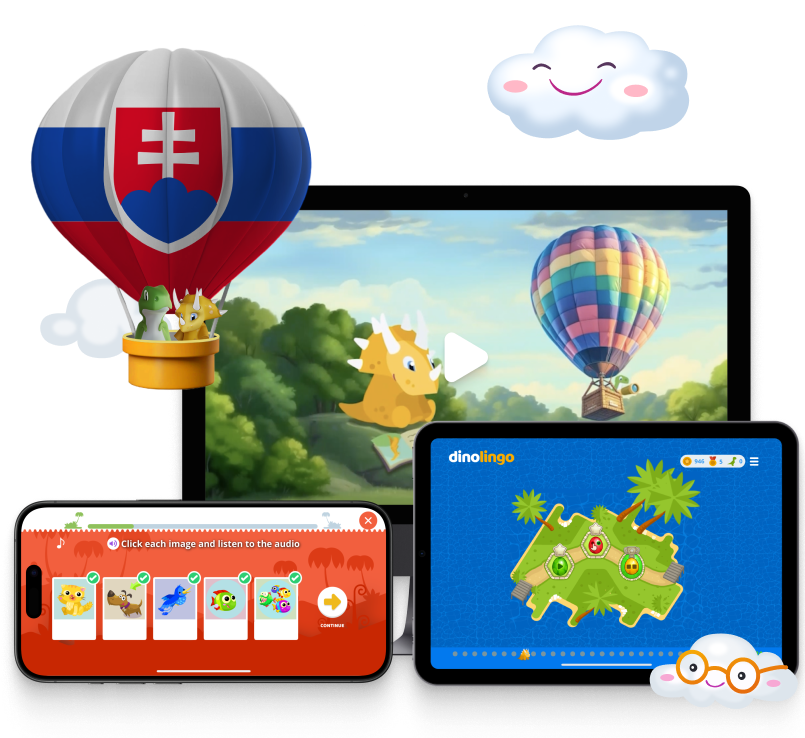
With Dinolingo, children ages 2–14 can discover the Slovak language through songs, games, stories, and fun activities. They will hear common names in stories, say them out loud in exercises, and learn to recognize the letters and sounds that make them special. The program brings together everything in this guide, from greetings and proverbs to folktales, food, music, and the castles and mountains of Slovakia, through videos, printable worksheets, and interactive lessons.
One subscription lets up to six users access Slovak and over 50 other languages on the web, iOS, or Android. Parents can track progress through the built-in dashboard, and kids can enjoy rewards and lessons even offline.
Final Thoughts
Names are more than just words: they carry stories, values, and cultural identity. In Slovakia, both traditional and modern names are loved for their meaning and musicality. From the classic Jakub and Sofia to the charming Nela and Matus, Slovakian names are a beautiful reflection of heritage, and they open onto a country full of natural wonders, old legends, smooth-sounding words, and warm traditions.
Whether you are learning the language, preparing for a cultural trip, or just exploring names around the world, Slovak offers a wonderful starting point for discovering something new. Ready to learn more? Dive into Slovak with Dinolingo and start your language adventure today.