Hungarian for Kids: Culture, Food, Games, and More
Hungary is a country with a deep history, a one of a kind language, and traditions that are full of color, flavor, and fun. For kids, exploring Hungarian culture is a wonderful way to discover new foods, festivals, games, and stories while picking up the language along the way. This guide walks through the tastes, customs, and curiosities that make Hungary special.
Hungarian Food and Cuisine
Hungarian cuisine is full of bold flavors, colorful ingredients, and dishes that are loved by both kids and adults. From sweet treats to spicy stews, food is an important part of Hungarian culture and daily life, and it is one of the easiest ways for children to connect with the country.
Spices and Flavors
Hungarian food is often rich, hearty, and known for its use of paprika, a bright red spice made from dried peppers. There are two main kinds: sweet paprika and hot paprika. The combination of paprika, red onions, and lard is the traditional base of many dishes. A thick sour cream called tejföl is also used often to make meals creamy and rich.
Sausages and Salami
Hungarians are especially proud of their sausages and winter salami. These are seasoned with many spices, so their flavor is strong, tasty, and often quite spicy. They are enjoyed on sandwiches, with eggs, or as part of a bigger meal, and they play a big role in Hungarian food culture.
Soups and Stews
One of the most popular dishes in Hungary is goulash soup, made with beef, vegetables, noodles, paprika, and spices. It is warm, filling, and perfect for colder days. Another iconic dish is halászlé, or Fisherman’s Soup, made with fresh fish and cooked in different styles along Hungary’s main rivers, the Danube and the Tisza, often during lively cooking competitions.
Goulash is sometimes confused with pörkölt, a similar dish that is thicker and made with less liquid. Pörkölt tastes great with rice, potatoes, or noodles.
Delicious Desserts
For dessert, children often enjoy palacsinta, thin stuffed pancakes that Hungarian grandmothers are famous for making. These crepes can be filled with sweet cheese, jam, or chocolate. Another favorite is Somlói Galuska, a sponge cake with layers of chocolate sauce and whipped cream that is a popular treat at birthday parties and family dinners.
Learning Hungarian Through Food
Exploring food is a fun way to learn about Hungarian culture and language. Kids can learn the names of dishes and ingredients, and even practice saying “thank you” or “this is delicious” in Hungarian. To make it even more exciting, you can use videos, songs, and language games. Whether you are tasting sweet palacsinta or enjoying a bowl of warm goulash, there is something for everyone.
Culture and Traditions
Traditional Clothing
Traditional Hungarian clothing is a beautiful form of textile art, now mostly seen during festivals and in rural areas like Hollókő, Kalocsa, and Transylvania. The garments are decorated with flowers, leaves, birds, and designs resembling a peacock feather’s eye. Regions like Matyóföld, Kalocsa, and Kalotaszeg are famous for their embroidery and needlework, and visitors will often see these art pieces in Hungarian homes.
Festivals and Holidays
Hungarians celebrate several unique and colorful holidays. During the Farsang, or Carnival Season, in February, costume parties, parades, and open-air concerts fill the streets. In Mohács, the Busójárás festival features people in scary costumes who dance and burn away winter.
March 15 marks the 1848 Revolution Day, when Hungarians fought for independence. August 20 celebrates St. Stephen’s Day, Hungary’s founding as a state, with fireworks over the Danube. October 23 is the memorial of the 1956 uprising against Soviet rule.
The Origin of Hungarians
A popular Hungarian legend tells the story of two brothers, Hunor and Magor, who chased a magical deer into a beautiful land full of food and nature. There they met and married fairy princesses, and their descendants became the Huns and the Magyars, the modern Hungarians.
Communication and Greetings
Hungarians greet each other by shaking hands, with men waiting for the woman to extend her hand. Older generations may bow to women, and close friends kiss on both cheeks. Hungarians prefer in-person conversations and often invite guests for meals.
Family Values
Family is at the heart of Hungarian culture. It is common for several generations to live together. Grandparents often help raise grandchildren, and families offer emotional and financial support to one another.
Children’s Games
Hungarian children enjoy games that involve singing and movement. One popular game is Forfeits, where children form a circle, sing, and follow a leader’s instructions. If a child makes a mistake, they must sit out until the last round. These games are fun, social, and often include elements of dance and folk music.
Fun Facts and Famous Places
Fun Facts
Hungarian is one of the world’s hardest languages and comes from the Finno-Ugric language group. Hungary once experienced the worst inflation in history, and one banknote was worth one quintillion pengő!
Hungarians excel in sports, mathematics, and science. Hungary ranks in the top 10 countries for Summer Olympic medals. The famous Rubik’s Cube was invented by Hungarian Ernő Rubik. Hungary also has a rich tradition of classical music, with composers like Béla Bartók, Zoltán Kodály, and Franz Liszt.
Famous Places Outside Budapest
Hollókő is a charming village and UNESCO site where people live like a century ago, preserving their folk traditions. In Herend, you can find world-famous handmade porcelain. The Sziget Festival in Budapest is one of Europe’s largest music festivals, hosting over 1,000 performances every year.
Learning Hungarian with Dinolingo
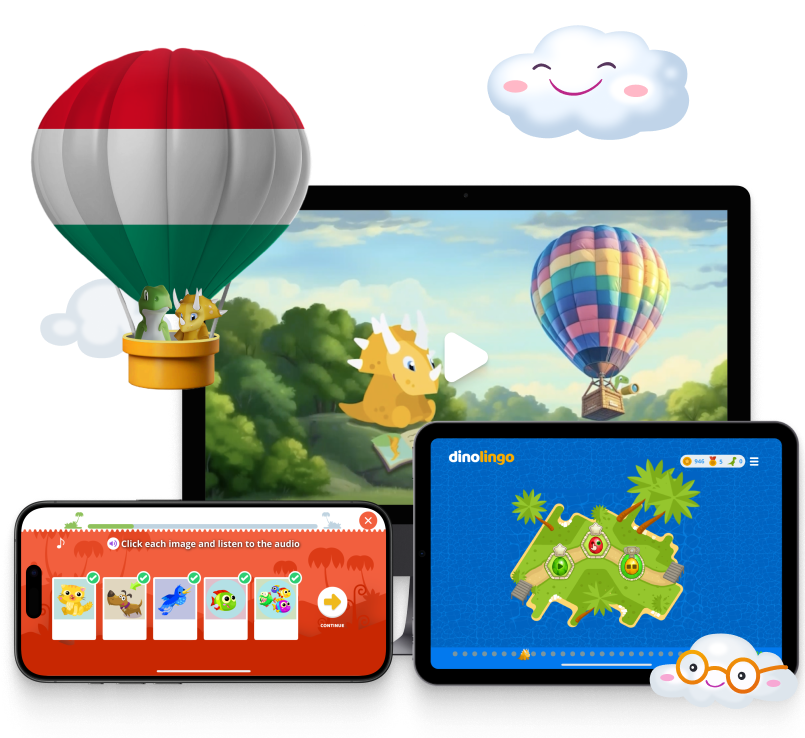
Children can explore all of these cultural treasures and more through Dinolingo. With over 50 language options, including Hungarian, Dinolingo offers interactive lessons, games, songs, videos, and printable materials. It makes learning Hungarian fun and effective for kids ages 2 to 14. The platform works on web, iOS, and Android, includes offline resources and a fun reward system, and comes with a helpful parent dashboard.