Traditional Romanian Clothing: A Colorful Journey for Kids
Have you ever wondered what people wore hundreds of years ago in different parts of the world? In Romania, traditional clothes have stayed almost the same for centuries! These special outfits are still worn during festivals, dances, and important holidays. Let’s take a fun look at what boys and girls wear in traditional Romanian clothing, and then discover how kids can start learning the Romanian language too.
The Most Important Piece: The Ie
Whether you’re a boy or a girl in Romania, your traditional outfit always starts with an ie. That’s the name of a white shirt made from wool, linen, or hemp. It’s light, comfy, and beautifully decorated. The ie is the heart of Romanian traditional clothing and can be seen all across the country.
The shirt is tied around the waist with a brau, which is a special woven belt. This belt keeps the ie in place and adds color to the outfit. Every ie is a little different depending on which part of Romania it’s from. Some have bright colors, others have fine embroidery, but all of them are full of stories.
What Do Women Wear?
Romanian girls and women wear a white ie, just like the boys, but they also wear something called a catrință. That’s a straight, colorful apron worn over a skirt. The colors and patterns can change from region to region. Some are filled with red and black lines, while others sparkle with gold threads!
On their heads, women often wear basmale, which are scarves made of cotton, wool, or silk. These scarves are folded into triangles and tied under the chin or at the back of the head. They’re decorated with bright embroidery and add charm to the whole outfit.
What Do Men Wear?
Traditional clothes for boys and men also include a white ie (shirt) and white trousers. To finish the outfit, they wear a hat, a belt, and sometimes a waistcoat or overcoat, depending on the weather or occasion.
One fun part of the traditional outfit is the shoes! Romanian people used to wear special leather sandals called opinci. These sandals were easy to make and perfect for village life.
From the Costume to the Words: Learning the Romanian Language
Once kids fall in love with the colors of the ie and the catrință, they often want to know how to name them in Romanian. Romanian is a beautiful, musical language that sounds like a mix of Italian and Slavic languages. It’s part of the Romance family like French, Spanish, and Italian, but with some surprises! So what makes it easy or hard for kids to learn?
Why Romanian Can Be Easy
For many kids, Romanian sounds familiar right away. It shares lots of words with other Romance languages, so if a child has heard Spanish or Italian, they may recognize Romanian terms too. Also, Romanian uses the Latin alphabet, just like English, making it easy to read and write. The pronunciation is mostly phonetic, so what you see is what you say. That’s great news for young learners starting with basic vocabulary, including the names of those traditional clothes.
What Might Be Tricky
Romanian grammar includes cases, which means words can change form depending on how they’re used. This might take time for kids to grasp. It also has some unique sounds (like ă or ț) that may be new to English-speaking learners. But with practice, these challenges turn into achievements, and that’s part of the fun of learning!
Try These Fun Activities
Same or Different? Make flashcards with Romanian and Spanish or Italian words. Let kids guess which ones mean the same thing!
Alphabet Sound Search. Focus on Romanian letters with special sounds. Have kids find objects or names that start with those letters.
How Can Kids Learn More About Romanian Clothes and Language?
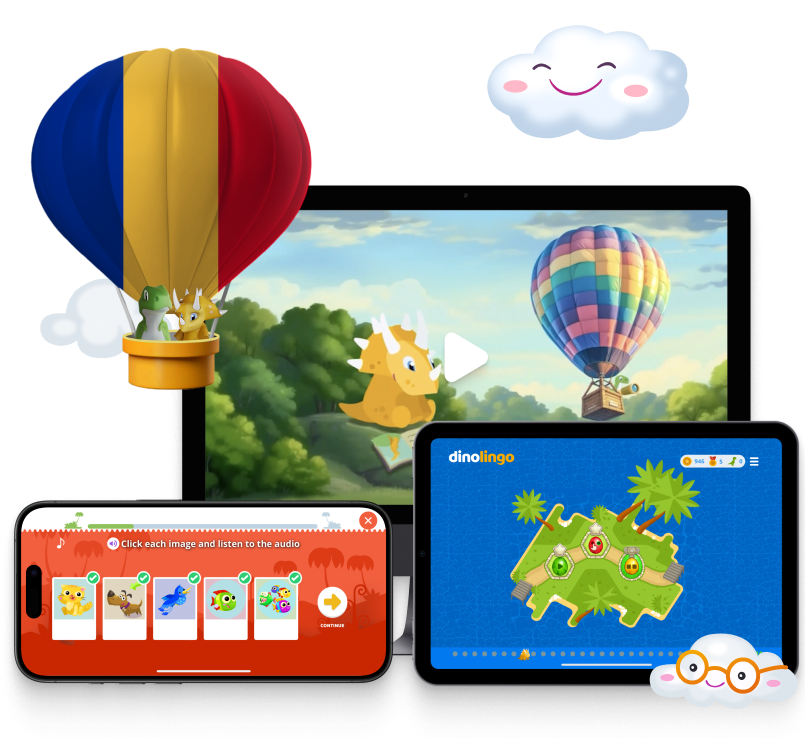
Curious to learn more about Romanian culture, including clothes, songs, food, and fairy tales? With playful tools like Dinolingo’s Romanian program, kids can explore the language through songs, repetition, and interactive stories that make tricky grammar feel like a game. You can explore it all with Dinolingo! This fun and interactive platform helps children:
- Discover 50+ languages through stories, videos, and songs
- See traditional outfits in cultural lessons
- Learn at their own pace on web, iOS, or Android
- Use printable flashcards, books, and worksheets
- Practice with games and get rewarded with fun stickers and points!
- Share the learning experience with up to 6 users on one account
Whether you want to dress up like a Romanian villager or just learn how to say “hat” in Romanian, Dinolingo makes language and culture learning exciting for kids ages 2–14.