Sakura Sakura: A Beautiful Song About Cherry Blossoms
Few things capture the spirit of a Japanese spring like Sakura Sakura, the gentle, time-honored song that children sing as cherry trees burst into bloom. This guide walks through the full song, line by line, then shows you how to bring the same blossom magic home with a hanami picnic, simple cherry blossom vocabulary, and playful language games. Together, the song and the activities turn a single spring afternoon into a complete little lesson in Japanese language and culture.
The Song: Japanese Lyrics
さくら さくら
やよいの そらは
みわたす かぎり
かすみか くもか
においぞ でずる
いざや いざや
みに ゆかん
さくら さくら
のやまも さとも
みわたす かぎり
かすみか くもか
あさひに におう
さくら さくら
はなざかり
Romaji (Japanese in Latin Alphabet)
sakura sakura
yayoi no sora wa
miwatasu kagiri
kasumi ka kumo ka
nioi zo dezuru
izaya izaya
mi ni yukan
sakura sakura
noyama mo sato mo
miwatasu kagiri
kasumi ka kumo ka
asahi ni niou
sakura sakura
hanazakari
English Meaning (Simple Interpretation)
Cherry Blossoms, Cherry Blossoms
In the spring sky,
As far as you can see,
Is it haze? Is it clouds?
The scent is coming through
Now, now,
Let’s go out and see!
Cherry blossoms, cherry blossoms,
In the fields, in the mountains,
As far as you can see,
Is it haze? Is it clouds?
Fragrant in the morning sun
Cherry blossoms, cherry blossoms,
In full bloom.
Why This Song Matters
This song is not just about flowers, it reflects Japanese people’s deep connection to nature, beauty, and the seasons. Children often sing this song during spring festivals or while doing crafts related to sakura trees. It teaches both vocabulary and cultural appreciation in a gentle, musical way. When children learn songs like Sakura Sakura, they are not just learning a language, they are stepping into a world of tradition, beauty, and rhythm. It is a perfect blend of language and culture that can be both calming and inspiring.
Bring the Blossoms Home: A Hanami Picnic
Every spring, Japanese families gather under blooming cherry trees for hanami (flower viewing). The same feeling that fills Sakura Sakura lives in this tradition, and you can recreate it at home to spark curiosity and teach simple Japanese words. With a few blossoms, cozy picnic blankets, and playful language games, children soak in new terms like さくら (sakura, cherry blossom) and はなびら (hanabira, petal) while enjoying a festive atmosphere.
Key Cherry Blossom Words
Introduce these terms before your picnic setup. Hold up real petals or pictures to reinforce meaning:
- さくら (sakura) : cherry blossom
- はなびら (hanabira) : petal
- にわ (niwa) : garden
- せんすい (sensui) : fan
- ピクニック (pikunikku) : picnic
Practice saying each word aloud together as you arrange blankets and sprinkle petals.
Activities and Games
Petal Sort. Scatter paper or real petals in two bowls. Label one さくら and the other はなびら. Children sort petals into each bowl, saying the Japanese word as they place each one.
Blossom Bingo. Create bingo cards with images of blossoms, fans, picnic baskets, and gardens. Call out a Japanese word, such as 「ピクニック!」, and kids cover the matching picture. First to bingo shouts 「ビンゴ!」 (bingo).
Sensory Fan Dance. Hand out small fans (せんすい). Play gentle spring music and invite children to flutter petals in the air while stepping to the beat, naming せんすい and はなびら each time they wave. This pairs beautifully with humming Sakura Sakura in the background.
Practice Corner. Keep a “Cherry Word Chart” visible. At snack time, randomly point to a word, にわ or さくら, and challenge your child to use it in a sentence: 「ここは にわ です。」 (This is the garden.)
Learn Japanese Songs and Words with Dinolingo
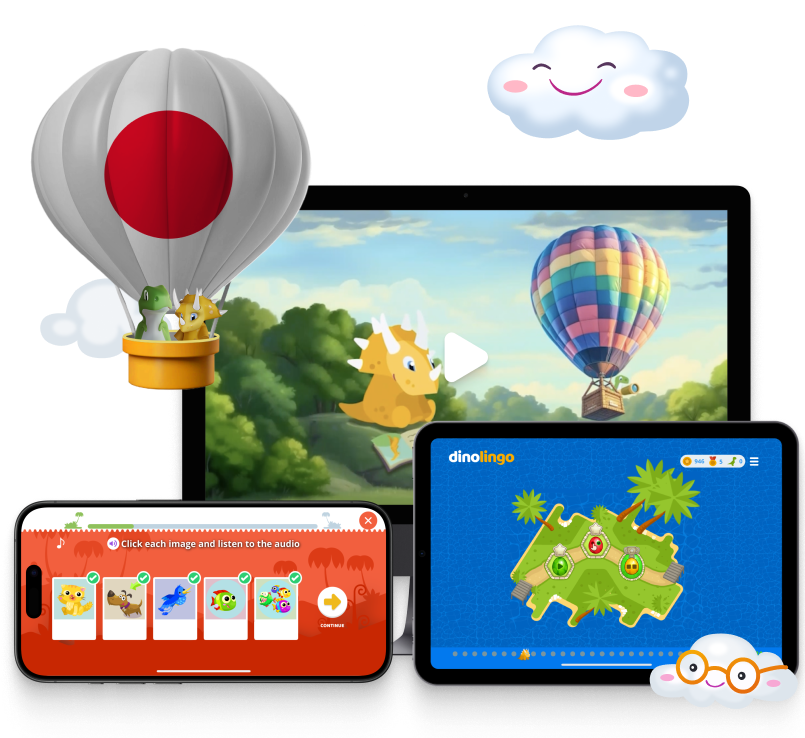
With Dinolingo’s Japanese lessons for kids, children can hear authentic pronunciations of traditional songs like Sakura Sakura, learn the meaning of each line, and even sing along with native speakers. The program includes songs, games, printable materials, and guided speaking activities tailored for children ages 2 to 14, and it works across web, iOS, and Android platforms.
You can extend your hanami fun the same way. A single Dinolingo family plan unlocks 50+ languages and 40,000+ activities, including animated spring stories, printable flashcards, and surprise badges, sorted by Pre-readers (2 to 5), Elementary (6 to 10), and Tween/Teen (11 to 14). Kids revisit さくら, はなびら, and other words through interactive games while parents track progress on an ad-free dashboard.
Final Thoughts
An at-home hanami picnic blends culture, language, and play in perfect spring harmony. By folding blankets, sorting petals, and waving fans while naming each item in Japanese, and by singing Sakura Sakura together, children absorb new vocabulary naturally. Pair this floral festival with Dinolingo’s follow-up games, and watch their Japanese bloom like cherry blossoms.
Sources