Japanese Animal Sounds & Names: Moo, Meow, and More in Japanese
Animals are some of a child’s first language teachers. In Japanese, creatures “talk” differently: a cat says にゃー (nyā) and a cow goes もー (mō). Pairing animal names (どうぶつ, dōbutsu) with their sounds helps kids remember both vocabulary and fun onomatopoeia naturally. This guide brings the sounds, the names, and a set of hands-on crafts and games together so your child can hear, say, fold, and collect Japanese animal words all in one playful journey.
Animal Names & Sounds
Start with the core vocabulary. Each animal has a Japanese name and a distinctive sound, and saying the two together makes both easier to remember.
| English | Japanese Name | Sound (Onomatopoeia) | Japanese Sound |
|---|---|---|---|
| Cat | ねこ (neko) | Meow | にゃー (nyā) |
| Dog | いぬ (inu) | Woof | わんわん (wan-wan) |
| Cow | うし (ushi) | Moo | もー (mō) |
| Bird | とり (tori) | Tweet | ぴーちくぱーちく (pīchiku pāchiku) |
| Frog | かえる (kaeru) | Ribbit | けろけろ (kero-kero) |
| Duck | あひる (ahiru) | Quack | がーがー (gā-gā) |
| Pig | ぶた (buta) | Oink | ぶーぶー (bū-bū) |
| Sheep | ひつじ (hitsuji) | Baa | めーめー (mē-mē) |
Beyond the farmyard, a zoo opens up even more names worth knowing: うさぎ (usagi, rabbit), ぞう (zō, elephant), きりん (kirin, giraffe), and さかな (sakana, fish). You can also add favorite characters to the mix, such as ぴかちゅう (Pikachū, Pikachu), which children already love and pick up instantly.
Sound & Vocabulary Games
Once the words are introduced, games turn them into living language. These quick activities focus on matching names to sounds and saying them out loud.
Sound-Match Relay
Print two sets of cards, one with animal pictures and words, one with their sounds in hiragana. Spread all face down. Kids flip one of each, read aloud (「ねこ… にゃー!」), and keep pairs. Fastest matcher wins.
Animal Choir
Line children up as different animals. Call out a Japanese animal name, 「かえる!」, and they chorus the sound 「けろけろ!」 in unison. Rotate until every voice has “spoken.”
Origami Zoo Workshop
Origami brings paper to life and makes new words stick. In this zoo-themed workshop, children fold simple animals and learn their Japanese names through hands-on fun, practicing each word as they fold.
Workshop Setup
Gather colored square paper (15 cm × 15 cm), a flat surface and small bowls for paper pieces, and a printed zoo map to display finished animals. Explain that each model comes with a matching Japanese term and that they’ll practice saying the word as they fold.
Origami Animal Folds
うさぎ (usagi, rabbit)
- Fold a white square diagonally twice to make an X.
- Fold the top corner down to form ears.
- Fold bottom corner up to shape the body.
ぞう (zō, elephant)
- Start with gray paper folded in half horizontally.
- Fold the top edge down to make a head.
- Create a narrow triangle for the trunk by folding one side inward.
きりん (kirin, giraffe)
- Use yellow paper; fold diagonally to mark center.
- Fold top corners inward to form the neck.
- Shape a head by folding a small triangle at the top.
さかな (sakana, fish)
- Fold a square in half diagonally.
- Fold the two outer corners toward the center line for fins.
- Flip and fold the tail corner upward.
After each model, have kids hold up their paper animal and say the Japanese name aloud.
Animal Parade
Line up the finished origami zoo and practice a parade chant: “うさぎ、ぞう、きりん、さかな!” Kids march each paper creature across the table while naming it in Japanese.
Guess the Animal
Place models in a cloth bag. Without looking, children feel a shape and guess the animal in Japanese: “これは … ぞう ですか?” (Is this an elephant?)
Surprise Japanese Toys: Learning with Gachapon
Gachapon (ガチャポン) are colorful capsule toys dispensed from vending machines across Japan. Each mystery toy reveals an animal or beloved character, making learning new Japanese words an exciting surprise. With every turn of the crank, children practice vocabulary naturally, no flashcards needed.
What Is Gachapon?
Gachapon originated in the 1960s when Bandai’s Ryūzō Shigeta introduced capsule machines to Japan, inspired by earlier gumball-style dispensers from the United States. The name combines gacha (ガチャ), the sound of cranking, and pon (ポン), the capsule dropping into the tray. Today, machines offer high-quality PVC figures, from cute animals to anime heroes, each one a mini lesson in Japanese vocabulary.
Learning Japanese Words with Gachapon
Each capsule holds a surprise toy that helps kids link objects to their Japanese names, including ねこ (neko, cat), いぬ (inu, dog), うさぎ (usagi, rabbit), ぞう (zō, elephant), and ぴかちゅう (Pikachū, Pikachu). When a child uncaps a toy, they say its name aloud, 「ねこ!」, embedding new words through play.
Capsule Word Hunt
Hide several sealed capsules around a room. Give children a list of Japanese words (for example ねこ, いぬ). As they find each capsule, they open it, name the toy, and check it off their list.
Blind Capsule Guess
Without looking, children shake a capsule and describe its shape in Japanese: 「ふわふわ」 (fuwafuwa, fluffy) for a rabbit or 「ながい」 (nagai, long) for an elephant’s trunk. Then they open it to reveal the match.
Practice Corner at Home
Carry the fun into everyday routines. Create a “Zoo Wall” at home with picture cards and sound bubbles, or display all your origami animals on it. Each day, add one new animal and its sound, then challenge family members to name both word and onomatopoeia before snack time. You can also randomly point to a paper creature and ask, “なに ですか?” (What is it?), prompting the correct answer, “きりん です.”
For the capsule toys, keep a “Gacha Gallery” display of emptied capsules and their figures. Each day, pick one figure and use its Japanese name in a sentence: 「ぞうはおおきいです。」 (The elephant is big.)
Keep the Adventure Going with Dinolingo
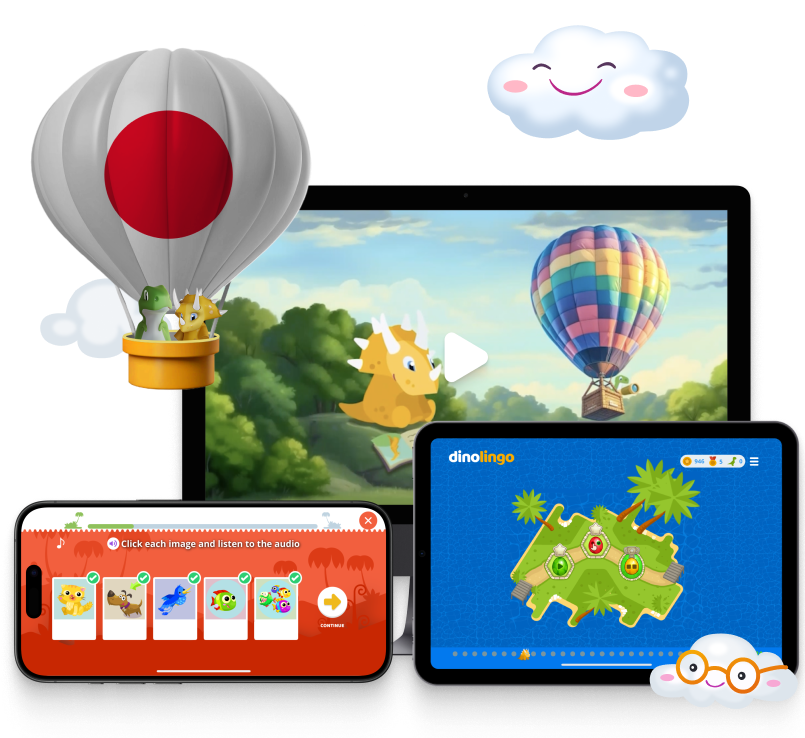
Extend your animal adventure with Dinolingo. A family plan unlocks 50+ languages and 40,000+ activities: animated animal stories, folding tutorials, matching flashcards, animal-themed toy quizzes, and surprise badge rewards. Age-specific paths (Pre-readers 2–5, Elementary 6–10, Tween/Teen 11–14) reinforce every creature’s name and sound and echo your origami zoo and Gachapon words in bite-size lessons, while parents track progress on an ad-free dashboard. Pair these crafts and games with Dinolingo’s follow-up activities, and watch your little learners speak Japanese animal names with pride.
Final Thoughts
Learning how animals “speak” in Japanese turns vocabulary into a playful symphony of sounds. By hearing the calls, folding paper creatures, and cranking out surprise capsules, children connect shape with sound and embed new words in their memory. Combine these games with Dinolingo’s interactive follow-ups, and your child will soon say 「ぶーぶー」 or 「ぴーちくぱーちく」 with delight and confidence, one delightful word at a time.
Sources
- Tofugu – Japanese Onomatopoeia Guide
- Origami Club – Animal Origami Tutorials
- Origami.me – Animal Origami Tutorials
- Bandai Namco Group – Gashapon: Capsule Toys History
- Ikidane Nippon – The Unexpected Origins of Gachapon