Morning & Bedtime Phrases in Japanese: Easy Routines for Children
Daily routines are rich opportunities for language learning. When families sprinkle Japanese greetings and good-night expressions into their morning and evening rituals, children absorb words like おはよう (ohayō, good morning) and おやすみ (oyasumi, good night) in meaningful contexts, without a formal lesson in sight. Mornings set the tone for the whole day, and bedtime brings it to a gentle close, so each end of the day becomes a natural language moment: おはよう at the breakfast table or いただきます (itadakimasu, let’s eat) before the first bite, then a soft おやすみ as the lights go down. These simple greetings help children start speaking Japanese naturally, even before their cereal is gone.
Morning Routine Phrases
Introduce one phrase at a time, using it at the right moment and repeating it throughout the morning so the meaning sticks:
- おはよう (ohayō) – good morning
- いただきます (itadakimasu) – let’s eat, or thank you for the meal (before meals)
- ごちそうさまでした (gochisōsama deshita) – that was delicious (after meals)
- いってきます (ittekimasu) – I’m off! (when leaving)
- いってらっしゃい (itterasshai) – have a great day! (when someone leaves)
Use each phrase at the right moment, at wake-up, mealtime, and the school-run, to anchor meaning. Practice them during breakfast or as kids head out the door. Smiling and bowing add cultural flair.
Bedtime Routine Phrases
End the day with comforting expressions:
- おやすみ (oyasumi) – good night
- いいゆめを (ii yume o) – sweet dreams
- ありがとう (arigatō) – thank you
- おやすみなさい (oyasuminasai) – good night (polite)
Use these as you tuck in children, read a story, or turn off the lights. Encourage whispered echoes to make it a cozy ritual.
Activities & Games
Once the phrases are part of your routine, these playful games turn repetition into something children look forward to, morning and night.
Greeting Relay
Write each phrase on a slip of paper and spread them around the kitchen or hallway. At wake-up time, children race to find a card, read the phrase aloud, and act it out, bowing for おはよう, miming eating for いただきます. Rotate until all phrases are practiced.
Phrase Flashlight Tag
In a dim room, shine a small flashlight on a phrase card, おはよう or おやすみ. Children race to the card, read it aloud, and act it out (wave for おはよう, yawn for おやすみ). It is a perfect wind-down game for the bedtime end of the day.
Mirror Morning
Stand face-to-face in front of a mirror. One person models a phrase and gesture, おはよう! with a wave, and the other repeats. Switching roles turns repetition into a playful challenge.
Routine Role-Play
Create simple morning and bedtime “scripts.” One child plays the parent saying いただきます, and the other replies. Swap roles each day to practice dialogue.
Practice Corner
Keep a “Daily Phrase Jar” on the table. Each morning and evening, draw one phrase. Challenge everyone to use it five times before the next routine. Celebrate with stickers, a sticker chart, or a family cheer when everyone joins in.
Keep the Routine Going with Dinolingo
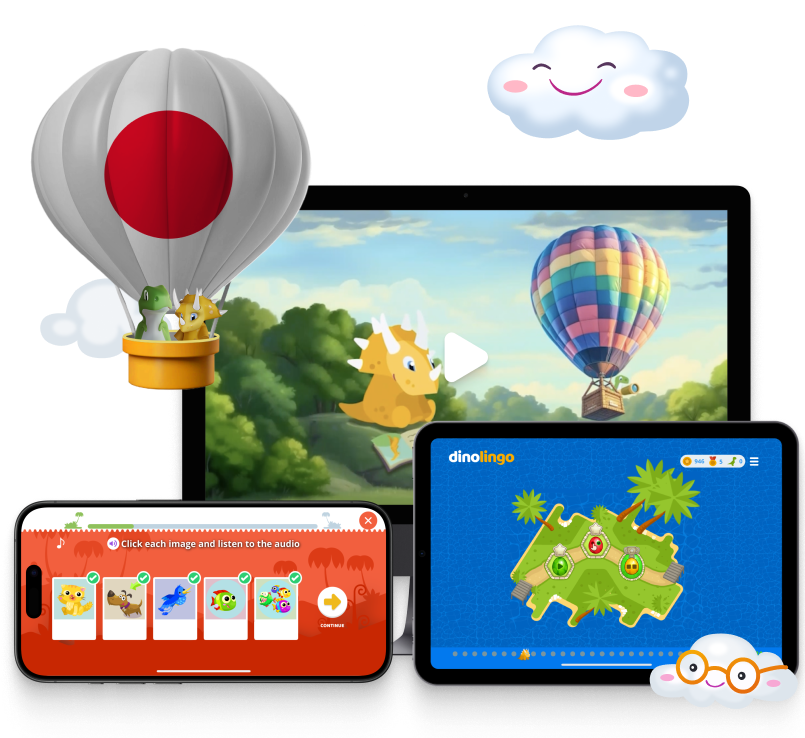
After your hands-on games, extend your daily rituals with Dinolingo. One family plan unlocks over 50 languages and 40,000+ interactive activities, including animated morning-and-night lesson modules, morning-routine videos, phrase quizzes, printable flashcards, and surprise badge rewards. Age-specific paths (Pre-readers 2–5, Elementary 6–10, Tween/Teen 11–14) reinforce each routine phrase you just practiced, while parents track progress in real time on a clean, ad-free dashboard.
Final Thoughts
Turning morning hellos and bedtime goodnights into Japanese moments makes language learning seamless and joyful. A few minutes each day dedicated to Japanese greetings and expressions turns routine into ritual. Blend these quick games with Dinolingo’s interactive follow-ups, and your family will soon greet each day and each dream with authentic Japanese phrases, ready to say おはよう with confidence and joy.
Sources