Surprising Dutch Fun Facts: Holland Like You’ve Never Seen It
The Netherlands may be a small country, but it has made a big impact on the world, especially in sports, culture, and history. The way Dutch people play, speak, and tell stories opens a window into a culture that is open-minded, proud, and full of surprises. Here are some fun facts, plus a closer look at how Dutch is spoken and one of the country’s most beloved folk tales, that make Dutch life and traditions so interesting.
Sports the Dutch Love: Soccer, Cycling, and Skating
Soccer is the most popular sport in the Netherlands. The Dutch national soccer team has reached the FIFA World Cup final three times: in 1974 (against Germany), 1978 (against Argentina), and 2010 (against Spain). Although they never won the title, their consistent success has placed them among the top teams in the world.
Cycling comes in second as a national favorite. With more bicycles than people, the Netherlands is famous for its bike-friendly roads and cycling culture. Speed skating is another popular sport, especially during the cold winters when frozen canals turn into natural rinks.
Amsterdam’s Open-Minded Spirit
Amsterdam, the capital of the Netherlands, is known for its tolerance and welcoming atmosphere. This spirit dates back to the 1700s, when the city became a safe place for refugees, artists, and thinkers escaping strict rulers in other European countries. As long as residents paid their taxes, they were free to live and think as they pleased. Today, Amsterdam still celebrates diversity and freedom.
How Dutch People Talk: Language, Expression, and Local Sound
That same open spirit shows up in the way Dutch people communicate. Understanding how they speak is a great way to explore the culture of the Netherlands. From formal greetings to regional accents, the way Dutch is spoken can vary widely depending on the context and location. Here’s what children, and their parents, should know when learning Dutch.
Formal and Informal Speech
In the Netherlands, people often use the formal words “U” (you) or “Uw” (your) when speaking to strangers, elders, or in professional settings. This shows politeness and respect. Children are usually taught to speak formally to older people, and in many cases, adults will continue using the formal tone unless invited to switch to informal speech.
Once a relationship becomes more relaxed or friendly, speakers may shift to informal terms like “je” or “jij” (also meaning “you”). But until that happens, Dutch people prefer to keep the formality in their conversations, especially older generations who were raised with these customs.
Regional Differences in Dialects
Although the Netherlands is a relatively small country, it has a surprisingly large number of dialects. There are more than thirty distinct ways of speaking Dutch across the country. These dialects are closely tied to the geography, history, and religion of each region.
Southern Netherlands: Below the major rivers (Rijn, Waal, and Maas), the population is historically Catholic and more culturally connected to Belgium and France. Dialects like Brabants, Limburgs, and Zeeuws are common here. These dialects often have softer tones and different word choices compared to standard Dutch.
Northern Netherlands: Above the rivers, the country has Protestant roots and cultural influences from Scandinavia. Dialects spoken in this part include Gronings, Drents, and Achterhoeks. These often sound stronger and sharper, and some words are unique to each province.
Friesland and the Friesian Language
In the northern province of Friesland, people speak a completely different language: Friesian. It is recognized as an official language in the Netherlands and has its own grammar and vocabulary. More than 400,000 people speak Friesian, and it is taught in schools alongside Dutch. Learning about Friesian offers a fun glimpse into the country’s linguistic diversity.
A Heroic Tale from Dutch Folklore
Beyond sports and speech, stories are a great way to teach children language and values. One of the most beloved tales in Dutch folklore is the story of Hans Brinker, a young boy who became a hero by saving his country.
The Story of Hans Brinker
One crisp autumn afternoon, Hans Brinker went for a walk with his friend Liesa. They picked flowers and enjoyed chocolate while relaxing in the grass. But the weather suddenly changed. A massive storm rolled in, and the waves began pounding against the dykes that protect the land from flooding. One dyke was close to collapsing. Without hesitation, Hans spotted a small hole and placed his finger in it to stop the water.
Liesa ran to the nearby village for help. Soon, strong workers arrived and repaired the dyke just in time. Thanks to Hans’s quick thinking and bravery, a major disaster was avoided. He was celebrated as a true Dutch hero. This story is often told to children to teach the values of courage, responsibility, and quick action.
Help Your Child Explore Dutch Sounds and Stories
To help kids get used to the different ways Dutch is spoken, you can listen to regional music, stories, and cartoons. Watching how people greet each other or how characters in a video use formal vs. informal speech is both fun and educational.
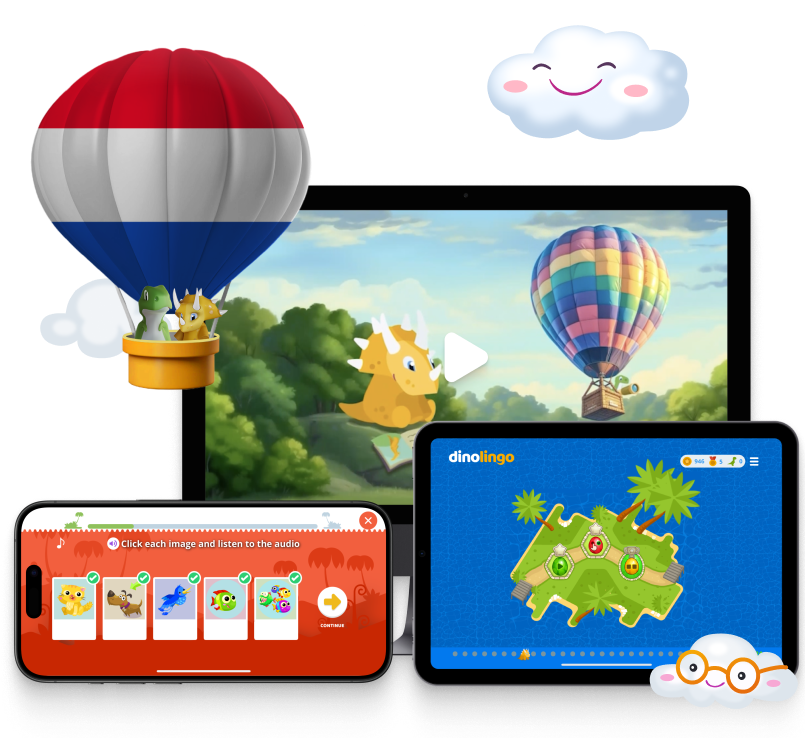
Dinolingo’s Dutch program makes this even easier. With animated lessons, children can hear proper pronunciation and learn new words in context. Whether your child is just beginning or already understands some Dutch, Dinolingo offers tools that encourage natural language use and cultural discovery. Let your child explore the sounds of Dutch, and maybe even pick up a regional phrase or two!
Learn Dutch the Fun Way
Want to help your child discover more about Dutch culture and language? Dinolingo’s Dutch program uses stories, songs, games, and cartoons to make language learning fun and engaging. It’s a playful way to explore both the Dutch language and the fascinating world of the Netherlands.