Why Dutch Kids Love the Word “Lekker”—And How You Can Use It Too
The Dutch word lekker is one of the most used and most loved words by kids (and adults!) in the Netherlands. It’s fun to say, easy to remember, and shows up in all kinds of situations. But it doesn’t just mean “tasty,” it means so much more! And lekker is just the beginning. From rhymes and slang to voice games and art talk, Dutch comes alive when kids learn it through play. This guide walks through the most joyful ways to help your child speak Dutch naturally, starting with that one beloved little word.
What Does “Lekker” Mean?
The basic meaning of lekker is “delicious” or “tasty,” but it’s used in many different ways:
- Lekker eten – Tasty food
- Lekker slapen – A good night’s sleep
- Lekker weer – Nice weather
- Lekker spelen – Fun playing time
It can describe anything that feels good, fun, or enjoyable. Kids use it constantly because it fits so many moments!
Why It’s Great for Young Learners
- It’s easy to say and repeat often
- It fits with everyday routines like meals, rest, and play
- It makes Dutch feel fun and expressive
Once kids learn lekker, they’ll start hearing it everywhere.
Activities to Learn & Use “Lekker”
“What’s Lekker?” Sorting Game. Give your child pictures or toy items and ask: Is dit lekker? (Is this lekker?). They can sort into two piles and say why. Great for food, toys, or weather pictures.
“Lekker Sentence Builder.” Help kids build short Dutch sentences using lekker: Ik slaap lekker, Het is lekker weer, De appel is lekker. Add drawings to make it visual.
Dutch Slang and Street Talk Kids Love
Once lekker feels natural, your child is ready for the rest of the playground vocabulary. Learning Dutch doesn’t stop at the classroom: kids also pick up fun and casual words from real-life conversations. Dutch slang and expressions make speaking feel natural, relaxed, and a lot more fun.
Slang helps kids understand native speakers better, feel confident using Dutch in social settings, and sound more like real Dutch kids. Just like in English, Dutch slang is playful and ever-changing. Use it in the right context, and it makes language more personal and engaging.
Popular Dutch Slang and Phrases for Kids
- Lekker! – Nice! Yummy! (used for food or even a good day)
- Cool! – Cool! (Same meaning as in English)
- Top! – Great! / Awesome!
- Doei! – Bye!
- Gezellig – Cozy, fun, or nice atmosphere (very Dutch!)
- Hé, wat leuk! – Hey, how fun!
- Chill – Relaxed, easygoing
- Te gek! – Awesome / Too cool
Start by using these in everyday conversation and repeat them often for fluency.
Street-Smart Learning Activities
“Slang Skit.” Let kids write and act out short scenes using Dutch slang words. For example, pretend friends meeting at school: Hoi! Hoe gaat het? Lekker! Acting makes the words memorable.
“Top or Not?” Game. Say Dutch phrases and let kids vote whether they’re slang or formal. Add sound effects or visuals to make it extra fun.
Let’s Rhyme in Dutch: Easy Poems and Word Games
Slang teaches kids how Dutch sounds in real life, and rhyming helps those sounds stick. Rhyming is a fantastic way for children to develop language skills. The rhythm, repetition, and melody of rhymes make Dutch words easier to remember. Plus, rhymes add an element of fun to everyday learning.
Rhyming teaches kids to recognize sound patterns, improve pronunciation, and remember words more easily. For young learners, especially ages 2 to 14, rhymes are a gateway to more confident speaking and listening.
Popular and Simple Dutch Rhymes
Here are a few classic Dutch rhyme lines that are easy to learn:
- Eén, twee, drie, vier – ik sta voor je deur! (One, two, three, four – I stand at your door!)
- Klap eens in je handjes, blij blij blij! (Clap your hands, happy happy happy!)
- In de maneschijn, in de maneschijn (In the moonlight, in the moonlight)
These are often paired with actions, helping reinforce meaning.
Interactive Rhyme Activities to Try
“Rhyme & Move” Game. Choose a rhyme and act it out. Kids can jump, clap, or spin whenever they hear rhyming words. This boosts listening skills and memory.
“Make Your Own Rhyme” Challenge. Give kids a Dutch word like boom (tree) and ask them to come up with rhyming words or silly poems: Boom, room, gnome! Even if some aren’t real Dutch words, the creativity is key.
Talk Back: Dutch Voice Practice Games
Rhymes give kids the words to say; voice games give them the courage to say them out loud. Speaking is one of the most exciting parts of language learning for kids. Voice practice not only improves pronunciation, but it also builds confidence. With the right games and tools, children can start using Dutch words and phrases out loud with joy.
Repeating words, answering questions, or acting out short conversations helps children practice pronunciation and intonation, strengthen memory through repetition, and feel more comfortable speaking in real-life settings. And when these activities are designed as games, they feel less like “studying” and more like play.
Fun Voice Practice Games
“Echo Me!” Say a Dutch word or phrase like Wat is dat? (What is that?) and ask your child to repeat it back exactly as you say it. Vary your tone, volume, or speed to keep it silly and fun.
“Question & Run” Game. Post simple questions around the room: Hoe heet jij? (What’s your name?), Wat zie je? (What do you see?). The child runs to a question, reads it out loud, and answers it using a full sentence.
From Tulips to Starry Nights: Speak Dutch with Art
Speaking practice gets even richer when there’s something beautiful to talk about. Art tells stories, and in Dutch, those stories become even more colorful! From tulip still lifes to Van Gogh’s dreamy skies, artwork gives kids exciting ways to learn and use Dutch in a creative, meaningful way.
Looking at art helps children describe what they see with new vocabulary, connect emotions to words, and practice sentence structure in a fun, creative context. It’s also a natural way to learn about Dutch culture and famous artists.
Fun Dutch Words from Art and Nature
- Sterrennacht – Starry night
- Tulp – Tulip
- Schilderij – Painting
- Kleuren – Colors
- Blauw / Geel / Groen – Blue / Yellow / Green
- Maan – Moon
- Bloemen – Flowers
- Kunst – Art
Try these words while looking at a painting or making one together!
Creative Art and Language Activities
“Dutch Art Talk.” Show a painting and talk about it in Dutch: Wat zie je? (What do you see?) Ik zie een gele maan en blauwe sterren. (I see a yellow moon and blue stars.)
“Make a Masterpiece.” Let your child paint or color their own version of a Dutch scene. Label each element in Dutch. For example: Dit is een schilderij met bloemen.
How Dinolingo Brings It All Together
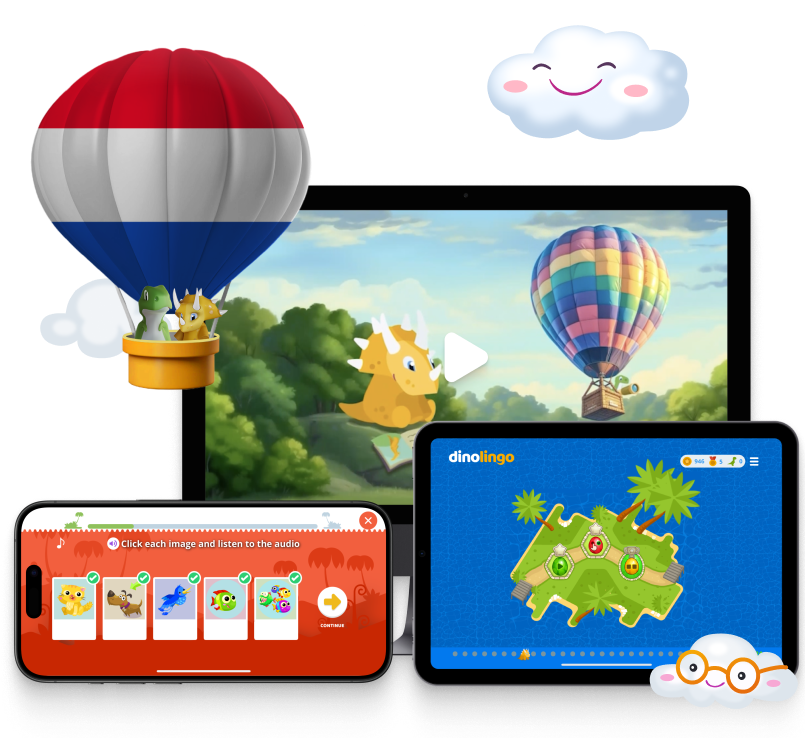
With playful videos, everyday scenes, and expressive vocabulary, Dinolingo makes words like lekker part of a child’s natural speech. The Dutch course uses repetition and real-life context so learners ages 2 to 14 understand not just what words mean but how they feel. It includes rhymes and songs designed to teach vocabulary naturally, so kids hear native pronunciation while engaging with fun characters and visuals, and the awards and rewards system keeps learners motivated as they rhyme, play, and grow their skills.
The course also includes natural-sounding dialogue, helping children pick up not only proper grammar but the everyday rhythm of real Dutch. With songs, stories, and voice-based repetition, Dinolingo makes Dutch speaking practice simple and natural, encouraging kids to talk back to characters, sing along, and repeat short phrases during interactive games. Offline worksheets and speaking prompts help reinforce these skills away from the screen. And by weaving cultural themes like art, nature, and colors into its lessons, the curriculum lets kids experience language through stories, images, and games, building a deep and joyful understanding of Dutch.
Final Thoughts
Lekker is more than just tasty, it’s a word for life’s best little moments. Paired with rhymes, slang, voice games, and art, it shows how Dutch becomes a language kids don’t just learn, they use. Whether your child is clapping out a rhyme, calling something te gek, echoing a phrase back to you, or describing a starry night, Dutch starts to feel natural, fun, and expressive. Once your child starts using these words, that joyful confidence carries into every conversation.
Sources