Zōsan: A Gentle Japanese Song About an Elephant’s Love
Zōsan is one of Japan’s most well-known and beloved nursery songs. With its short, easy-to-remember lyrics, this song tells a tender story of a baby elephant who is proud of its long nose, just like its mother’s, and expresses its love for her.
This song is perfect for very young children learning Japanese. Its repetitive structure and emotional warmth make it ideal for both language development and cultural learning. It is also part of a wider tradition of Japanese children’s songs that pair simple melodies with the seasons, animals, and family life, a tradition we explore further below with the winter favorite Yuki.
Zōsan: The Elephant Song
Japanese Lyrics
ぞうさん
ぞうさん
おはなが ながいのね
そうよ
かあさんも ながいのよ
ぞうさん
ぞうさん
だれが すきなの
あのね
かあさんが すきなのよ
Romaji (Latin Alphabet)
zōsan
zōsan
ohanaga nagai no ne
sō yo
kāsan mo nagai no yo
zōsan
zōsan
dare ga suki na no
ano ne
kāsan ga suki na no yo
English Translation (Simple Interpretation)
Elephant, elephant
You have such a long nose.
Yes, I do,
My mom has a long nose too.
Elephant, elephant
Who do you love most?
Well,
I love my mother.
Why This Song Is So Meaningful
At first glance, Zōsan may seem like just a cute animal song. But at its heart, it’s about admiration, pride, and unconditional love, values that resonate with both children and adults. It encourages kids to feel proud of their families and where they come from.
The simple vocabulary, zōsan (elephant), ohanaga (nose), kāsan (mother), and suki (like/love), makes it a great tool for building beginner-level Japanese language skills. The natural repetition also helps learners remember the new words more easily.
Yuki: Snow Magic from Japan
As winter arrives in Japan, children often sing ゆき (Yuki), a traditional song that captures the beauty of snowfall and the contrasting behaviors of pets on cold days. It’s a charming way to talk about nature, animals, and weather through rhythm and imagery.
This song is commonly sung in kindergartens and during winter festivals. It also introduces some delightful contrasts. While dogs run around excitedly in the snow, cats curl up warm indoors. These images make the song vivid and memorable for children.
Japanese Lyrics
ゆきやこんこ あられやこんこ
ふっては ふっては ずんずん つもる
やまも のはらも わたぼうし かぶり
かれき のこらず はなが さく
ゆきやこんこ あられやこんこ
ふっても ふっても まだふりやまぬ
いぬは よろこび にわ かけまわり
ねこは こたつで まるくなる
Romaji (Latin Alphabet)
yukiya konko, arareya konko
futte wa futte wa zunzun tsumoru
yama mo nohara mo wataboushi kaburi
kareki nokorazu hana ga saku
yukiya konko, arareya konko
futtemo futtemo mada furiyamanu
inu wa yorokobi niwa kakemawari
neko wa kotatsu de maruku naru
English Translation (Simple Meaning)
Snow and hail falling thickly,
Falling steadily and piling up,
The mountain and the fields wear white cotton hats,
Even the bare trees look as if they’re blooming.
Snow and hail falling thickly,
Still falling without stopping,
The dog runs happily around the garden,
While the cat curls up by the warm heater.
Why This Song is a Winter Favorite
Yuki isn’t just about snow. It helps children notice the natural world around them and understand different reactions to cold weather. The dog’s excitement and the cat’s coziness show two very different responses to winter, sparking conversations and vocabulary learning.
This song also introduces seasonal vocabulary like yuki (snow), inu (dog), neko (cat), niwa (garden), and kotatsu (a traditional Japanese heated table), making it a gentle way to learn new words in context.
Learning Japanese Songs with Dinolingo
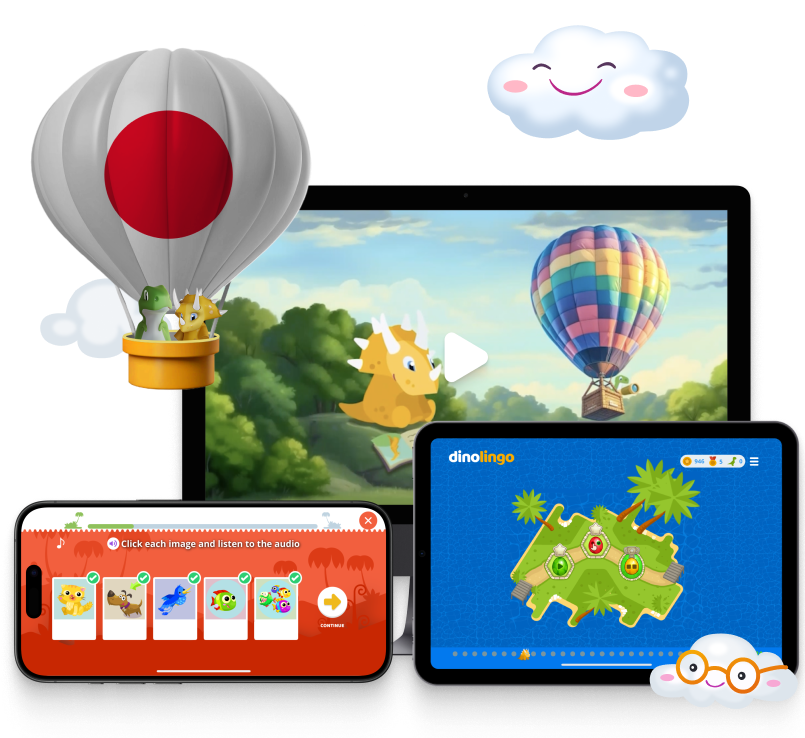
Songs like Zōsan and Yuki come to life in Dinolingo’s Japanese language program for kids. Designed for ages 2 to 14, Dinolingo includes songs, interactive videos, speaking practice, flashcards, and printable worksheets. Kids can learn animal names, emotions, seasonal words, and simple sentence structures through music and play.
These songs are brought to life with animations, winter-themed games, and storytelling. Learners can see snowy landscapes, hear clear native pronunciation, and interact with characters like dogs, cats, and elephants. The natural repetition in both Zōsan and Yuki makes them perfect first listening exercises for young ears.
Whether you’re using the web version or the iOS and Android app, Dinolingo makes learning Japanese fun, visual, and accessible. The platform also features parent dashboards, offline resources, and age-appropriate lesson plans for young learners at every stage, so it’s easy to stay on track whether you’re at home or in a classroom.
A Small Tune with a Big Heart
Zōsan is more than just a nursery rhyme, it’s a song about family, identity, and love. Singing this song helps children connect to the Japanese language in a warm, emotional way, while gently building vocabulary through repetition and rhythm. It’s a small tune with a big heart.
In the same spirit, Yuki helps children experience the calm beauty of a snowy day, Japanese style. With soft melodies and charming lyrics, it’s more than just a winter song, it’s a gentle journey into a season of wonder, language, and warmth. Together, these two songs offer young learners a heartfelt first step into Japanese culture and vocabulary.