Old but Gold: Timeless Children’s Games from Indonesia
In Indonesia, children enjoy many traditional games that are fun, creative, and full of cultural meaning. These games don’t require electronics or fancy equipment, just imagination, friends, and sometimes a few marbles or rubber bands. But play is only one part of the story. Indonesia is a colorful and diverse country made up of thousands of islands, each offering its own unique customs, food, music, and traditions. This guide takes you on a journey through the wonders of Indonesian culture, from beloved games and joyful tunes to tasty food, festive holidays, and fun facts, all in a way that is easy and exciting for kids to enjoy.
Traditional Games Kids Love
Indonesian children’s games are more than just fun. They teach sharing, teamwork, rhythm, and movement, and they bring kids together in schoolyards and at festivals across the country. Here are some of the most beloved games Indonesian children play.
Kelereng (Marbles Game)
Kelereng is a favorite pastime among boys in Indonesia. Known in English as “marbles,” this game is all about skill and precision. Players draw a circle on the ground and place their marbles inside. Then, each player tosses a second marble from outside the circle, and the one that lands farthest away gets to go first. The goal is to use that marble to knock others out of the circle, and the player who collects the most marbles wins. But there’s a catch: the striker marble must leave the circle after each shot, or the turn is over. It’s a fun and challenging game that can go on for as long as the players like.
Lompat Tali (Elastic Rope Jumping)
Lompat Tali is especially popular among elementary school girls. It’s similar to jump rope but uses a stretchy rope made from hundreds of rubber bands linked together. Two players hold the rope while others take turns jumping over it. The height of the rope increases with each round, making the game more exciting and tricky. Since it’s made from soft elastic, it’s also safer and less painful than regular jump rope. Kids laugh, cheer, and show off their jumping skills in schoolyards across the country.
Kuda Lumping (Bamboo Horse Play)
Kuda Lumping is a magical game that turns children into horseback riders, without real horses! These toy horses are made of painted bamboo, decorated with sequins and embroidery. Children ride or dance with them while pretending to be warriors or adventurers, acting out stories or just having fun. Kuda Lumping is often used during festivals, cultural parades, and holiday celebrations, sparking imagination and storytelling in young minds.
Music That Makes You Move
Indonesia is not only famous for its islands and games, but also for its beautiful music. Some of the most unique and oldest musical styles in the world come from this amazing country. These traditional tunes have been passed down from generation to generation, and even today, children and families enjoy them all across the islands. In fact, styles like gamelan and angklung date all the way back to the Bronze Age, over 2,000 years ago.
Gamelan: The Sound of the Islands
Gamelan is the most popular and well-known type of traditional music in Indonesia. It’s actually not just one instrument, it’s a whole orchestra made up of many instruments that are played by hitting them with wooden mallets, padded sticks, or small hammers. Each island in Indonesia has its own version of the gamelan, which makes it a very special part of local culture. Gamelan music has been part of Indonesian life for hundreds of years, and even though it was never written down, it has survived through memory and practice. The sound is gentle, calming, and full of history.
Angklung: The Bamboo Instrument
Another important and fun musical tradition is angklung music. Angklung instruments are made completely out of bamboo! Each one has two bamboo tubes of different sizes. When you shake the instrument, it makes a soft and unique sound. Every angklung plays just one note, so players need to work together as a group to create a full song and a joyful harmony. This teamwork makes angklung not just a musical performance, but also a fun and social experience for kids and adults alike.
Although many Indonesian kids also listen to pop or international music, traditional tunes like gamelan and angklung still hold a special place in their hearts. By learning and sharing these tunes, families in Indonesia continue to keep their culture alive for the next generation.
Delicious Foods and Simple Recipes
Indonesian food is full of flavor, spice, and color. Here are a few common dishes children love:
- Bakso: Tasty meatballs served in broth with noodles and vegetables.
- Nasi Goreng: Indonesia’s famous fried rice made with spices, egg, and prawns.
- Rujak: A fruit salad served with spicy peanut sauce.
Want to cook together at home? These easy recipes are a fun way to taste Indonesia:
- Mie Goreng: Stir-fried noodles with shrimp, chicken, and veggies.
- Peanut Butter Muffins: A sweet surprise in every bite with peanut butter centers.
- Sweet Potato Tart: Grated sweet potatoes steamed and served like cake.
- Indonesian Fruit Salad: A mix of tropical fruits, honey, lime, and peanuts.
What to Wear in Indonesia
Traditional Indonesian clothing is bright and beautiful, often featuring batik, a special patterned fabric. At home, boys often wear sarongs, and on special days they might wear batik shirts or traditional Javanese jackets. Girls wear kebaya blouses with bright batik sarongs. They often tie their hair in a bun and may wear a special shawl called a selendang.
Special Holidays and Festivals
- Children’s Day (July 23): A fun day filled with events and festivals to celebrate children’s rights and happiness.
- Sekaten Fair (February 15): Held in honor of Prophet Muhammad’s birthday, this fair has games, food, and cultural shows.
- Independence Day (August 17): Just like the 4th of July in the U.S., this day is full of flags, parades, and fireworks.
- New Year (January 1): Although not a major holiday in Indonesia, some families still celebrate with small festivals.
Important Manners and Customs
- Say “Selamat” with a handshake and a smile.
- Don’t give alcohol or non-halal food as gifts.
- Always offer gifts with your right hand.
- Wrap gifts in bright colors like red, green, or yellow.
- Formal meals require polite manners, especially during big celebrations.
Cool Facts About Indonesia
- It’s the fourth most populated country in the world.
- The name “Indonesia” means “Indian islands.”
- There are five main religions, with Islam being the largest.
- Indonesia is made of over 17,000 islands, and more than 6,000 of them are inhabited.
- Popular sports include football and badminton.
Must-Visit Places for Families
Jakarta: The capital city has malls, parks, tasty food, and fun for the whole family.
Sulawesi Island: Shaped like a flower, this island has mountains, lakes, and rainforests to explore.
Lombok Island: Known for its beaches and volcanoes, it’s a peaceful spot for parents and kids alike.
Playing and Learning the Indonesian Way
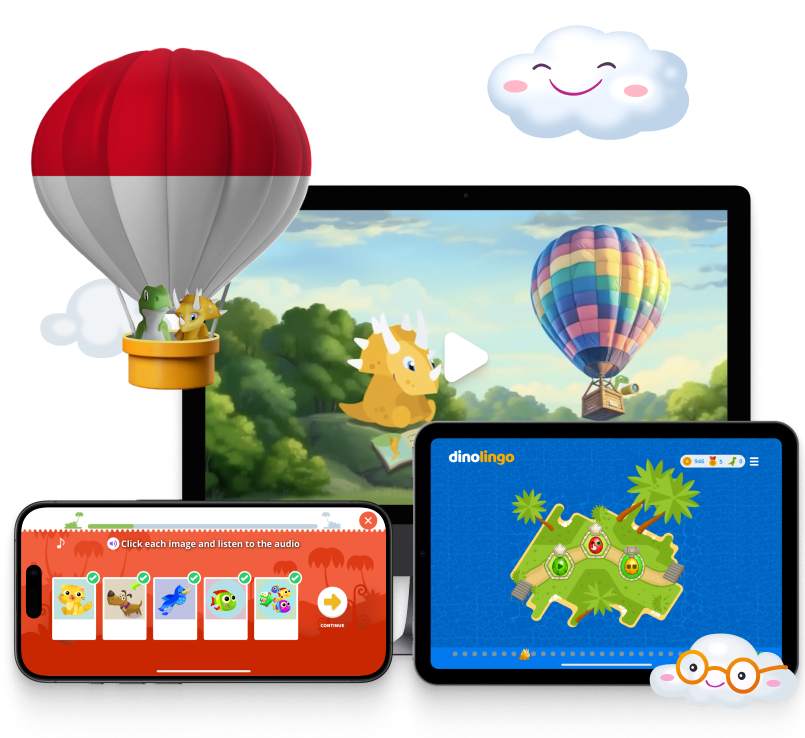
From tossing marbles and skipping elastic ropes to shaking an angklung and tasting nasi goreng, exploring Indonesia is a wonderful way for kids to learn the Indonesian language through play. Music is an especially powerful way to remember words, and tunes like gamelan and angklung make it even more fun. At Dinolingo, language learning is just as playful and exciting. Children ages 2 to 14 can explore over 50 languages, including Indonesian, through songs, games, stories, videos, printable worksheets, and interactive activities. Dinolingo works on the web, iOS, and Android, and includes rewards, offline options, and a parent dashboard for tracking progress.
Jump Into the Fun
Indonesia is a land full of color, taste, music, and play. Whether they’re tossing marbles, skipping elastic ropes, or galloping on bamboo horses, Indonesian kids enjoy a childhood full of joy and creativity. Why not try one of these games, recipes, or songs at home or in a language class? It’s a perfect way to combine movement, friendship, and learning, and to discover how kids around the world live, play, and celebrate every day.