Italian Folk Music for Kids—Songs, Stories, and Special Instruments
Italy is famous around the world for its beautiful music from grand operas to joyful folk tunes. Music is deeply woven into the culture of each Italian region, with different instruments, dances, and songs that reflect local traditions and history. And music is only one part of the story, because Italy is also a land of unforgettable food, festive celebrations, and a musical language that musicians everywhere still use today. This guide takes children on a tour through all of it.
A Country Full of Musical Traditions
Opera, one of Italy’s greatest gifts to the world, began in the 1500s and is still performed in magnificent theaters like La Scala in Milan. Alongside opera, classical music also flourished in Italy, with composers like Vivaldi and Verdi becoming internationally known.
But music in Italy isn’t just for grand stages, it’s part of everyday life, too. Across the countryside, especially in smaller towns and villages, people sing folk songs that tell stories about work, nature, love, and daily life. Different professions, such as fishermen, shepherds, and farmers, all had their own songs that were passed down through generations. In the north of Italy, even yodeling is part of traditional music!
Music in Celebrations and Daily Life
Many Italian songs are tied to seasons or special events. At Christmastime, traditional tunes are often played on the zampogna, a type of Italian bagpipe that fills the air with festive sounds. In churches, sacred music has been performed for centuries, not surprising, since most Italians belong to the Catholic faith.
For children, lullabies and playful songs are common in every region. These songs are not only fun but also a beautiful way to learn language and rhythm from a young age.
Unique Instruments of Italy
Italian folk music includes many special instruments that you might not see elsewhere:
- Zampogna – A traditional bagpipe, usually played during winter festivals or religious holidays.
- Tamburello (also called tamburini) – A drum with jingles, like a tambourine, perfect for rhythmic dances.
- Quartara – A clay wind instrument played by blowing across the top, mostly heard in southern Italy.
- Scacciapensieri – A tiny mouth harp made of metal, played by plucking. It’s common in northern Italy and Sicily and is known for its twanging, buzzing sound.
- Folk flutes and accordions – Often played in duets or with dancers, these are staples in village celebrations.
Each of these instruments adds a unique sound to Italy’s musical landscape, making every region feel like its own musical world.
The Italian Language of Music: Solfège and Musical Terms
Whether you are listening to a village folk tune or a grand opera, the words written in the music itself are almost always Italian. Italian musical terms form the universal language of music. From do-re-mi to allegro and forte, understanding these words empowers young musicians to read scores, follow instructions, and express emotion on any instrument.
Solfège Syllables (Il Solfeggio)
Do, Re, Mi, Fa, Sol, La, Si are the foundation for pitch recognition. Try this activity: sing the major scale using hand signs (the Kodály method) to anchor each syllable physically.
Dynamics (Le Dinamiche)
- Piano (p) – Soft.
- Forte (f) – Loud.
- Mezzo-piano (mp) / Mezzo-forte (mf) – Moderately soft / loud.
Activity: Play a simple melody, alternating soft and loud sections named in Italian.
Tempo Markings (Il Tempo)
- Largo – Broad, very slow.
- Adagio – Slow and stately.
- Andante – Walking pace.
- Allegro – Fast, cheerful.
- Presto – Very fast.
Activity: Clap or move to the beat at different speeds, labeling each pace in Italian.
Articulations and Expressions (Articolazioni ed Espressioni)
- Staccato – Detached notes.
- Legato – Smoothly connected notes.
- Crescendo – Gradually louder.
- Diminuendo – Gradually softer.
Activity: Perform short exercises on an instrument or with the voice, demonstrating each articulation.
Common Italian Terms in Sheet Music
- Da capo (D.C.) – Repeat from the beginning.
- Fine – The end.
- Al fine – To the end.
- Accelerando – Speeding up.
Learning Italian musical terms opens up a world of expressive possibilities. By combining solfège practice, dynamic games, and hands-on tempo activities, young learners build confidence and fluency in the universal language of music.
Tastes of Italy: Traditional Foods Kids Will Love
Music and food go hand in hand at every Italian celebration, so no tour of Italian culture would be complete without a trip to the table. When you think of Italy, one of the first things that probably comes to mind is pizza! Pizza is one of the most popular and well-loved foods in the world, and it was born in Naples, Italy, around 1860. Italian pizza is usually very thin and baked in a wood-fired oven, giving it a smoky, crispy flavor. Instead of being heavy with cheese, it often comes topped with fresh vegetables, thinly sliced meats like salami or ham, and tasty ingredients like artichokes and olives.
Another popular version of pizza is the calzone, which is like a folded pizza pocket stuffed with all your favorite fillings.
Italy is also famous for its pasta. There are more than 200 different pasta shapes, and each region has its own favorites. One well-known pasta dish is lasagna, made with layers of pasta, tomato sauce, meat, and cheese. Another delicious sauce is pesto, a green mix of basil, olive oil, herbs, and Parmigiano cheese, often served over spaghetti or gnocchi.
Italian food often includes fresh vegetables, seafood, and local herbs, making meals healthy and full of flavor.
When it comes to sweets, Italian treats are just as amazing. Kids (and grown-ups!) love gelato, a special kind of Italian ice cream. It’s smoother and creamier than regular ice cream because it’s made with more milk and less air. Italy also has wonderful baked desserts like panettone, a soft sweet cake with dried fruits, panforte, a rich fruit cake, and amaretti, crunchy almond cookies. Many of these treats, like panettone, appear at the very same Christmas celebrations where the zampogna plays, tying Italy’s music and food together in one festive season.
Bring Italian Culture to Life
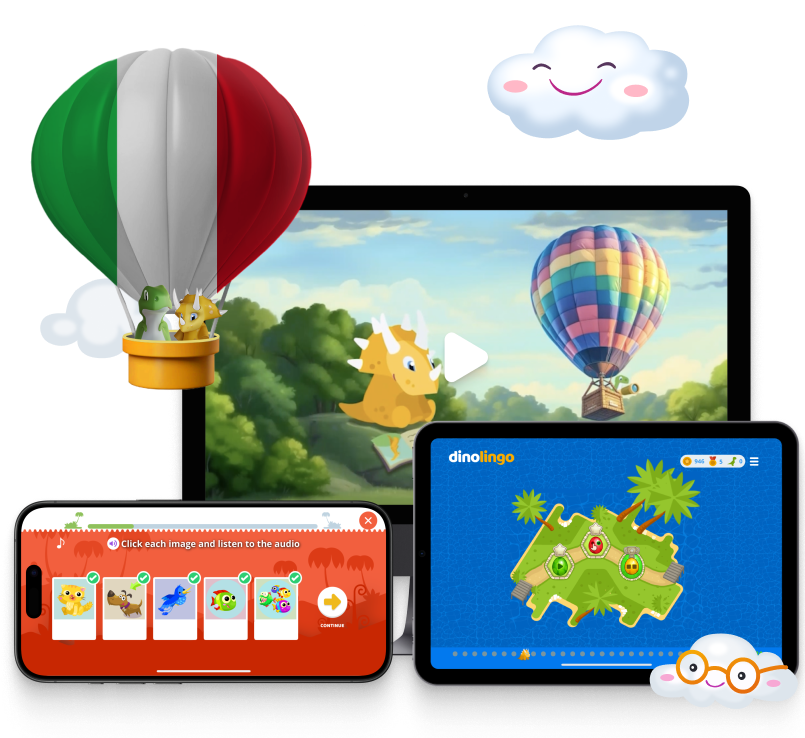
If your child is curious about Italian music, food, and culture, they can experience it firsthand while learning the language through stories, songs, and games at Dinolingo. The Italian for Kids course lets young learners listen to solfège examples, practice dynamic contrasts, explore Italian culture and food, and earn badges for mastering each category, all designed to make learning Italian as fun as eating gelato.