Who Are the Serbs?
The Serbs are a Slavic people living in Eastern Europe. That means they are related to other Slavic nations like:
- Russians
- Polish
- Czechs
- Slovaks
- And several others!
Because of this, people from these countries can often understand each other a little when they speak. But Serbs are even more closely related to their neighbors:
- Croats
- Bosniaks
- Montenegrins
In fact, these groups speak in such a similar way that a visitor might think they’re all speaking the same language!
What Makes the Serbian Language Unique?
One very special thing about the Serbian language is that it can be written in two alphabets:
- Cyrillic, the traditional Serbian script
- Latin, the same script used in English and many other languages
Serbs are among the few people in the world who can easily read and write in both! This makes learning and communication even more flexible and fun. And one of the tastiest ways to explore the language is through food, because Serbian cuisine is full of warm, flavorful words that kids love to say.
Yummy Words Kids Should Know
From homemade pastries to grilled street snacks, Serbian food gives children plenty of fun vocabulary to collect. Here are some tasty Serbian snacks and their names:
- ćevapi, small grilled sausages
- kiflice, crescent-shaped rolls, often filled with jam or cheese
- pljeskavica, Serbian burger-style patty
- pita, savory pastry with cheese, potatoes, or spinach
- ajvar, roasted pepper spread
Kids learning these words not only expand their vocabulary, they also connect with daily Serbian culture and family traditions.
Food Idioms and Sayings
Serbian also has fun expressions tied to food. For example:
- “Hleb i igra”, “Bread and games” (simple pleasures)
- “Sladak kao med”, “Sweet as honey”
- “Da jedeš koliko je sladak!”, “So cute you could eat them up!”
These sayings are full of warmth and perfect for playful language learning.
Serbian Life in the Balkans: Food, Family, and Fruit
Serbia is located in a region called the Balkans, a beautiful area full of mountains, rivers, forests, and fields. Most Serbs live in Serbia, but many also live in neighboring countries like Macedonia, Bulgaria, Romania, Hungary, and especially Croatia, Montenegro, and Bosnia and Herzegovina.
This land is perfect for growing fruit, and Serbian families have been doing it for generations.
Orchards and Autumn Adventures
Serbs are especially known for growing:
- Apples
- Plums
In the autumn, families often go to the countryside to visit their grandparents and help them pick plums from the orchard. This becomes a special family activity that brings everyone together.
In winter, the grown-ups, especially grandfathers, use small home distilleries to turn the plums into slivovitz, a famous homemade plum brandy for adults. While children don’t drink the brandy, they enjoy the gathering, storytelling, and laughter that fills the home during this traditional season.
What Does Serbia Make and Share With the World?
Serbia is a country that not only grows delicious food but also makes and exports important products to other countries. But what does “export” mean? Let’s find out together!
What Does “Export” Mean?
When a country exports something, it means that it sells its products to other countries. Serbia exports many different things all around the world. Some of the biggest regions that buy from Serbia include the Middle East, Africa, North America, and Asia.
High-Tech and Helpful: Military Equipment
One of Serbia’s largest industries is producing military equipment. This includes machines and tools used by different countries’ defense systems. While this may sound very grown-up, it shows that Serbia is known for its advanced technology and engineering skills.
Delicious Fruits and Vegetables
Beyond the apples and plums grown in family orchards, Serbia is also known for its wider fruit and vegetable farming. The country grows large amounts of:
- Potatoes
- Tomatoes
- Peppers
But here’s a fun fact: Did you know that Serbia grows one-third of the world’s raspberries? That’s right! Serbia is one of the biggest exporters of frozen fruit, and its raspberries are enjoyed in desserts and snacks around the world.
Fun Activities to Try at Home
Once children know a handful of Serbian food words and sayings, a few playful games help the new vocabulary stick.
Snack Word Bingo
Make bingo cards with Serbian food words. Call out each word and let kids cover the matching snack picture.
Food Phrase Charades
Act out a Serbian food saying and let others guess what it means or try to say it back in Serbian!
Language, Culture, and Family Fun with Dinolingo
Learning about the Serbian language and lifestyle helps children discover how people live, speak, and celebrate in other parts of the world. When kids learn a new language, they also get to learn about how that country helps the world. Whether it’s growing fruit, inventing machines, or building new things, learning the local language opens a door to understanding real life in that place. It also shows how language and tradition go hand in hand, especially in family settings.
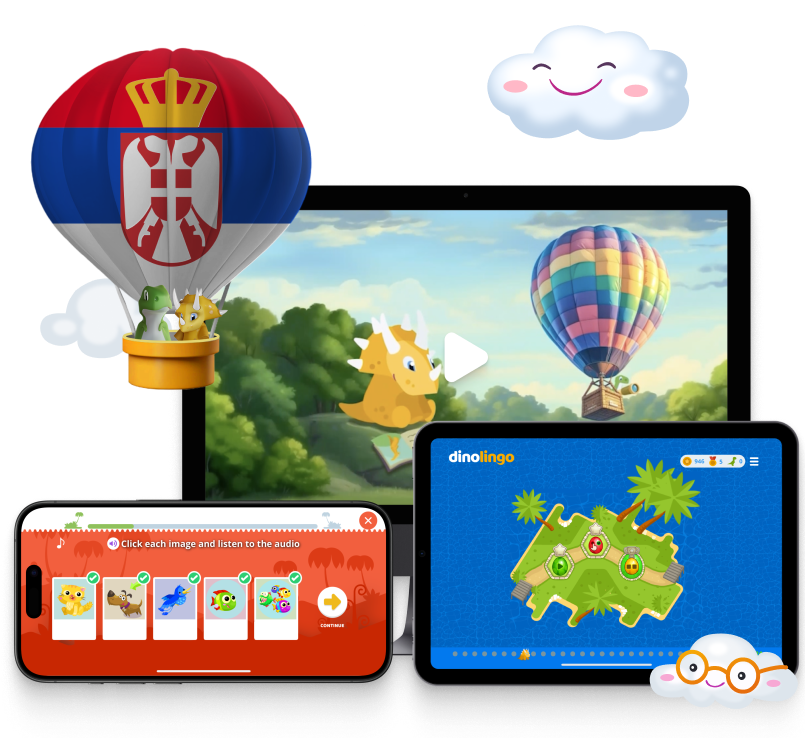
With Dinolingo, children ages 2–14 can learn Serbian and 50+ other languages through exciting and fun resources like interactive games, songs, animated stories, food-themed videos, and printable worksheets. Dinolingo makes it easy to explore the world, one word at a time, on the web, iOS, or Android. Whether your child is just beginning or already learning, Dinolingo offers age-based learning paths, surprise rewards, and a parent dashboard that make language learning both personal and joyful for the whole family.