What Are the Best French Learning Apps for Kids?
There are a lot of apps and websites that promise to teach French for kids, but which are the best? Below you’ll find a curated list of the best French learning websites and apps for kids, followed by a practical guide on how to get the most out of them. Choosing the right tool is only half the journey: how your child uses it, balancing watching and listening with speaking and doing, is what turns exposure into real fluency.
The Best French Learning Apps and Websites for Kids
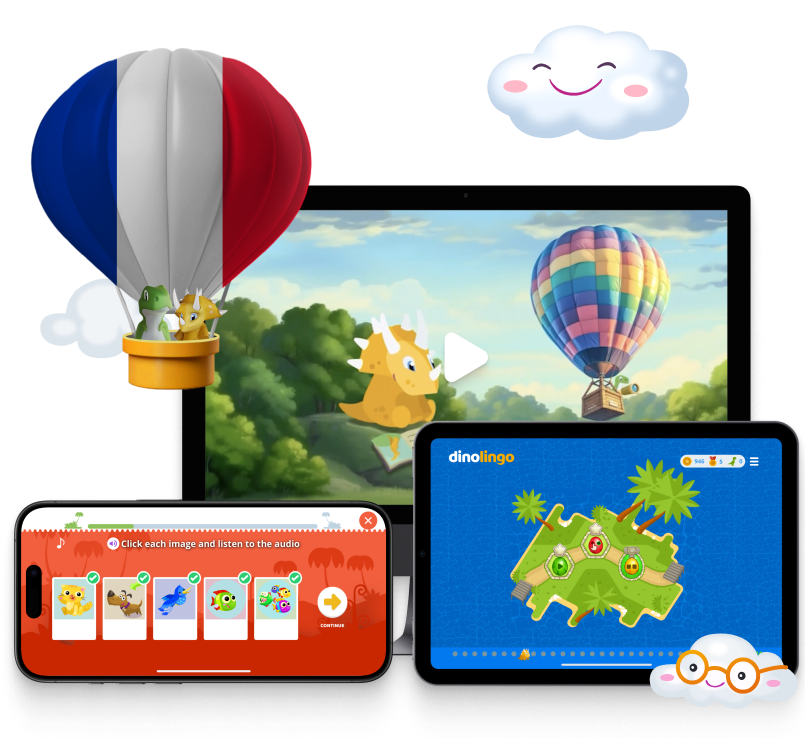
- Dinolingo: DinoLingo has been around since 2010, it uses the total immersion method with fun, animated characters. The videos keep kids entertained, they’re immersed in the French language right away. DinoLingo will capture children’s attention, use repetition, and quiz them so they’ll be encouraged and excited to speak the new language almost immediately.
- Muzzy BBC: Muzzy BBC is designed for young children by the BBC. Their videos follow an animated character called Muzzy and her friends. They also use the repetition method.
- Little Pim: Little Pim is for young kids ages 0-6. It was created by moms, teachers, and scientists to ensure your children will learn French effectively. They have five minute animated and live-action videos that you can watch with them.
- Duolingo: DuoLingo is free and for older children. It feels like a game to kids, but it’s more than that. Each challenge is actually a new skill. It keeps students competitive because they can lose lives and earn points. The site also created an app for younger kids to use on the go.
- Time4Learning: This is a creation by Rosetta Stone to appeal to younger generations. Time4Learning has four different curricula to choose from: preschool, elementary, middle, or high school. These are made up of five levels. Each level has four units. So, kids will be sure to learn a lot about the French language.
- Babbel: Babbel is not designed specifically for kids, but older children could get a lot out of it. They put users into realistic dialogue situations and also try and learn the user’s specific interests to make learning French a more enjoyable task.
- YouTube Kids: YouTube recently created an app that can also be used on your computer just for kids. It sensors adult content out of its algorithm, so you can be sure your child is not exposed to mature material. Hundreds of teachers, tutors, and vloggers post videos about the French language and target them towards a younger audience. We recommend these videos as supplementary resources.
Dinolingo has been around since 2010 and uses the total immersion method with fun, animated characters. The videos keep kids entertained while immersing them in French right from the start. If you’re looking for French lessons for kids, Dinolingo offers a playful yet structured learning environment with stories, songs, quizzes, and games that encourage speaking and comprehension almost immediately.
Active vs. Passive Learning: Getting the Most From These Tools
Picking a great app is the first step, but how your child uses it determines the results. Not all learning activities yield the same outcome. Active learning, where children engage, produce, and reflect, builds stronger language connections than passive intake alone. Yet a balanced approach that includes both methods can maximize engagement and retention.
Why the Distinction Matters
Passive learning (listening to songs, watching videos, reading) provides vital input and exposure to pronunciation, rhythm, and vocabulary. Active learning (speaking, writing, games, projects) forces learners to retrieve, manipulate, and apply language, solidifying neural pathways.
Passive Learning: Nourishing the Ear and Eye
Kids absorb French naturally through storytime, songs, and cartoons. For example, playing a short animated clip in French helps them tune into native speech patterns. Reading illustrated books builds sight-word recognition. While passive activities develop comprehension, they often lack the production practice essential for confident speaking.
Active Learning: Speaking, Writing, and Doing
Active exercises prompt children to use French in meaningful ways:
- Role-play a market scene, asking and answering questions: “Je voudrais un croissant.”
- Write a one-sentence journal entry: “Aujourd’hui, j’ai joué au parc.”
- Teach a sibling or plush toy a new word, since explaining cements memory.
Active methods require effortful retrieval and provide feedback opportunities, so mistakes become teachable moments.
Blending Both for Optimal Progress
- Input + Output Loops – After watching a short French cartoon, pause and ask your child to recount the plot in French (forced output).
- Echo & Expand – Play a Dinolingo story lesson, have kids echo lines (passive to active), then create their own next sentence.
- Project-Based Learning – Combine reading an illustrated recipe with cooking dialogue practice: read (passive), then role-play the chef-client exchange (active).
Dinolingo’s Role in Balancing Modes
Dinolingo’s interactive features seamlessly blend passive and active learning. Bite-sized videos and songs build listening comprehension, while mic-based quizzes, drag-and-drop activities, and live pronunciation meters turn input into output. Progress is tracked on the Parent Dashboard, highlighting both exposure time and production scores.
Quick Weekly Plan (20–30 min/day)
- Monday: Story video + echo practice
- Tuesday: Vocabulary song + flashcard quiz
- Wednesday: Dinolingo interactive lesson + role-play
- Thursday: Reading + journal entry
- Friday: Game-based review + badge celebration
- Weekend Bonus: Family shadowing walk, listen to a French podcast and shadow key phrases while walking.
Final Thoughts
The best French learning app for your child is the one they’ll use consistently, and the best results come from how you use it. Active learning cements language through use, while passive learning supplies the essential input. By weaving both into short daily routines, and leveraging French lessons that integrate games, stories, and pronunciation checks, you ensure your child’s French journey is both effective and fun.
Sources