How to Say “Hello” in Bulgarian (And Sound Like a Local!)
Saying “hello” is one of the first things we learn in any language and in Bulgarian, it’s fun to say! Whether you’re visiting Bulgaria, meeting someone new, or just exploring the language from home, learning greetings is a great way to start. This guide takes you on a full journey through the Bulgarian language and culture: greetings, the Cyrillic alphabet, numbers, everyday words, music and myths, folktales and games, food and festivals, plus plenty of ideas for teaching Bulgarian at home.
The Word for Hello in Bulgarian
In Bulgarian, the most common way to say hello is “Zdravey” (Здравей). It’s used with friends, family, and anyone close to your age. If you’re greeting more than one person, say “Zdraveyte” (Здравейте). This version is more polite and formal.
It may look tricky to pronounce at first, but kids catch on quickly! Try saying it slowly: z-drah-VEY. The “zd” sound at the beginning is new for many English speakers, which makes it a fun challenge!
Other Friendly Words
- Dobro utro (Добро утро) = Good morning
- Dobar den (Добър ден) = Good day
- Leka nosht (Лека нощ) = Good night
Greetings aren’t just words, they show respect, warmth, and connection. In Bulgarian culture, saying hello with a smile is a great way to make friends and show kindness.
Reading Bulgarian: The Cyrillic Alphabet
The Bulgarian alphabet may look like a secret code, but it’s actually easy to learn once you know the steps. Bulgarian uses the Cyrillic alphabet, which has 30 letters. Some look like English letters but sound totally different, while others are brand new shapes with sounds all their own. Learning them is like solving a puzzle, and it opens the door to reading, writing, and speaking Bulgarian with confidence.
Step 1: Get to Know the Letters
Start with a few letters that map closely to familiar sounds:
- А а = A as in “apple”
- Б б = B as in “bat” or “ball”
- В в = V as in “van”
- Г г = G as in “go”
- Д д = D as in “dog”
Then meet some special letters with sounds that are extra fun to say:
- Ж ж (Zh) = like the “s” in “treasure,” a buzzy sound
- Ц ц = like the “ts” in “cats”
- Ш ш = like the “sh” in “shoe”
- Щ щ (Sht) = a unique combo that sounds like “sht,” like “shhh + t”
- Ч ч (ch) and Ю ю (yu) = playful sounds found in many everyday words
Step 2: Sound It Out
Bulgarian is a phonetic language, which means words are written the way they sound. Once kids learn each letter’s sound, they can start reading real words right away!
Step 3: Practice with Fun Words
Try easy words built from letters you already know:
- мама (mama) = mom
- тато (tato) = dad
- котка (kotka) = cat
- снежинка (snezhinka) = snowflake
- жаба (zhaba) = frog
The letters feel like a secret code at first, but once kids learn them they can read signs, books, and names in Bulgarian. It builds confidence and adds excitement to every lesson.
Counting in Bulgarian: 1 to 10
Numbers are one of the best places to start when learning a new language. In Bulgarian, counting from 1 to 10 is fun, musical, and easy to remember with just a little practice. Counting also helps kids get used to the rhythm of the language and gives them words they’ll use every day, whether playing games, sharing snacks, or doing crafts.
- 1 – едно (edno)
- 2 – две (dve)
- 3 – три (tri)
- 4 – четири (chetiri)
- 5 – пет (pet)
- 6 – шест (shest)
- 7 – седем (sedem)
- 8 – осем (osem)
- 9 – девет (devet)
- 10 – десет (deset)
Try clapping or jumping while saying each number to help remember the sounds!
Everyday Words: From Sofia to the Sea
Bulgaria is full of exciting places and colorful words. From the bustling streets of Sofia to the peaceful Black Sea coast, this country offers kids lots of fun language to learn. Let’s take a little trip through Bulgaria with words!
City Life: Words from Sofia
Sofia (София) is the capital of Bulgaria. It’s a big city with parks, schools, and old buildings. Some fun city words include:
- ulitsa (улица) = street
- park (парк) = park
- uchilishte (училище) = school
- ploshtad (площад) = square
Kids in Sofia walk to school, play in the park, and meet friends in the square. Try saying these words out loud!
By the Sea: Words from the Coast
Bulgaria’s Black Sea coast is sunny, warm, and perfect for learning new words:
- more (море) = sea
- pyasak (пясък) = sand
- zaliv (залив) = bay
- kula (кула) = tower
Many families visit the beach during the summer. Imagine building a sandcastle and saying “pyasak” with each scoop of sand!
Bulgarian Culture: Music, Myths, and Magic
Learning a language isn’t just about words, it’s also about discovering the stories, songs, and traditions that bring it to life. Bulgarian culture is full of rich folklore, lively music, and magical customs that help kids connect with the language in fun and meaningful ways.
Magical Bulgarian Myths
Bulgarian legends are filled with heroes, dragons, and mysterious creatures. One famous tale is the story of Krali Marko, a strong and kind-hearted hero who protects the land. Kids love these stories because they’re exciting and full of imagination.
Music That Makes You Move
Bulgarian folk music uses special rhythms and instruments like the gaida (bagpipe) and kaval (wooden flute). Songs are often about nature, family, or celebrations, and many include group dances called horo. These songs are not only fun to hear, they also help kids pick up sounds, rhythm, and vocabulary without even realizing they’re learning!
Colorful Festivals and Celebrations
Bulgaria is a country full of lively traditions, exciting festivals, and joyful holidays. Each celebration has its own meaning and story, helping children and adults stay connected to nature, history, and each other. Let’s explore three of the most beloved Bulgarian celebrations.
Kukeri: Dancing Away the Evil Spirits
In January, many Bulgarian villages come alive with a fascinating ritual called Kukeri. This celebration is all about chasing away bad spirits and bringing good fortune for the new year.
Men wear large, colorful costumes that cover their entire body. The most interesting part is the wooden animal masks and big bells tied to their belts. As they walk and dance through the streets, the jingling of the bells and their mysterious appearance are believed to scare away any evil spirits hiding nearby.
Kukeri is not only fun to watch, but also a way for people to wish for a good harvest, health, and happiness during the year. It’s one of Bulgaria’s most exciting winter traditions, full of music and laughter.
Baba Marta Day: Welcoming Spring with Red and White
On March 1st, Bulgarian people celebrate Baba Marta, which means “Grandmother March.” This lovely tradition marks the end of winter and the beginning of spring.
People exchange small red-and-white bracelets or dolls called martenitsi. They tie them on their wrists, backpacks, or trees. These little decorations are symbols of health, happiness, and a fresh start. When the first stork or blooming tree is seen, the martenitsa is removed and hung on a tree as a wish for good luck. If you ever visit Bulgaria in early spring, don’t be surprised to see trees “wearing” bracelets, it’s part of this heartwarming tradition!
May 24: Celebrating Letters, Language, and Learning
In Bulgaria, May 24 is a very special day. It’s called the Day of Bulgarian Education and Culture and the Slavonic Alphabet. On this national holiday, people celebrate the beauty of their language, culture, and literature.
The day honors Saints Cyril and Methodius, who created the first version of the Cyrillic alphabet. This alphabet is used not only in Bulgaria, but also in Russia and many other countries. These two brothers are called the Apostles of the Slavs, and their work helped many people read and write in their own language for the first time. On this day, schools, libraries, and cultural centers across Bulgaria host events, music, and parades. It’s a proud moment for all Bulgarians to remember their roots and celebrate knowledge.
Folktales and Games Bulgarian Kids Love
Stories and games can teach us a lot about a country’s culture. In Bulgaria, children grow up listening to tales filled with wisdom and playing outdoor games that bring friends together.
The Sweetest Fruit: A Story of Wisdom
Once upon a time, a father had three sons. He loved them all very much, but he didn’t know which one should inherit his fortune after he died. To decide, he gave each of them a bag of gold and asked them to go find the sweetest fruit in the world. Whoever brought back the most precious fruit would earn the inheritance.
The oldest son returned first. He had found white grapes and said, “These are the sweetest fruit.” The middle son came back next. He had traveled far south and brought bananas, oranges, and dates. “These fruits are rare and delicious,” he said proudly.
But the youngest son had stayed home. Instead of buying fruit, he spent his gold on books and went to school. When he returned, he said, “Father, I did not bring fruit you can eat, but I brought something sweeter: knowledge.” The father smiled and hugged him. “You have chosen wisely,” he said. “There is no fruit sweeter than learning. You shall inherit everything I have.” This story reminds Bulgarian children that education is one of the greatest treasures in life.
Policemen and Thieves (стражари и апаши)
This is one of the most classic Bulgarian games. Kids split into two teams: one team is the policemen, and the other is the thieves. The policemen chase the thieves and try to catch them all. Once a thief is caught, they must say a secret password made up by their team. After everyone is caught, the teams switch roles and the game starts again. It’s full of running, laughter, and teamwork.
Sudge (садже)
Sudge is a fun name-changing game that kids play with a ball. One player throws the ball to someone and says something like, “Your name will be Eliza.” If the other player wants that name, they catch the ball. If they don’t like it, they throw it back. At any point, someone can say “sudge,” which means you get to choose your own name instead. If you don’t say anything, you keep your current name. It’s a simple game, but it always makes everyone laugh and be creative with funny names.
Bulgarian Food and Daily Life
Bulgaria is a country full of traditions, delicious foods, and interesting customs. From tasty breakfasts to everyday habits, here is a taste of Bulgarian life in a way that’s fun and easy to understand.
What Do Bulgarians Eat?
Bulgarian cuisine is similar to the food in other Balkan countries. Thanks to the warm climate, people eat many vegetables, herbs, and fruits, and it’s common to enjoy a salad with every meal. A typical breakfast includes banitsa, a warm pastry filled with cheese or meat. It’s usually eaten with yogurt or boza, a malt drink made from maize or wheat with a sweet and sour taste.
Lukanka is a special type of Bulgarian salami that is flat and flavorful. Sirene, a white cheese similar to feta, is used in many dishes including the popular Shopska salad, made with tomatoes, cucumbers, onions, and peppers. Because of Bulgaria’s long history with the Ottoman Empire, Turkish foods like doner kebab and baklava are also popular.
Traditional Bulgarian Clothing
Different regions in Bulgaria have different styles of traditional clothing. Men often wear black or white trousers, a white shirt, a bright sash, a black lambskin hat, and leg wraps or socks. Women’s outfits include aprons or tunics, a belt, a headdress, socks, and sometimes a vest or overcoat. The patterns and colors often show where someone is from.
Communication and Family Values
In Bulgaria, nodding means “no” and shaking your head side to side means “yes,” the opposite of most places! People speak loudly and stand close when talking. Family is very important. Often, several generations live together, and grandparents help raise children. Young couples may live with parents until they get their own home, and elderly family members are cared for by the younger generation.
Amazing Bulgarian Facts and Famous Places
Amazing Bulgarian Facts
- The first electronic computer was invented by John Vincent Atanassoff, who was Bulgarian.
- Bulgaria produces about half of the world’s rose oil, used in famous perfumes.
- The oldest gold treasure in the world was found in Varna.
- Peter Petroff, a Bulgarian, invented the first digital wristwatch.
- Bulgarian singers like Boris Christov and Raina Kabaivanska are world-famous.
- A Bulgarian folk song was sent into space on the Voyager spacecraft as a sound of Earth.
Famous Places in Bulgaria
- Plovdiv: One of Europe’s oldest cities, with Roman ruins and an ancient theater.
- Varna: A seaside city with summer festivals and beautiful beaches.
- Burgas: Hosts a popular music event called “The Spirit of Burgas.”
Best Methods to Teach Children Bulgarian
Learning Bulgarian can be a joyful and memorable journey for children, especially when it includes stories, songs, play, and real-world experiences. Whether you’re a parent, caregiver, or teacher, there are many ways to make language learning a part of everyday life. Here are creative and practical ideas to help your child fall in love with Bulgarian.
Start with Online Bulgarian Lessons for Kids
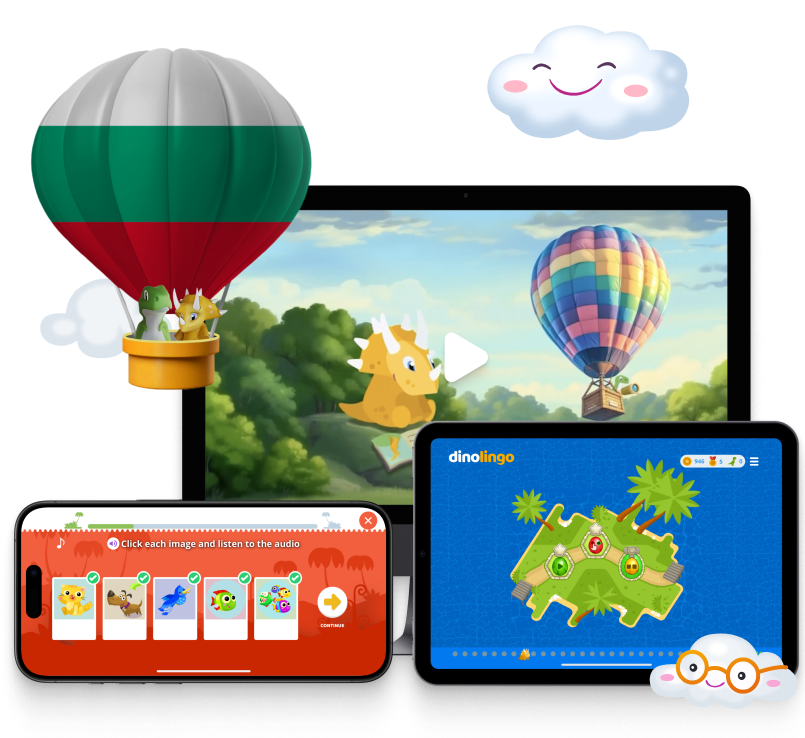
A great starting point is Dinolingo, which offers interactive Bulgarian lessons for children ages 2–14. Through videos, songs, stories, worksheets, and games, kids learn vocabulary and grammar in a playful environment. It’s available on web, iOS, and Android, and includes offline activities and a parent dashboard to track progress.
Make Reading a Daily Habit
Reading storybooks and fairy tales in Bulgarian builds vocabulary and sparks imagination. You can:
- Find Bulgarian books online or at your local library
- Choose books with strong illustrations and talk about the pictures together
- Use different voices for each character
- Encourage your child to act out their favorite scenes or change the story’s ending
Use Puppets, Toys, and Play
Turn your child’s favorite plush toy into a Bulgarian-speaking puppet to act out stories or daily routines, introduce new vocabulary, and play finger puppet games during songs. This type of play helps develop both language and motor skills. Games make practice stick, too: count from 1 to 10 then up to 20 during hide and seek, count backwards, or say “ready or not” in Bulgarian before seeking. Board games like Snakes and Ladders, Memory, and Go Fish are great for language learning, and flashcards help kids match words with pictures or sounds.
Sing, Watch, and Listen
Music is a powerful memory tool. Sing along to Bulgarian children’s songs or nursery rhymes, add hand motions, and host fun “performance nights.” Cartoons are perfect for understanding tone, emotion, and story, so look for Bulgarian-language cartoons, YouTube playlists, and learning videos. Even if kids don’t understand every word, they’ll begin to absorb the sounds and rhythm of the language.
Learn Through Everyday Life
Bring Bulgarian into daily routines. Go to the zoo or look through animal books and say the animals’ names in Bulgarian, adding colors and adjectives. Cook Bulgarian recipes together while saying ingredients and steps out loud. Decorate your home with themed flashcards for animals, fruits, and numbers, pick a “word of the day,” and let your child decorate a personal Bulgarian notebook for new vocabulary. Visit cultural centers, restaurants, libraries, or local parades, and invite Bulgarian-speaking relatives or friends to chat or video call. These real-life conversations are priceless for language development.
Track Progress and Celebrate Goals
Use a progress chart with stickers to track the words and phrases your child has mastered. Celebrate every milestone with a hug, a high five, or a small prize. Setting monthly or yearly language learning goals helps both you and your child stay focused and motivated.
Creative Activities to Try at Home
Pull these hands-on activities into your week to make every theme above come alive:
- Greeting Practice Circle: Take turns greeting each other in Bulgarian using different times of day. Add handshakes, waves, or silly bows!
- Hello Craft: Make a colorful poster with the word “Zdravey” in big letters and decorate it with drawings of people saying hello.
- Alphabet Letter Art: Choose a favorite Cyrillic letter like Ж or Щ, draw it big, and decorate it with glitter, stickers, or shapes that match its sound.
- Sound Hunt Game: Pick a letter and find things around the house that start with that sound (Hint: Ж = жаба = frog!).
- Number Hop Game: Write Bulgarian numbers 1–10 on paper, place them on the floor, call out a number, and hop to the right one!
- Word Map Adventure: Draw a simple map of Bulgaria with Sofia, the beach, and a mountain, then add words like “ulitsa” or “more” near each place.
- Make Your Own Kukeri Mask: Use paper, yarn, and markers to create a fun mask, then put on music and dance to chase away “bad spirits!”
- Sing and Dance Horo Style: Watch a video of a traditional horo dance, then create your own mini version with friends or family.
Start Learning Bulgarian with Dinolingo
Understanding a country’s traditions makes learning its language even more exciting. With Dinolingo’s Bulgarian course, kids aged 2–14 can learn greetings, the Cyrillic alphabet, numbers, and real-world vocabulary through fun videos, interactive games, songs, folktales, and printable flashcards. Each activity helps reinforce how and when to use words like “zdravey” in real life.
The program is available online and on iOS and Android, with offline worksheets and a parent dashboard to track progress. Whether you’re learning at home or on the go, Dinolingo makes it easy to start speaking Bulgarian confidently. Learning how to greet someone is the first step in making a new friend, and in speaking a new language with heart.
Sources: