About France – facts, flag, population, food, and more
From the glittering Eiffel Tower to delicious croissants and exciting music, France is a country full of wonders! In this article, we’ll explore some fun facts about France, its people, language, culture, and food. We will also share hands-on ways to bring the country to life at home, from easy French recipes and kitchen games to virtual tours that connect new words to real sights and sounds.
Geography and Nature of France
France, while appearing small compared to giants like Canada or the United States, holds the title of the largest country in the European Union by land area. Its influence extends far beyond continental Europe, encompassing several overseas regions and territories across North America, South America, the Caribbean, and the Pacific Ocean. These territories not only contribute to France’s global presence but also add to its geographic and ecological diversity, ranging from tropical islands in the Caribbean to vast stretches of rainforest in French Guiana.
Population Dynamics
With a population ranking 20th globally, France is home to approximately 65 million people. Paris, the vibrant capital, alone hosts almost 12 million of these residents, making it one of the most densely populated cities in Europe. The population distribution in France is notably uneven, with a significant concentration in urban areas like Paris, while rural areas are more sparsely populated.
Capital City and Important Cities
Paris is not just the political and cultural capital of France; it’s also a top tourist destination, drawing around 45 million visitors annually. Despite its reputation for high costs, Paris’s allure lies in its rich history, iconic landmarks such as the Eiffel Tower and Louvre Museum, and vibrant cultural scene. Other significant French cities include Lyon, known for its historical and architectural landmarks; Marseille, a Mediterranean port city noted for its diverse culture; and Nice, pronounced “Nees,” famous for its Riviera charm and vibrant arts scene.
The French Flag
The national flag of France, commonly known as the “French Tricolor” or simply “the Tricolor,” features three vertical bands of blue, white, and red. The blue and red are traditional colors of Paris, while white was the color of the Royal House of Bourbon. Together, these colors represent the values of liberty, equality, and fraternity, ideals at the heart of the French Republic.
French Cuisine
French cuisine is celebrated worldwide for its quality and diversity, embodying the essence of French culture. Known for its exquisite cheeses and world-renowned wines, French culinary practices have significantly influenced global dining habits, including those in America. Iconic dishes such as escargot, coq au vin, and bouillabaisse, along with pastries like croissants and macarons, highlight France’s culinary prestige.
That love of good food also makes the kitchen one of the best classrooms for young learners. Because children taste, see, and play with food every day, food words are among the first French phrases they love to say. The sections below turn this everyday cuisine into a flavor-packed way to build vocabulary, starting with the words themselves and moving on to recipes and playful activities.
Easy French Food Vocabulary for Kids: From Pomme to Chocolat
From la pomme to le chocolat chaud, food words are among the first phrases kids love to say. Use crafts, kitchen play, and smart tech to make each new bite stick.
Mealtime Essentials
| French | English | Quick Cue |
|---|---|---|
| le petit‑déjeuner | breakfast | Sun rising hand sign |
| le déjeuner | lunch | Sandwich mime |
| le dîner | dinner | Fork & knife gesture |
| le goûter | snack | Pretend apple bite |
| l’eau | water | Drink motion |
Fruity Favourites
| French | English | Colour |
|---|---|---|
| la pomme | apple | red/green |
| la banane | banana | yellow |
| la fraise | strawberry | red |
| le raisin | grape | purple/green |
| l’orange | orange | orange |
Turn it into a rainbow plate, matching fruit pieces to their colour labels en français.
Yummy Veggies & Treats
- la carotte – carrot
- le concombre – cucumber
- la tomate – tomato
- le fromage – cheese
- le chocolat chaud – hot chocolate
Taste‑test day: try a sample, name it in French, rate with thumbs‑up cards.
Kitchen & Table Routines
Morning: Label cereal box les céréales; say it aloud before pouring.
Snack: Ask Tu veux une pomme ou une banane ? then let kids choose.
Dinner: Pass dishes naming colours, le brocoli vert, la purée blanche.
Five daily uses beat weekend cramming: taste, say, and celebrate.
3 Easy French Recipes to Teach Kids Food Vocabulary
Cooking together is a delicious way to expand French food vocabulary. These three easy-to-follow recipes introduce key words in context, engage multiple senses, and pair perfectly with Dinolingo’s interactive recipe module. Gather your ingredients and let the language learning begin.
1. Open-Face Tartine with Cheese and Tomatoes
Aim: Practice le pain (bread), le fromage (cheese), la tomate (tomato).
Ingredients: • 2 tranches de pain complet • 2 tranches de fromage à raclette • 1 tomate coupée en rondelles • Un filet d’huile d’olive
Steps: Préchauffez le four à 180 °C. Étalez l’huile sur le pain. Posez le fromage, ajoutez les rondelles de tomate. Enfournez 5 minutes. Dégustez chaud.
Kitchen Dialogue: “Passe-moi le couteau, s’il te plaît.” “Je mets le fromage sur la tartine.” “Attention, la tartine est chaude !”
2. Classic French Crêpes
Aim: Learn la farine (flour), le lait (milk), l’œuf (egg), la poêle (pan).
Ingredients: • 100 g de farine • 2 œufs • 250 ml de lait • Une noisette de beurre
Steps: Mélangez la farine et les œufs. Versez le lait progressivement. Chauffez la poêle et ajoutez un peu de beurre. Versez une louche de pâte, cuisez 1 minute par côté.
Kitchen Dialogue: “La crêpe est prête, tu peux la retourner.” “Je mets du sucre sur la crêpe.” “C’est délicieux avec de la confiture !”
3. Simple Salade Niçoise
Aim: Introduce la salade (salad), le thon (tuna), l’olive (olive), l’oignon (onion).
Ingredients: • 1 laitue (lettuce) • 1 boîte de thon • 10 olives noires • 1 petit oignon émincé • 2 tomates en dés • 2 cuillères à soupe d’huile
Steps: Lavez la laitue et coupez-la. Égouttez le thon. Mélangez tous les légumes dans un saladier, ajoutez le thon et les olives. Assaisonnez avec l’huile.
Kitchen Dialogue: “Verse l’huile sur la salade.” “Je mélange bien tous les ingrédients.” “Qui veut goûter une feuille de salade ?”
Hands-on cooking connects vocabulary to taste, sight, and touch. By following these simple French recipes, children practice authentic phrases naturally and build confidence in the kitchen and beyond.
Fun Kitchen Activities to Teach French Food Words
Cooking together turns vocabulary into flavor. When children handle real ingredients while saying pomme, fromage or chocolat, every new word blends with sensory memory, and that stickiness lasts. These five games build on the words and recipes above.
Activity 1: Grocery Sorting Game
Invite your child to categorize play food by color, shape, or type, all labeled in French. Ask them to fetch “le pain” before “le beurre.” Each correct choice earns a sticker and a spoken phrase on a one-minute mini-lesson on Dinolingo.
Activity 2: Recipe Reading Relay
Turn a simple recipe into a team sport. Print ingredient lists in French and cut each item into cards. Kids relay them to the “chef” who reads aloud “Ajoute deux œufs.” Use a timer for friendly races and echo every instruction twice.
Activity 3: Cooking Dialogue Role-Play
Create a pretend café at home. One child is le serveur, the other le client. With printed menus, they say phrases like “Je voudrais une crêpe.” This live dialogue boosts confidence and conversational flow.
Activity 4: Snack Station Showdown
Set up two snack stations with bowls labeled in French (e.g., les fruits, les biscuits). Call out a category, kids dash, grab one item, and say its name before tagging the next player. Quick moves, quick recall.
Activity 5: DIY French Menu Creation
After tasting, have kids design their own menu in French. They draw dishes, write names like le croissant, and add prices (e.g., “€2”). Display the menu and role-play orders all week.
Virtual Tours of France to Spark Language Interest
Beyond the kitchen, transporting children into real-world French settings can ignite vocabulary and cultural curiosity. Virtual tours of France let families stroll Parisian streets, wander medieval châteaux, or sail along the Seine, all while connecting words to sights and sounds.
Stroll Through Parisian Neighborhoods
Start with a guided 360° walk in Le Marais or Montmartre. Encourage learners to spot words like la rue (street), le café (café), la basilique (basilica). Pause the tour to have kids label a screenshot in French or narrate their route using simple sentences.
Explore Famous Landmarks
Take a virtual climb up the Eiffel Tower or zoom through the tunnels of the Château de Versailles. Before each visit, preview key terms, la tour (tower), la galerie (gallery), les jardins (gardens), and then review by matching photos to French labels.
Dive Into Museum Masterpieces
Virtually wander the halls of the Louvre or Musée d’Orsay. Look for interactive exhibits and audio guides in French. Challenge children to describe a painting using three new words: un portrait, une scène, coloré.
Taste Regional Culture
Join a live cooking demo of Provençal cuisine or a wine harvest walk in Bordeaux vineyards. Listen for food vocabulary, l’huile d’olive, le raisin, and then try a simplified recipe offline, narrating steps in French as you cook.
Building a Virtual Travel Routine
• Pre-Tour Prep: Teach five essential words with flashcards.
• Live Exploration: Follow a 5–10 minute virtual tour, pausing to ask questions.
• Post-Tour Reflection: Have kids draw a scene and label objects in French.
• Dinolingo Follow-Up: Link the tour to a related lesson in the Dinolingo curriculum for deeper practice.
Music and Dance
France’s contribution to the arts extends deeply into music and dance, with a rich history of influencing classical music. Composers like Claude Debussy, Maurice Ravel, and Hector Berlioz have played pivotal roles in music history, shaping what is known globally as the French romantic and impressionist music movements. Ballet also has strong roots in French culture, with France being the birthplace of classical ballet terms and techniques.
Currency
France transitioned from using the French Franc to adopting the Euro in 2002, aligning with much of Europe in creating a unified economic front. The Euro is now one of the world’s leading currencies, symbolizing economic stability and integration among European Union member states.
Language
French is the sole official language of France, spoken universally across the country. However, France also recognizes regional languages, which include Breton, Occitan, Alsatian, and Corsican among others. These languages are part of France’s cultural heritage, reflecting the diverse historical influences across different regions of France.
Learn French With Dinolingo
Each of these facets of French geography, society, culture, and official symbols contributes to a comprehensive understanding of France’s unique position in the world, reflecting a nation that is steeped in historical significance, cultural wealth, and ongoing global influence. The best part is that children can experience much of it from home by blending real cooking moments, playful kitchen contests, virtual tours, and smart digital tools into one flavor-packed routine.
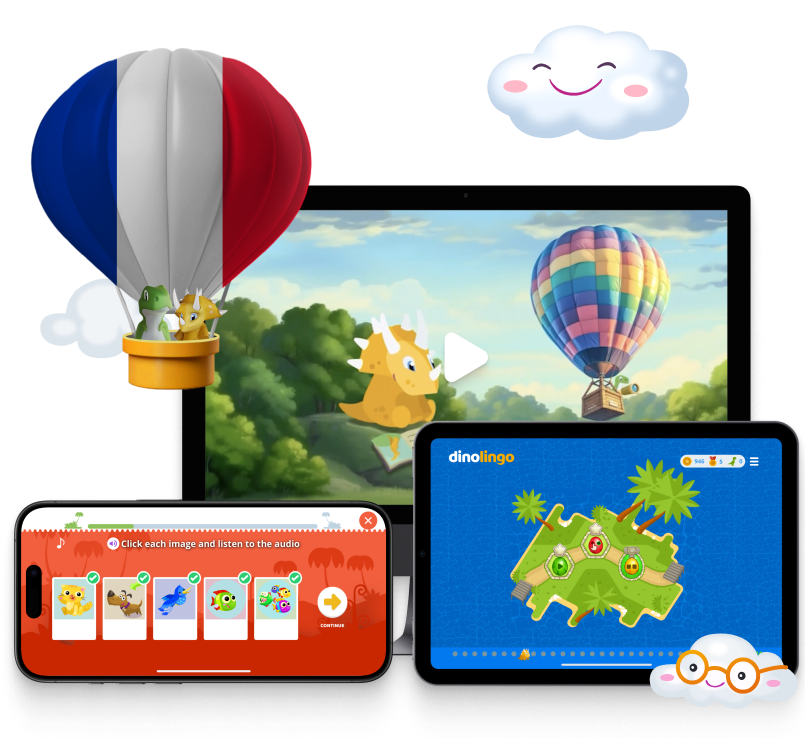
A five‑minute lesson on the Dinolingo French course shows animated foods flying into baskets while a native speaker names each item. Key highlights kids and parents love:
- 40 000+ videos, songs, and AR flashcards, plus curated immersive experiences where 360° videos, native audio, and on-screen vocabulary prompts combine.
- Parent Dashboard with live pronunciation scores, a streak tracker, and progress badges as words multiply.
- Surprise badges for every 20 new words mastered, plus printable certificates that arrive as PDFs and a badge when children prepare three recipes.
- Offline kit with recipe cards, supermarket bingo, flashcards, worksheets, and placemat posters for screen‑free practice.
- Curious about package options? Check the Dinolingo page: one plan covers up to six kids and 50+ languages.
Kids can explore all these amazing things, and much more, while learning French with fun videos, songs, games, and stories on Dinolingo’s French program for kids. Mix real‑world snacks and virtual adventures with Dinolingo’s gamified lessons and watch your child order un jus de pomme like a tiny Parisian chef. It’s the perfect way to learn while having fun!