The Heart of Arab Culture: Family and Traditions
In Arab culture, family is not just important: it is the foundation of social life. Whether in cities or rural areas, family bonds are strong, and relationships are built on love, respect, and support across generations. Children in the Arab world grow up surrounded by a wide network of siblings, cousins, grandparents, aunts, and uncles, often all living under the same roof or very close by. From close-knit homes to joyful music, beautiful handcrafts, and wondrous places to explore, this guide takes kids on a journey through the values and traditions at the heart of the Arab world.
Family: The Foundation of Arab Life
Big Families, Big Love
Arab families are typically large, and children are considered a great blessing. It is common for three generations to live in the same household: grandparents, parents, and children, creating a lively, connected environment. Even if family members move out, they often stay in close contact, visiting each other regularly and supporting one another in both happy and difficult times.
Respect and Responsibility
Children are taught from a young age to respect their elders. Grandparents, especially, hold an honored place in the home and are often the ones to pass down stories, wisdom, and traditions. Older siblings also take on responsibilities to help care for the younger ones. Respect for authority, kindness toward others, and a strong sense of community responsibility are core values in Arab upbringing.
Hospitality is Everything
One of the most beloved aspects of Arab family life is hospitality. Guests are treated with immense generosity: no one leaves an Arab home without being offered tea, coffee, sweets, or even a full meal. It is not unusual for a host to prepare far more food than needed, just to make sure their guests feel welcomed and honored.
This hospitality is not just shown to family and close friends, but also to neighbors, travelers, and even strangers. Children learn by example to be generous and kind to others, often helping to serve guests and joining in the conversations at family gatherings.
Faith and Togetherness
Many Arab families place a strong emphasis on religion and spirituality. Daily prayers, religious holidays, and moral teachings are integrated into family life. Whether Muslim, Christian, or from another background, Arab families often see their faith as a guide for how to treat others: with compassion, patience, and honesty.
Rhythms of Arabia: Music and Dance
The Arab world is rich with music, rhythm, and joyful celebrations. From traditional instruments to mesmerizing dances, music is deeply woven into the daily life and cultural identity of many Arabic-speaking countries. These traditions often come alive at the very family gatherings, weddings, and festivals that bring everyone together.
Music in Arab Culture
Arabic music often combines beautiful melodies with rhythmic drum patterns and poetic lyrics. Traditional instruments like the oud (a pear-shaped string instrument), tabla (hand drum), qanun (a kind of zither), and nay (bamboo flute) are commonly used in folk songs and classical Arabic music. These instruments create sounds that are deeply emotional and often used during weddings, religious festivals, or cultural events.
Music is not only for entertainment in Arab culture: it is a way to express love, sorrow, happiness, and spirituality. From the hauntingly beautiful songs of ancient poets to the upbeat tunes played during joyful gatherings, music plays a central role in Arab identity.
The Beauty of Belly Dancing
One of the most well-known and visually captivating forms of Arab cultural expression is belly dancing, a dance form that has fascinated people around the world for centuries. Known in Arabic as Raqs Sharqi, it is traditionally performed by women and features graceful, flowing movements of the hips, waist, belly, arms, and shoulders. Some dancers also use veils, swords, or finger cymbals (called zills) to add flair to their performances.
Belly dancing is believed to have ancient roots, possibly dating back to fertility rituals or traditional ceremonies. Over time, it evolved into a celebrated form of artistic and cultural expression. While often performed solo, belly dancing can also be part of group performances, especially during weddings or festivals.
Costumes and Performance
Belly dancers typically wear colorful and ornate costumes that highlight their movements. These outfits often include a fitted top, a flowing skirt, and a decorative belt or chain worn around the hips to emphasize the rhythm. The jingling of the coins and beads adds to the visual and auditory charm of the performance.
Flexibility, balance, and coordination are important in mastering belly dance, but it is also about confidence, joy, and self-expression. Many young girls and women across the Arab world grow up learning basic moves during family celebrations and community events.
Little Hands, Big Culture: Arab Handcrafts and Home Traditions
The Arab world is full of color, creativity, and tradition. From glittering gold patterns to handmade crafts, Arab culture offers many fun and beautiful things for children to discover, and many of these crafts are part of the same celebrations where music and dance fill the air.
Henna and Body Art
One of the most exciting traditions is henna art. Henna is a natural dye used to create pretty patterns on hands and feet. These designs are especially popular during holidays and celebrations like weddings and Eid. Kids often get small flowers or swirls drawn on their hands, which fade away after a few days.
Handicrafts and Home Decorations
Arab homes are often decorated with colorful carpets, fancy pillows, and hand-carved wooden furniture. Many families also use calligraphy art, which turns Arabic words into beautiful pictures. You may also find incense burners that fill the house with lovely smells, or tea and coffee pots made from shiny metal, perfect for the welcoming hospitality that Arab homes are known for.
Jewelry and Accessories
In many Arab cultures, people wear unique jewelry made of gold, silver, or beads. These items are passed down from generation to generation and are often worn during festivals or family events.
Rugs and Carpets
Arab and Middle Eastern rugs, especially Persian silk rugs, are known all over the world for their quality and colorful patterns. Making one rug can take months or even years, and each one tells a story through its designs.
Did You Know?
Many of these traditions are passed down through families and are still practiced today. Children in Arab countries learn these crafts by watching their parents or grandparents and joining in the fun during holidays.
Wonders of the Arab World: Fun Travel Facts for Kids
Traveling is a wonderful way for children to explore the world and learn about different cultures. The Arab world is full of incredible places that can spark curiosity and imagination. From ancient wonders to futuristic cities, here are some exciting travel facts for kids who love adventure and discovery!
The Egyptian Pyramids
The Egyptian Pyramids are among the most famous landmarks in the world. Built thousands of years ago, they were used as tombs for powerful Pharaohs (kings) of ancient Egypt. The Pyramids of Giza are the largest and most famous, with the Great Pyramid being one of the Seven Wonders of the Ancient World. It was made using huge stone blocks and still stands strong after over 4,500 years! Kids can learn about mummies, hieroglyphics, and how ancient Egyptians believed in the afterlife.
Burj Al-Arab: The World’s Only 7-Star Hotel
Located in Dubai, Burj Al-Arab looks like a giant white sail standing in the sea. It is not just any hotel: many people call it the only 7-star hotel in the world! This luxury building is shaped like a sailboat and sits on a special man-made island. With gold-covered walls, underwater restaurants, and private butlers, it is one of the most amazing hotels ever built. Even if you do not stay there, it is exciting just to see it!
Dubai: A City of Modern Wonders
Dubai is one of the most modern and exciting cities in the Arab world. It is famous for skyscrapers, shopping malls, and even an indoor ski slope in the desert! Many people from different countries live in Dubai, making it a diverse and fun place to visit. It is also known for camel rides, desert safaris, and traditional souks (markets) where you can find spices, textiles, and Arabic sweets.
Why It Matters for Kids
Learning about Arab family life helps children understand how different cultures express love and togetherness. It can also teach values like respect, sharing, and gratitude in a real-world context. Through stories, family traditions, and daily routines, Arab children grow up with a strong sense of identity and connection.
Exploring music and dance from other cultures helps children appreciate diversity and develop a sense of global understanding. Watching or even trying a few basic dance steps can be a fun way for children to explore movement, rhythm, and storytelling through body language. In the same way, discovering crafts, holidays, and famous places like the Pyramids and Dubai sparks curiosity and a love of learning about the wider world.
Explore Arab Culture Through Language with Dinolingo
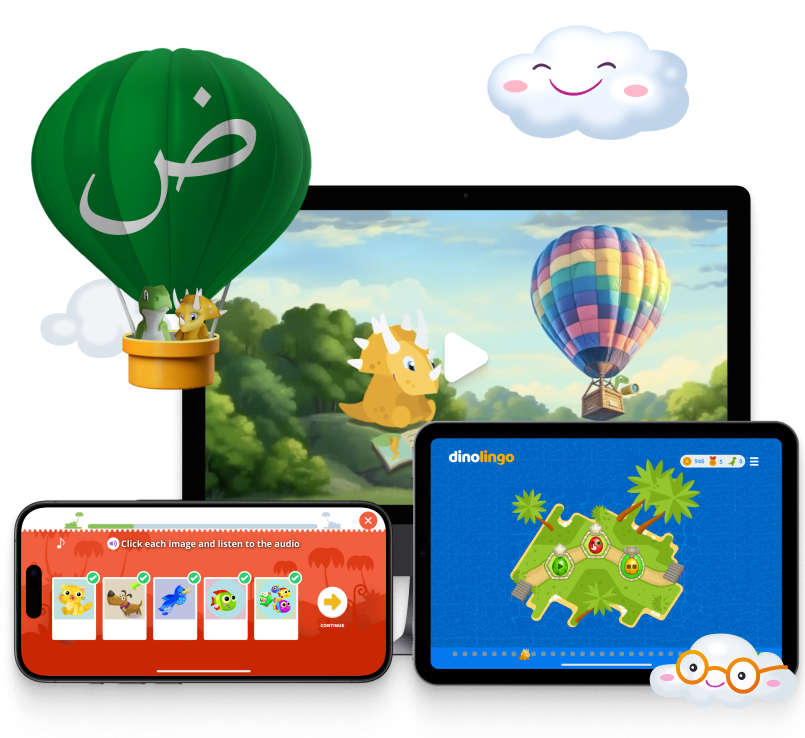
Kids can learn even more about Arab family life by learning the language that ties it all together: Arabic. With Dinolingo, children ages 2 to 14 can explore Arabic through interactive videos, songs, games, and printable worksheets that make learning both fun and meaningful. Whether your child loves henna, music, home decor, or dreams of visiting Egypt and Dubai, Dinolingo brings culture and language together in a playful, educational experience. The platform supports learning at every level, whether your child is just starting or already familiar with the language, and helps them connect with the rich cultural traditions of the Arab world. There is also a parent dashboard to track progress. Dinolingo is available online, as well as on iOS and Android devices, and offers offline printables and resources too.