Eid and Ramadan: Special Celebrations in Arabic Culture
Arabic culture is full of colorful traditions, and two of the most important ones are Eid and Ramadan. These holidays are not just about religion. They are also times of joy, family, and community, filled with kindness, sharing, and togetherness across every Arabic-speaking country.
What Is Ramadan?
Ramadan is a very special, holy month in the Islamic calendar. It lasts for about 30 days and is a time of fasting, prayer, and reflection. From sunrise to sunset, many Muslim people do not eat or drink anything, not even water. After the sun sets, families gather to enjoy a meal called iftar.
Beyond fasting, Ramadan is a time to:
- Be thankful and patient
- Do kind deeds and help those in need
- Spend extra time with family
- Say special prayers
During Ramadan, cities come alive at night. Shops, cafés, and streets are busy after dark, often until midnight or later. Kids often join in too, by helping cook, decorating the home, or doing kind actions like giving to others.
What Is Eid?
Eid is the biggest holiday celebration in Arabic-speaking countries. The word “Eid” means “festival” or “feast.” There are two main Eids in the Islamic world: Eid al-Fitr and Eid al-Adha.
Eid al-Fitr comes at the end of Ramadan, celebrating the end of a month of fasting. It is a big, joyful day with:
- New clothes
- Tasty food, special sweets, and traditional dishes enjoyed all over the Arab world
- Visits with friends and family
- Gift giving, especially to children, and fun games
Later in the year, there is also Eid al-Adha, a time to remember stories of faith and to give to people in need.
Family Traditions
In many Arab families, Eid mornings begin with a visit to the mosque for a special prayer. After that, children often visit their grandparents or other elders to say hello and receive gifts or small amounts of money, known as Eidiya.
If a family can’t visit in person, they often call their loved ones to share warm wishes and greetings. The common phrase during Eid is “Eid Mubarak”, which means “Blessed Eid.”
Creative Activities to Try
These holidays are a wonderful chance for children to experience the joy of language and the spirit of togetherness. Here are two simple activities to try at home.
Ramadan Kindness Calendar
Make a 30-day chart where kids do one kind act each day. Use Arabic words like “shukran” (thank you) or “salaam” (peace) along the way.
Eid Card Craft
Create colorful cards that say “Eid Mubarak” in Arabic. Decorate them with stars, moons, and glitter!
Arabic Lessons for Kids
Would you like your child to learn more about Arabic holidays, traditions, and language?
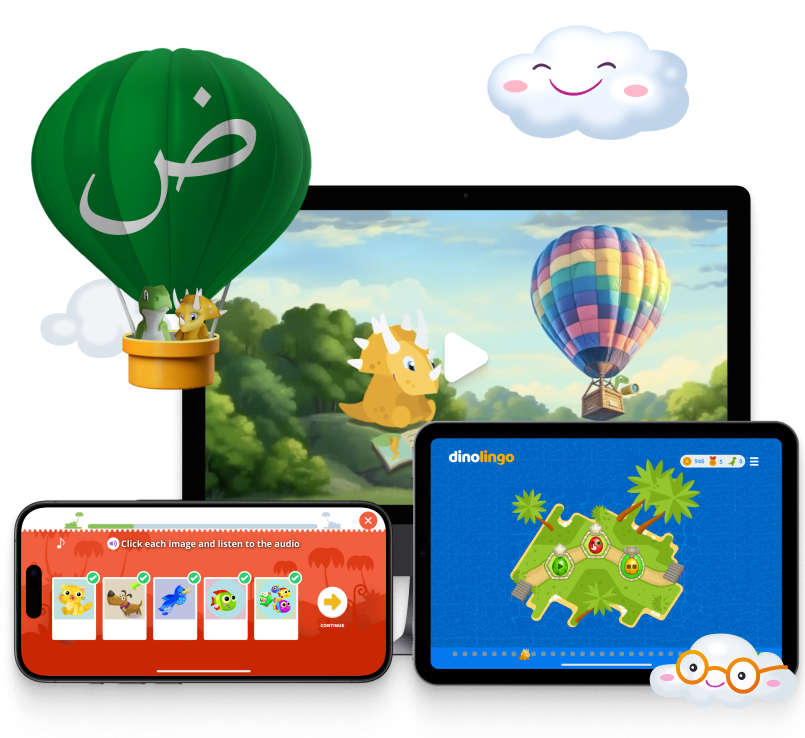
Dinolingo offers a fun and easy way for children ages 2 to 14 to learn Arabic at their own pace. With interactive videos, songs, games, flashcards, printable worksheets, and stories, Dinolingo makes learning Arabic feel like playtime and helps kids connect with language and culture in meaningful ways.
The platform works on web, iOS, and Android, and offers offline materials and a parent dashboard to track progress. Whether your child is just starting or already knows some Arabic, Dinolingo helps bring the language and culture to life.