Family Learning Month 2026: Take the May Challenge to Learn a Language Together
May is Family Learning Month — and this year, Dinolingo is inviting every family to take the Family Learning Challenge: spend just five minutes a day learning a new language together. No pressure, no quotas, no homework — just a shared daily ritual that turns screen time into together time. Whether you’re raising bilingual kids, reconnecting with a heritage language, or simply curious about how to teach your child Spanish, French, or Mandarin Chinese, this is your month.
In this guide we’ll cover what Family Learning Month is, why family language learning works so well, the science behind raising bilingual children, and a practical 31-day plan you can start today. We’ll also share the Dinolingo Family Learning Challenge — a free, structured way to make the habit stick.
What is Family Learning Month?
Family Learning Month is a yearly celebration of one of the simplest, most joyful things families can do together: learn. It’s not flashcards-at-the-kitchen-table learning. It’s the kind of learning where a 5-year-old teaches a parent how to count to ten in Spanish, where a grandparent shares a story in their first language, where the whole family laughs through a Japanese tongue-twister at dinner.
At Dinolingo, we celebrate Family Learning Month every May with a 31-day language challenge. The goal is simple: spend a few minutes each day learning any of our 50+ languages together, and track your streak as a family.
Why “together” changes everything
Kids who learn a language alongside a caregiver don’t just pick up vocabulary faster — they form a deeper emotional connection to the language. Decades of family literacy research point to the same pattern: when learning is a shared activity, children retain more, stay engaged longer, and develop stronger confidence in speaking aloud.
And the benefits run both ways. Parents who learn with their kids report feeling more present, more curious, and more connected. The U.S. Department of Education’s “Talk, Read and Sing Together Every Day” guide highlights exactly this point: shared language activities are some of the most powerful early-learning tools available to families. It turns out the best part of learning a new language isn’t the language at all — it’s the time you spend learning it.
The science: benefits of family language learning for kids
Research on raising bilingual children consistently shows that early, sustained exposure to a second language delivers benefits that extend far beyond vocabulary. Here are five science-backed reasons to start now.
1. Stronger cognitive flexibility and attention
Bilingual children show measurable advantages in executive function — the brain’s ability to focus, switch tasks, and ignore distractions. Bilingualism research published by the National Institutes of Health finds that bilingual children outperform monolingual peers on attention and self-control tasks as early as age 4.
2. Better problem-solving and creativity
Switching between two languages is, neurologically, a workout for the prefrontal cortex. Bilingual kids tend to be stronger at multitasking, lateral thinking, and creative problem-solving — skills that pay off for the rest of their lives.
3. Deeper family and cultural connection
For families with heritage languages, learning together is a way to keep traditions alive. Children who maintain their home language stay closer to grandparents, cousins, and cultural roots — which research links to higher self-esteem and stronger identity through adolescence.
4. Easier academic outcomes later
Counter to old myths, bilingual kids do not fall behind academically. In fact, a strong first-language foundation makes it easier to learn additional languages and even helps with reading comprehension, math word problems, and standardized test performance.
5. A lifelong love of learning
Maybe most importantly, kids who learn a language as part of family life see learning itself as warm and joyful, not as a chore. That mindset is the gift that keeps giving — long after Family Learning Month ends.
The Dinolingo Family Learning Challenge: how it works
The challenge is simple. From May 1 through May 31, 2026, do one Dinolingo activity together as a family every day. That’s it. No leaderboards, no streak shame, no minimum word counts. A song before bedtime counts. A 5-minute game in the car counts. Counting your strawberries in French at breakfast definitely counts.
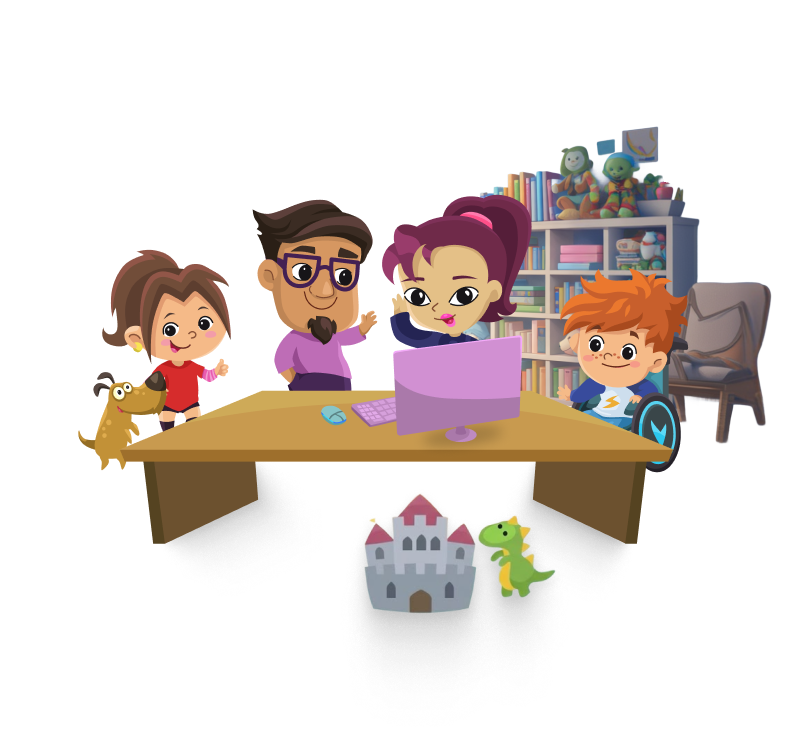
And because Family Learning Month is, well, about families — every Dinolingo subscription supports up to 6 kids under one account. Siblings, cousins, the neighbors who are basically family — everyone learns on the same plan, with their own profile, progress, and language pick.
- Pick one language together. Vote on it as a family — kids love being part of the decision. Popular starter languages include Spanish, French, German, Italian, and Japanese.
- Set a tiny daily ritual. Five minutes after dinner, before storytime, or during the morning commute. Pair the activity with something you already do every day.
- Take turns leading. Let the youngest pick the song, the oldest pick the story, and a parent pick the game. Rotation keeps everyone engaged.
- Celebrate small wins. First word? First sentence? First time the dog learned to sit in Italian? Worth a high-five — and a sticker.
- Track the streak. A simple May calendar on the fridge with stickers is more motivating than any leaderboard. Aim for 21 days; you’ll be amazed at how easily the rest follows.
10 family language learning tips that actually work
Pick the ones that fit your household — most families find that two or three good rituals beat a long list of ambitions.
- 1. Label the house. Sticky notes on the fridge, the door, the lamp — your home becomes a 3D dictionary.
- 2. Pick a “language meal.” Sundays are desayuno en español. Order water as agua. Say buenas noches before bed.
- 3. Sing it. Dinolingo songs are designed to be earworms — on purpose. Play them while you cook or clean.
- 4. Read together. Bilingual storybooks are perfect for shared reading. Kids love spotting words they recognize.
- 5. Watch with subtitles. Switch one weekly cartoon to the target language with kid-level subtitles.
- 6. Travel without leaving home. Cook a recipe from a country that speaks your target language. Talk about the ingredients in that language.
- 7. Video-call relatives who speak the language. Real conversation with real people is unbeatable motivation.
- 8. Let kids teach you. “Mom, do you know how to say ‘dinosaur’ in French?” is a magic sentence.
- 9. Make mistakes loudly. When parents fumble pronunciation and laugh, kids learn that mistakes are part of learning.
- 10. Keep it short. Five focused minutes beats an unfocused hour. Always.
Best languages to learn as a family
Dinolingo offers 50+ languages for kids, but a few are especially beginner-friendly for English-speaking families. Pick whichever you’ll have the most fun with — that’s by far the strongest predictor of success.
- Spanish for kids — the most-spoken second language in the U.S. and full of cognates that English-speaking kids pick up fast. (See our complete guide to helping your child learn Spanish.)
- French for kids — beautiful, melodic, and famously good for travel.
- Italian for kids — easy pronunciation, expressive vocabulary, fantastic songs.
- German for kids — surprisingly logical and packed with English-cognate verbs.
- Japanese for kids — playful sounds, no plurals, a hit with kids who love anime.
- Mandarin Chinese for kids — the most-spoken language on Earth and a great long-term investment.
Want to start with something even smaller? Try our list of how to say hello in different languages for kids — a single greeting can be the spark that starts a whole month of learning.
Family language learning by age
Ages 2–4: songs, sounds, and play
Toddlers learn through repetition and rhythm. Stick to short songs, animal sounds, color words, and counting. Five minutes a day is plenty. Don’t worry about full sentences — at this age, exposure is the entire goal.
Ages 5–8: stories and games
Early readers love simple stories with repeating phrases. Add games — matching, memory, “I spy” in the target language. Around age 7, most kids can start handling short dialogues.
Ages 9–14: real conversations
Tweens are ready for grammar that actually clicks, plus richer reading and listening. Pair Dinolingo activities with a YouTube show in the target language, a pen pal, or a family video call with relatives. The Dinolingo platform’s new Video Mode is especially popular with this age group.
Building a 31-day family language routine
Want a simple plan you can print out and stick on the fridge? Try this:
- Week 1 (Days 1–7): Greetings, family words, numbers 1–10. One Dinolingo song per day.
- Week 2 (Days 8–14): Colors, animals, food. Add a Dinolingo storybook three times this week.
- Week 3 (Days 15–21): Verbs and short phrases. Try a “language dinner” once.
- Week 4 (Days 22–28): Mix songs, stories, and games. Have your child teach you one new word per day.
- Bonus (Days 29–31): Celebrate the streak. Cook a meal from a country that speaks your language, watch a kid show in the target language, and post a photo of your fridge sticker chart.
Common pitfalls to avoid
- Going too long. A frustrated 30-minute session damages the habit. End on a high — even if it’s only three minutes.
- Correcting too much. Let kids speak. Model the right pronunciation in your reply, and move on.
- Treating it like school. Family learning works because it isn’t homework. Keep it fun.
- Switching languages mid-month. Pick one and stick with it for May. You can switch in June.
- Skipping parents. If only the kids “do” Dinolingo, the magic is gone. The whole point is together.
Family Learning Month FAQs
When is Family Learning Month?
Family Learning Month runs every May. The Dinolingo Family Learning Challenge runs from May 1 through May 31 each year.
How much time should we spend learning a language as a family each day?
Five focused minutes is enough to build a habit. The consistency matters more than the duration. Some families do 10–15 minutes once kids are hooked.
What’s the best age to start learning a language?
The earlier the better — research shows children’s brains are uniquely flexible between ages 0 and 7 — but it’s never too late. Older kids and parents can absolutely learn together with great results.
How many kids can use one Dinolingo subscription?
One Dinolingo subscription covers up to 6 kids — perfect for families with siblings of different ages. Each child gets their own profile, can pick their own language from our library of 50+, and tracks their own progress and streak.
Is Dinolingo free?
Dinolingo offers a free trial so families can try the Family Learning Challenge with no commitment. The full library includes 50+ languages, 40,000+ activities, songs, stories, games, and printable worksheets.
Can grandparents and extended family join?
Absolutely. In fact, intergenerational language learning — especially with grandparents who speak a heritage language — is one of the most powerful Family Learning Month traditions you can build.
Ready to take the Family Learning Challenge?
Start your family’s first day today — it takes about five minutes. By May 31, you’ll have spent two and a half hours learning a new language together. More importantly, you’ll have spent two and a half hours being together. That’s the real challenge. And the real prize.
Try Dinolingo free and join thousands of families learning a new language together this Family Learning Month.