How to Say “Peace” in Arabic—and Why It Matters
In Arabic, the word for peace is “Salaam” (سلام). It’s a word that means more than quiet. It means kindness, respect, and connection. Learning it helps kids explore big ideas in small, simple words, and it is the perfect doorway into one of the world’s oldest and most beautiful languages. This guide walks you and your child through everything from peaceful greetings to Arabic script, history, food, stories, and the best ways to teach Arabic at home.
What Does “Salaam” Mean?
- Salaam is used to say “hello” in many Arabic-speaking places
- It also means peace, calm, and safety
- It shows care and good wishes when meeting someone
Teaching kids salaam is a great way to help them understand how language carries meaning and values. In everyday life, Arabs greet each other with “Salaam Alikum.” Friends of the same gender often greet with a cheek-to-cheek kiss, while public displays of affection between men and women are rare. Greetings may vary depending on the country, but the warmth behind them stays the same.
You can pair salaam with other kind words like “shukran” (thank you) and “afwan” (you’re welcome). Learning salaam gives children more than a word. It gives them a mindset of care and global friendship.
Arabic Around the World, and Why It’s So Important
Arabic isn’t just a language. It’s a passport to connect with over 400 million people worldwide. It’s one of the top five most spoken languages, one of the six official languages of the United Nations, and an official or national language in more than 20 countries. For kids, learning Arabic opens the door to new friendships, stories, and cultures across continents.
Why Arabic Is Important for Kids
- Builds communication with Arabic-speaking friends and family
- Encourages cultural curiosity and respect
- Develops early thinking skills through a rich writing system
Surprising Fun Facts About the Arabic Language
Arabic is one of the oldest and richest languages in the world, and it is also full of surprises that kids will love discovering. Here are some amazing facts to spark curiosity in young Arabic learners:
- Arabic is the most widely spoken language in the Middle East, used in conversations, schools, books, and cartoons.
- It is the official language of 22 different countries, including Egypt, Saudi Arabia, Morocco, Jordan, and the United Arab Emirates, each with its own accent and cultural flair.
- English has borrowed many fun words from Arabic. Words like admiral, arsenal, candy, giraffe, lime, sofa, and spinach all came from Arabic.
- The letter “M” is one of the most commonly used sounds. You hear it in affectionate words too, like umm, which means “mom” in Arabic.
- Arabic is written from right to left, which makes learning to write feel like a whole new adventure.
- Arabic has no capital or lowercase letters, but each letter can look different depending on where it appears in a word.
Why Arabic Looks Different: Curls, Dots, and Beautiful Shapes
The Arabic language has one of the most beautiful writing systems in the world. With flowing letters, dots, and curves, it looks like art, and that makes it fun for kids to explore.
What Makes Arabic Script Unique?
- It is written from right to left, which feels new and exciting.
- Letters change shape. The same letter can look different at the beginning, middle, or end of a word.
- Dots matter. Many letters have dots that change their sound, sometimes one dot, two dots, even three.
- Letters connect to each other like a puzzle, forming words that flow like a ribbon across the page.
The Magic of Arabic Calligraphy
Arabic calligraphy is more than just writing. It’s art. Every swirl and curve has a rhythm, and this beautiful tradition lets kids connect to language in a creative and calming way. Calligraphy is the art of writing letters in a decorative way, which in Arabic means long, flowing shapes, beautiful curves and patterns, and letters that connect like dancing lines. Kids love learning that writing can be art, and that art can help them learn new words and shapes. Practicing it also helps children focus, express themselves, and fall in love with the beauty of written words.
The Rich History of Arabic Culture: From Origins to Today
Where Did Arabic Culture Begin?
The Arab world spans a vast area across North Africa and the Middle East, where many civilizations have passed through and left their mark. From ancient times to the present, this region has seen many changes in rulers and borders. Today, countries like Egypt, Saudi Arabia, Morocco, and Iraq are all part of what we call the “Arab world.”
Life Before Islam
Before Islam, Arab people mostly lived in tribes and led a rural, nomadic lifestyle. They were known for their poetry, storytelling, and oral traditions. Many famous poems and tales from this period are still celebrated in Arab culture today. Life was simple but full of strong social bonds and traditions.
The Rise of Islam
A major turning point in Arab history was the arrival of Islam in the 7th century. Prophet Muhammad (peace be upon him) was born in Makkah and later moved to Medina with his followers after facing resistance. From there, Islam began to spread rapidly across the region through peaceful teachings and battles like Uhud, the Trench, and Hudaybiyyah. Eventually, Makkah was taken peacefully, and many people embraced the new religion.
The Golden Age of the Arab World
One of the most exciting periods in Arab history was the Golden Age during the rule of Caliph Harun al-Rashid in the 8th and 9th centuries. The Muslim world became a center of science, medicine, mathematics, and art. Baghdad, in particular, was a hub of learning where scholars from different backgrounds came together to translate and preserve important texts. Much of what Europe later learned in the Renaissance came from Arabic books.
Arabs in Europe and the Fall of the Empire
Did you know that Arabs once ruled parts of Spain? During the 8th century, they brought new ideas, architecture, and culture that influenced Europe in amazing ways. Even today, you can see Arab-style buildings and hear Arabic words in the Spanish language. After centuries of strength, the Arab Empire began to break apart, and different rulers and empires, like the Ottomans, controlled various regions until the modern-day Arab countries were formed. Today, each Arab country has its own unique traditions, accents, and stories, but they all share a rich historical root.
Discovering Arabic Culture and Heritage
Arabic culture is one of the richest and most influential cultures in the world. From its legendary poets and storytellers to its colorful clothing and deep-rooted family values, the Arab world offers children a fascinating journey through language, faith, traditions, and community. Understanding Arabic culture helps children appreciate diversity and respect other worldviews, while also making learning the Arabic language more meaningful and fun.
Language and Literature
Arabic is not just a language. It is a cultural treasure. Arabic literature is filled with poetry, folk tales, wisdom sayings, and stories passed down through generations. Famous poets such as Nizar Qabbani, Imru’ al-Qais, and Ahmad Shawqi are known for capturing emotions and life experiences through beautiful language. These literary works help children connect with imagination and values like courage, honesty, and kindness.
Religion and Values
Islam, the dominant religion in the Arab world, has greatly shaped Arabic culture. It encourages values such as peace, fairness, family bonding, and compassion. In most Arab homes, you’ll find people praying five times a day, fasting during Ramadan, and celebrating religious holidays with delicious food and joyful gatherings. Children learn from a young age the importance of respect, especially toward elders, parents, and teachers.
Traditions and Family Life
In Arab societies, family comes first. Grandparents, uncles, aunts, and cousins often live close by and gather regularly. It’s common for elders to be decision-makers, and younger family members are taught to show deep respect to them. Arab families are usually large, and family members care deeply for one another. Arab people are known for being warm, religious, and welcoming to guests. Sharing meals is another important custom, especially during holidays like Eid or family events, and generosity and hospitality are core cultural values that children also learn.
Clothing and Modesty
Traditional Arab clothing varies by country but is designed for modesty and comfort in the region’s warm climate. Arab men usually wear a one-piece cotton garment called the dishdasha or thobe, along with a head cover called the ghutra or smagh, held in place with a black ring called the igal. On special occasions like weddings, a long coat called bisht is worn. Arab women traditionally wear an abaya, a long black dress, with a headscarf called the hijab, and some also wear a face cover called the burqa or niqab. For weddings, many women choose western gowns, and bright colors and gold jewelry are popular. Children often wear western clothes.
Festivals and Celebrations
Eid is the biggest holiday in Arabic culture, celebrated with food, sweets, gift-giving, and shopping. Ramadan is a holy month when Muslims fast without food or water during the day. Shops and businesses stay closed in the daytime and open in the evening until late at night. During Ramadan, children often help prepare meals and learn the importance of sharing food with neighbors and those in need.
Art and Handicrafts
Arab artisans create beautiful crafts like silk rugs, furniture, jewelry, and calligraphy wall art. Incense burners and tea or coffee pots are also common. Henna, a temporary tattoo applied to the hands, is used for decoration during celebrations.
Music and Dance
Belly dancing is a famous Arab dance. It involves moving the shoulders, belly, and hips. Special costumes with waist chains are worn for this dance, which requires flexibility and rhythm.
Tastes of Arabia: Fun Food Facts Kids Will Love
Arabic food is one of the most flavorful cuisines in the world. With a heavy Mediterranean influence, many dishes include olives, dried fruits like dates, nuts such as pine nuts, cashews, and pistachios, and dairy products like cheese and yogurt. Food is a fun and tasty way for kids to explore the world.
Popular Arabic Dishes
- Hummus is a smooth dip made from chickpeas, often eaten with a special bread called khubus.
- Baba ghanoush or mutabbal is similar to hummus but adds the flavor of smoked or roasted eggplant.
- Falafel is made from ground chickpeas fried into small balls, and tastes great with hummus or in a wrap.
- Shawarma is a popular street food of grilled meat slices wrapped in pita bread. Chicken and lamb are the most popular meats.
- Kebabs and grilled chicken are often served with rice and tomato-based sauces.
- Fatayer are flatbreads filled with ingredients like yogurt (lebna), oregano (zaatar), cheese (jiben), chicken (dijaj), or lamb (leham).
- Couscous is made of tiny steamed grains, often served with vegetables or meat.
Salads, Sweets, and Drinks
Arabs enjoy fresh vegetables, and one famous salad is tabbouleh, made with parsley, tomatoes, lemon, and bulgur. Arabic meals usually end with something sweet. Baklava is a pastry with layers of dough, syrup, and nuts. Kenafa is a fried or baked dish made with cheese and thin noodles, and Umm Ali is a type of bread pudding. Arabs love tea (shaay) and coffee (kahwa), which are enjoyed throughout the day, often after meals and sometimes with dates or sweets.
Step into the Souk: Arabic Words from Colorful Market Life
Souks, or markets, are exciting places in Arabic-speaking countries. They’re full of colors, sounds, and delicious smells, and kids can learn tons of useful Arabic words by imagining they’re walking through one. A souk is more than just shopping. It’s an adventure where you might hear someone say:
- “Marhaban!” (Hello!)
- “Kam ath-thaman?” (How much is it?)
- “Shukran” (Thank you!)
- “Tuffah” (Apple)
- “Khobz” (Bread)
- “Ma’” (Water)
Learning these words in a real-life setting helps kids remember them faster, and makes language come alive. Markets are where people connect, and through the souk, kids can build their vocabulary while exploring culture and having fun.
Famous Arabic Stories: Aladdin and the Magic Lamp
Aladdin and the Magic Lamp is one of the most beloved folk tales in Arabic culture. It tells the story of a young boy named Aladdin who discovers a mysterious lamp with magical powers. When he rubs the lamp, a genie appears and offers to grant him any wish he desires. Aladdin’s life changes as the genie provides him with delicious food, a grand palace, and even the chance to marry the king’s daughter. But not everything is easy. An evil wizard tries to steal the magic lamp, and with bravery and cleverness, Aladdin defeats him and protects everything he holds dear. In the end, Aladdin and his princess live happily ever after. This enchanting story is part of the famous Arabian Nights collection, also known as One Thousand and One Nights, and these tales have been passed down for generations to inspire children around the world.
Mancala: A Traditional Arabic Game for Kids
Mancala is one of the oldest board games in the world and remains popular across the Arab world. Children and families often play it together as a fun way to pass time, build focus, and improve counting skills.
How to Play Mancala
Mancala is played using six small pits and one larger scoring pit for each player. Each small pit starts with three colorful marbles or beads. Players take turns picking up marbles from their pits and dropping them one by one into the others. The goal is to collect the most marbles in your scoring pit by the end of the game, and capturing your opponent’s marbles by landing in an empty pit adds an extra layer of strategy.
Why Kids Love Mancala
The game is easy to learn but full of strategy, making it fun for all ages. It doesn’t require a fancy board. Families can make their own at home using bottle caps, small bowls, or even pits drawn on cardboard. Games like Mancala are also a great opportunity for children to learn Arabic words for numbers, colors, and directions while having fun, whether they count the beads or say simple instructions in Arabic.
Amazing Facts About Arabic-Speaking Countries
Arabic is spoken across more than 20 countries, and each one has its own exciting stories, foods, animals, and traditions. Arabic is the official or widely spoken language in places like:
- Egypt, home to the pyramids and the Nile River
- Saudi Arabia, where the Arabic language began
- Morocco, known for its colorful markets and desert adventures
- United Arab Emirates, famous for tall skyscrapers like the Burj Khalifa
- Jordan, where you’ll find the amazing stone city of Petra
There are also Arabic speakers in many other countries, from Iraq and Syria to Tunisia, Lebanon, and Algeria. Among the most famous landmarks, the Egyptian Pyramids in Giza are one of the Seven Wonders of the World, built as ancient tombs for the pharaohs. Dubai is a modern Arab city known for tall buildings and luxury hotels like the Burj Al Arab, drawing many tourists for shopping and sightseeing.
Best Methods to Teach Children Arabic
Teaching your child Arabic can be a joyful, engaging, and meaningful journey, especially when you weave the language into everyday life through fun, play, and shared experiences. Whether you’re raising a bilingual child or simply want to connect them to their heritage, the key is to build motivation and create a learning environment that supports curiosity and confidence.
Motivation Comes First
The secret ingredient to successful language learning is motivation. Offer small rewards for progress, such as a treat from an Arabic-speaking country like a chocolate bar from Egypt, a trip to a Moroccan restaurant, or an outing to a park or zoo. For toddlers and small children, surprises enhance engagement: games like peekaboo with Arabic phrases help little ones stay attentive while absorbing new vocabulary naturally. Above all, turn Arabic into a game, like counting in Arabic during hide-and-seek.
Keep It Short, Simple, and Consistent
Children lose interest if tasks feel too hard or long, so teach only a few Arabic words at a time. Short lessons help kids feel successful and eager to continue. Practice makes progress: try mini quizzes with simple prompts like “What’s this in Arabic?”, use flashcards to create image-word associations, and set annual and monthly learning goals broken into mini-targets you can track with a sticker chart. Celebrate every milestone with praise and rewards.
Read, Sing, and Watch Together
- Read Arabic storybooks, fairy tales, and bedtime stories together, using illustrations to point out known words and different voices for characters.
- Sing Arabic songs and lullabies, add actions, or organize a mini performance night.
- Watch Arabic cartoons with strong visuals and reinforce vocabulary afterward.
- Play Arabic songs, radio, or audio lessons in the background during car rides and playtime.
Play and Create
- Use puppets or plush toys that “speak” Arabic to act out stories and songs.
- Play counting games, board games like snakes and ladders, and flashcard games like memory, Go Fish, or matching.
- Learn animal names at the zoo and ingredient and action words while cooking Arabic food together.
- Print beginner worksheets, use a picture dictionary or alphabet book, and try a Word of the Day activity.
- Decorate with Arabic learning posters and keep a personalized notebook where your child draws pictures for new words.
Connect with the Community
- Visit local libraries, cultural centers, Arabic supermarkets, and restaurants.
- Arrange playdates with other Arabic-learning families and video chats with Arabic-speaking friends.
- Invite Arabic-speaking grandparents to share stories, and attend cultural festivals or parades.
- Join online communities and language-exchange chats to share challenges and get support.
Learn Arabic the Fun Way with Dinolingo
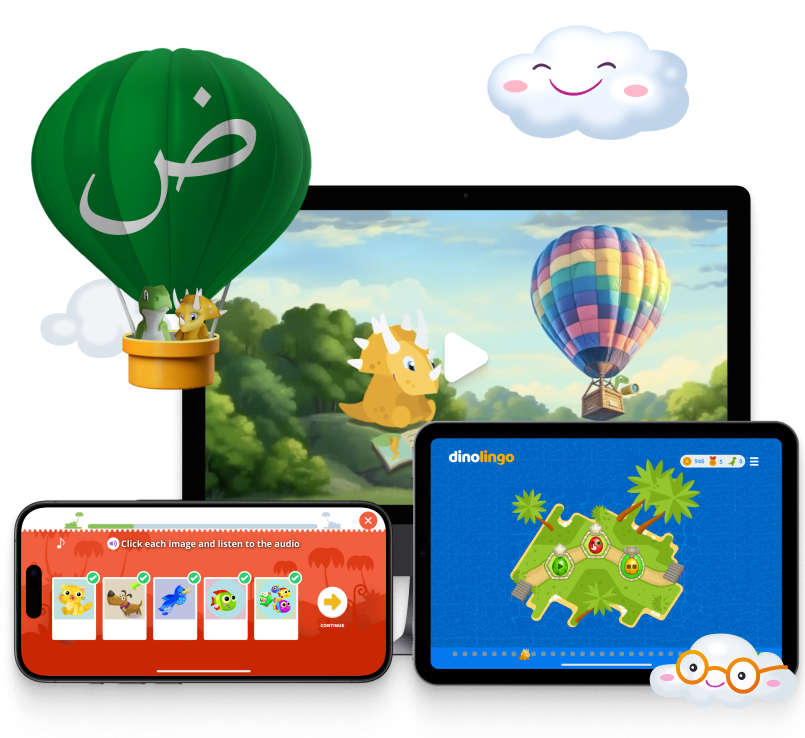
With Dinolingo, children aged 2–14 explore Arabic greetings, values, geography, and culture through interactive games, songs, stories, and printable tools that teach kindness through words. The program meets kids at every stage, from pre-readers (ages 2 to 5) to elementary learners (6 to 10) and middle schoolers (11 to 14), with level-based paths tailored to their needs.
Why Families Love Dinolingo
- Over 40,000 activities: songs, games, flashcards, stories, and videos
- Learn over 50 languages, including Arabic, Spanish, French, German, and Italian
- Accessible on web, iOS, and Android, with offline printable worksheets, flashcards, and posters
- One subscription works for up to 6 kids
- Safe for kids, with no ads, no pop-ups, and no chat rooms
- A Parent Dashboard to track progress in real time, plus rewards and badges kids unlock as they learn
Creative Activities to Try at Home
Peace Poster
Let your child decorate a poster with the word Salaam in Arabic. Add hearts, doves, or peaceful scenes.
Kindness Jar
Create a jar where kids collect kind actions each day. Add Arabic words like “shukran” (thank you) or “afwan” (you’re welcome) to go with them.
Map and Match Game
Print out a world map. Find and color the Arabic-speaking countries, then match each one with a fun fact or landmark. You can also add stickers or stars to the countries your child wants to learn more about.
Letter Art Gallery and Dot Detective
Choose a few Arabic letters, trace them big and bold, and decorate each one like a mini painting to hang up. For a script game, print out Arabic letters and circle all the ones with dots, counting how many dots each letter has.
Pretend Market Game
Set up a mini market at home with toys or real fruit, and practice buying and selling using Arabic words like “marhaban” and “shukran.”
My Arabic Menu
Have your child create a pretend menu using Arabic food names. Pick three foods from Arabic-speaking countries, draw them on a plate, and label each one with its Arabic name or English translation.
Learning salaam and the words around it gives children more than vocabulary. When kids learn about the world through language, they open their hearts to many places and discover how much we all have in common.