Learn Italian Hand Gestures: 20 Gestures & Their Meanings
Italian isn’t just about words. Hand gestures add emotion, emphasis, and nuance to every conversation. Teaching children these common gestures helps them connect with native speakers and express themselves more naturally. And gestures are only one part of the picture. From the way Italians talk with their hands to the food they share around the table, Italian culture is something children can experience with their whole bodies. This guide walks through 20 essential hand gestures, then takes the fun into the kitchen with a homemade Italian pizza that families can make together.
20 Italian Hand Gestures and Their Meanings
Start with these everyday gestures. Practice each one slowly, say the Italian phrase out loud, and let children mirror the movement.
- Mano a borsa (pinched fingers) – “What do you want?” Hold fingertips together and move hand up and down.
- Pollice in su (thumbs up) – “Great/OK!”
- Pollice verso (thumbs down) – “No/Bad.”
- Dito medio (middle finger) – strong insult (avoid using!).
- Ci sta (index finger flick under chin) – “I don’t care/Whatever.”
- Che fai? (wiping hand gesture) – “What are you doing?”
- Che dici? (hand near ear) – “What did you say?”
- Me ne frego (wrist twist) – “I couldn’t care less.”
- Dai! (open palm push) – “Come on!”
- Silenzio (finger to lips) – “Be quiet.”
- Aspetta (hand chop) – “Wait/hold on.”
- D’accordo (finger circle) – “Agreed/OK.”
- È un altro paio di maniche (hands shift) – “That’s a whole different story.”
- Dammelo (hand extended) – “Give it to me.”
- Sono stanco (hand on forehead) – “I’m tired.”
- Non rompere (cutting gesture) – “Stop bothering me.”
- Bravo! (pat on palm) – “Well done!”
- Vieni qui (beckoning finger) – “Come here.”
- Andiamo (forward sweep) – “Let’s go.”
- Mano sul cuore (hand on heart) – “Truly/with sincerity.”
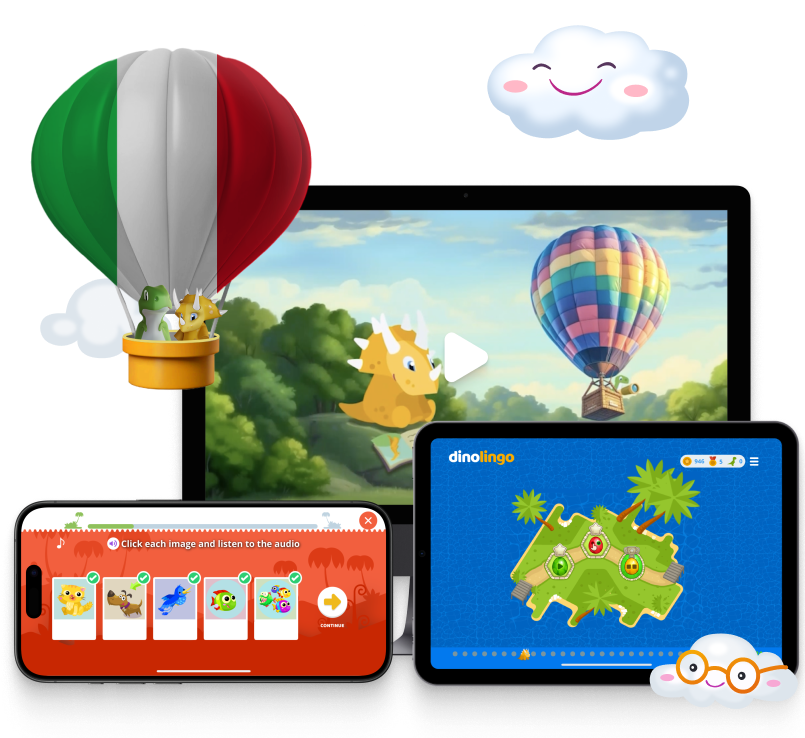
Reinforce gestures with cultural video lessons in the Dinolingo Italian for Kids course, where native speakers demonstrate authentic nonverbal cues.
From Gestures to the Kitchen: Make Your Own Italian Pizza at Home
Once children have the gestures down, bring Italian culture to life in the kitchen. Italy is famous for its delicious food, and what better way to enjoy it than by making your very own Italian-style chicken pizza at home? This fun and easy recipe is perfect for kids to help with, and it’s a great way to explore Italian culture right from your kitchen. Try cheering each other on with a Bravo! pat on the palm or a Pollice in su thumbs up as the pizza comes together.
Ingredients
- 1/2 tablespoon active dry yeast
- 1 teaspoon sugar, divided
- 1/2 cup warm water (105–115°F)
- 1 3/4 cups all-purpose flour, divided
- 3/4 teaspoon salt, divided
- 2 tablespoons olive oil, divided
- 1 (14.5 oz) can whole tomatoes, undrained
- 1 medium onion, chopped
- 1 garlic clove, minced
- 2 tablespoons tomato paste
- 1 teaspoon dried oregano, crushed
- 1/2 teaspoon dried basil, crushed
- 1/8 teaspoon black pepper
- 1/2 small red bell pepper, chopped
- 1/2 small green bell pepper, chopped
- 4 fresh medium mushrooms, sliced
- 1 3/4 cups shredded mozzarella cheese
- 1/2 cup grated Parmesan cheese
- 1/3 cup sliced black olives
- 1 cooked chicken breast, shredded
Directions
To begin, proof the yeast: sprinkle it with 1/2 teaspoon sugar over the warm water. Stir until dissolved and let sit for 15 minutes until bubbly. If it doesn’t bubble, the yeast may be expired.
In a medium bowl, combine 1 1/2 cups flour and 1/4 teaspoon salt. Stir in the bubbly yeast mixture and 1 tablespoon of olive oil. Mix until a soft dough forms. Place the dough on a lightly floured surface and knead until smooth and elastic, using remaining flour as needed. Form the dough into a ball and place it in a greased bowl, turning it once to coat. Cover with a kitchen towel and let rise for 30–45 minutes, or until doubled in size.
Meanwhile, prepare the sauce. Chop the canned tomatoes (including juice). Heat 1 tablespoon of olive oil in a saucepan and cook onion until soft, about 5 minutes. Add garlic, then stir in tomatoes, tomato paste, oregano, basil, the remaining sugar, salt, and pepper. Bring to a boil, then simmer for 10–15 minutes until thick. Let the sauce cool.
Once the dough has risen, press it gently to remove air bubbles. Roll it into a 10-inch circle and place it on a greased 12-inch pizza pan, pressing it to the edges. Let it rest for 15 minutes.
Preheat the oven to 350°F (180°C). Mix mozzarella and Parmesan in a bowl. Spread sauce over the dough and top with 2/3 of the cheese mixture. Bake for 25 minutes.
Remove the pizza, raise oven temp to 400°F (200°C), and add the toppings: chopped peppers, mushrooms, olives, and chicken. Sprinkle with remaining cheese and bake for 10 more minutes, or until golden and bubbly.
Pizza night is the perfect chance to explore Italian culture. You can make it even more educational by pairing the meal with Italian lessons for kids through Dinolingo. Their fun language-learning activities include games, songs, and videos designed for children aged 2–14.
Final Thoughts
Learning Italian hand gestures, and sharing a homemade pizza around the table, enriches language skills and cultural awareness together. Practice these gestures alongside vocabulary lessons, and bring the language into everyday moments like cooking, to help children communicate confidently and connect more deeply with Italian speakers.
Sources