What Is a Matsuri? Discovering Japan’s Colorful Festivals
Japan is famous for its lively and meaningful festivals, called “matsuri” (まつり). These festivals take place all year round and in every part of the country, each with its own unique traditions, foods, and celebrations. Bursting with color, costumes, and catchy chants, matsuri are the perfect way for children to pick up Japanese words like おまつり (omatsuri, festival) and たいこ (taiko, drum) while crafting lanterns and dancing along.
The Meaning Behind Matsuri
The word matsuri originally means “respect for the gods.” Most matsuri are connected to Shinto shrines, where people gather to show gratitude, honor their ancestors, and wish for good health and success. These celebrations are not just religious, they are joyful events that bring families and communities together.
Matsuri are also seasonal events rooted in local traditions: summer fireworks, autumn harvest parades, and spring cherry-blossom viewings. Each festival features its own music, food stalls, and games. Explaining why people gather helps kids connect vocabulary to real emotions, like joy, community, and wonder.
What Happens at a Matsuri?
During matsuri, people often carry beautifully decorated portable shrines called mikoshi, or large wooden carts called danjiri. They march, sing, and dance through the streets, creating a happy and energetic atmosphere. Visitors can try traditional Japanese festival foods like takoyaki (octopus balls), yakisoba (fried noodles), or sweet snacks and cakes sold at food stalls called yatai.
Many people wear traditional cotton kimonos called yukata, especially in summer festivals. But don’t worry, casual clothes are welcome too!
Key Matsuri Vocabulary
Introduce these five core words before your first craft. Use picture cards or real items, like a small lantern, to anchor each term:
- おまつり (omatsuri) – festival
- たいこ (taiko) – drum
- ちょうちん (chōchin) – lantern
- はなび (hanabi) – fireworks
- ゆかた (yukata) – summer kimono
Craft Activities
Hands-on crafts turn festival words into memorable experiences. Here are two simple projects to try at home.
Paper Lantern Craft
Provide red and white paper, scissors, and tape. Step by step, children cut slits in a folded paper, roll it into a cylinder, and tape it to make a lantern. As they work, practice saying ちょうちん.
Koinobori Windsock
Using colored paper, draw and cut carp shapes (こい). Attach them to a string so they flutter like real こいのぼり (carp streamers). Kids repeat こい and のぼり as they hang them up.
Practice Corner
Set up a mini “Matsuri Market” at home. Label stations: a たいこ booth, a はなび show, and a ゆかた try-on. As children move through each area, they announce the word in Japanese before playing or dressing up.
Bringing Japanese Culture to Life with Dinolingo
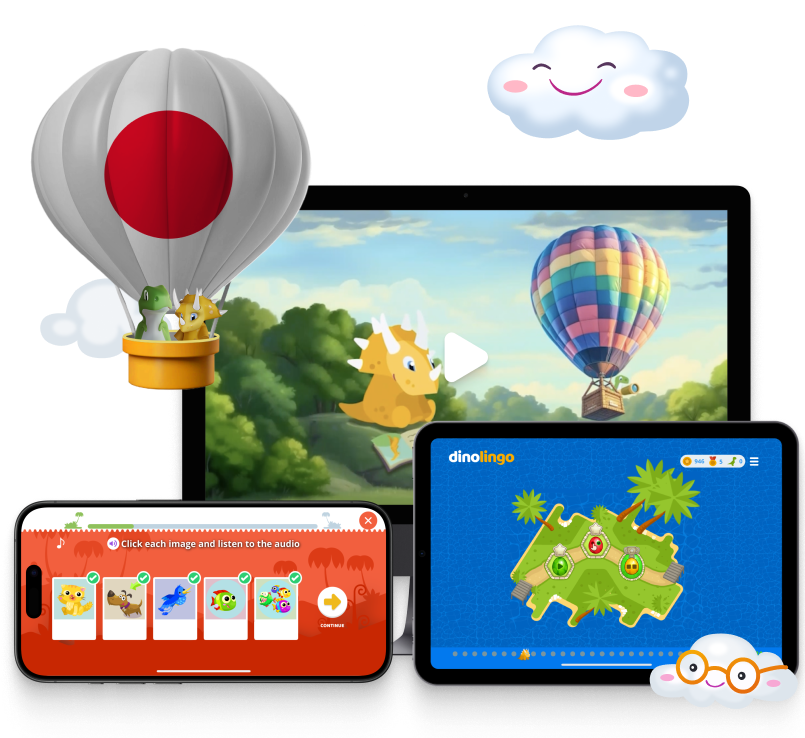
Through Dinolingo’s Japanese lessons, kids can learn vocabulary and cultural concepts like matsuri, mikoshi, and yukata while having fun. With interactive games, cheerful songs, and colorful animations, Dinolingo makes learning both educational and entertaining. Children not only pick up the language but also discover what daily life and traditions look like in Japan.
You can extend the festival fun on Dinolingo as well. A family plan opens over 50 languages and 40,000+ activities, including animated matsuri stories, printable lantern templates, and taiko-beat games. Age-specific paths guide Pre-readers (2–5), Elementary learners (6–10), and Tweens/Teens (11–14) through themed lessons, while parents track progress on an ad-free dashboard.
By folding lanterns, flying carp, and moving through a home festival, children turn matsuri vocabulary into memorable experiences. Whether it’s the dancing, the delicious food, or the vibrant outfits, matsuri festivals are a magical way to experience Japanese culture. Pair these crafts with Dinolingo’s follow-up games, and thanks to tools like Dinolingo, kids around the world can take part in that excitement right from home, saying 「おまつり、だいすき!」 (I love festivals!) in no time.
Sources