Discovering Beautiful Norwegian Baby Names for Girls and Boys
Norwegian names are known for their deep meanings, beautiful sounds, and strong cultural roots. Many names in Norway come from mythology, nature, history, and even places! Did you know that Norway has an official list of approved baby names? This list helps protect children from having names that might be confusing or hard to live with.
Let’s explore some of the most popular and meaningful baby names in Norway, and then take a wider journey into the Norwegian language and culture that gives these names their magic.
Popular Norwegian Baby Girl Names
Many Norwegian girl names sound soft and elegant. Some come from nature or old Norse legends, and others have been passed down through many generations.
Here are some lovely examples:
- Astrid – A royal-sounding name that means “divinely beautiful”
- Ingrid – A strong name linked to Norse mythology
- Freya – The name of a famous Norse goddess of love and beauty
- Elsa – Made popular around the world by a certain snow queen, but also a traditional Nordic name
- Hanna / Hannah – A timeless name meaning “grace”
- Gudrun – A powerful old Norse name that means “divine knowledge”
- Sigrid – A name made of “victory” and “beautiful”
- Mari / Maria – Classic and widely used across many cultures
Popular Norwegian Baby Boy Names
Norwegian boy names often reflect bravery, strength, or nature. Some are inspired by Viking heritage or ancient leaders, while others come from everyday Norwegian life.
Check out these cool names:
- Olaf – A strong name meaning “ancestor’s heir”
- Leif – Meaning “descendant,” made famous by explorer Leif Erikson
- Erik / Eric – A name of many kings, meaning “ever ruler”
- Bjorn – Means “bear,” perfect for a brave and bold child
- Anders / Andreas – Popular names meaning “manly” or “strong”
- Magnus – A Latin-based name meaning “great,” used by kings and warriors
- Haakon – A royal Norwegian name that means “high son”
- Sverre – A traditional name meaning “wild, restless one”
How Norwegian Names Are Chosen
In Norway, parents must choose names from an official government list. This rule helps make sure that every child has a name that fits well into Norwegian language and culture. Names that are too unusual or hard to pronounce might be rejected.
Norwegian names often come from:
- Mythology – like Freya, Odin, or Thor
- Nature – such as Bjorn (bear) or Liv (life)
- History and Royalty – like Olaf or Astrid
- Religion – such as Maria or Paul
- Colors and Plants – for example, names inspired by flowers or natural elements
Why Norway Has Two Written Norwegians, and How to Use Them
The same culture that shapes these names also shapes the language they live in, and Norwegian holds a big surprise: it has two official written languages! They’re called Bokmål and Nynorsk. Both are used in schools, books, and signs across the country. But don’t worry, you don’t have to learn both right away.
Bokmål vs. Nynorsk
Bokmål is the most common form of Norwegian, especially in big cities like Oslo and Bergen. Nynorsk, which means “New Norwegian,” is more often used in western parts of Norway and in rural areas. The words look a bit different, but they sound very similar when spoken!
How to Tell Them Apart
You might see the sentence “I am a child” written two ways, and both are completely correct:
- In Bokmål: Jeg er et barn.
- In Nynorsk: Eg er eit barn.
Fun Activities to Explore Both
Language Detective Game. Print out a few sentences in both Bokmål and Nynorsk. Let kids play detective to spot the differences!
Say It Your Way! Pick a simple phrase like “Hello, my name is…” and write or say it in both versions. Kids can create fun posters showing each version. Whether you’re in the city or the countryside, you’ll hear both forms of Norwegian in action.
How to Sound Nice in Norwegian (It’s Easy!)
Being kind is cool, and learning how to say nice things in Norwegian is super fun, too! Whether you’re saying thank you or greeting someone warmly, Norwegian has some lovely phrases that kids can learn right away.
Kind Words Kids Can Use
Here are a few cheerful phrases to get started:
- Takk – Thank you
- Vær så snill – Please
- God dag – Good day
- Ha det bra – Goodbye (literally “have it good”!)
Saying these words with a smile makes them even more meaningful. Try using them during pretend play or family time!
Activities for Kindness Practice
Politeness Role Play. Act out situations like asking for a toy, saying goodbye to a friend, or meeting someone new. Use Norwegian phrases and swap roles for extra fun.
Kindness Chart. Make a weekly chart. Each time a child uses a kind Norwegian phrase, add a sticker. At the end of the week, celebrate with a small treat or extra game time!
How to Talk About the Northern Lights in Norwegian
Norway is also home to one of nature’s most magical shows, the northern lights, which Norwegians call nordlys! Learning how to talk about them in Norwegian is a great way to mix language with wonder.
Magical Sky Words
- nordlys – northern lights
- himmel – sky
- stjerner – stars
- lys – light
- fargerik – colorful
- mørk – dark
These words help kids describe the night sky, whether they’ve seen the aurora in real life or in pictures.
Activities for Learning Sky Words
Paint the Night Sky. Use black or deep blue paper and let kids create their own nordlys with colored paints or crayons. Add stars and say each word aloud in Norwegian.
Aurora Storytime. After watching a short video or reading about the northern lights, ask kids to describe what they saw using Norwegian words like lys, fargerik, and himmel.
A Fun Way to Learn Norwegian Names, Words, and Culture
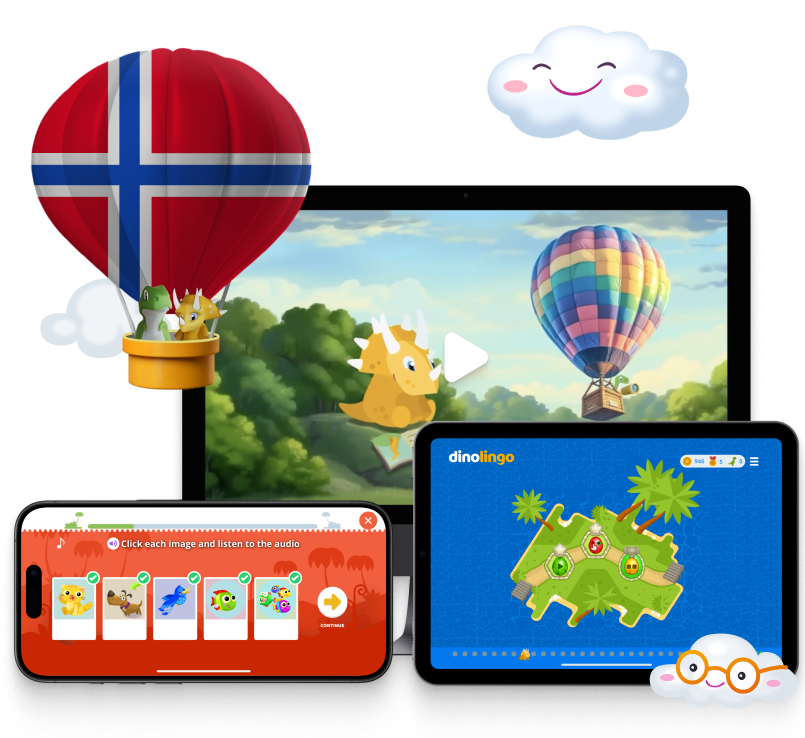
If you want to help your child learn more Norwegian words, stories, and names, try using fun learning tools like Dinolingo. Dinolingo offers online Norwegian lessons for kids ages 2–14, with games, videos, songs, and printable worksheets. The platform mostly uses Bokmål but introduces kids to real-life language variety through playful content, and it turns big ideas like space and nature into simple, fun learning. Whether your child is learning their own name, how to greet others, or how to describe the nordlys in Norwegian, they can enjoy every step of the journey while building both language and social-emotional skills.
With access on web, iOS, or Android, and offline learning options, it’s easy for kids to explore a new language anytime. Plus, the parent dashboard helps you track progress while your child collects rewards and learns with joy.