Celebrating the Seasons: Polish Festivals and Holidays
Poland is a country rich in tradition, and its holidays beautifully reflect the nation’s deep cultural and religious roots. From candlelit cemeteries to playful water fights, Polish celebrations are full of warmth, meaning, and togetherness. Fireworks, sweets, songs, and traditions fill Polish holidays with warmth and joy, and teaching kids the happy words of each event helps them connect language to culture in the most memorable way.
Christmas in Poland: The Magic of Wigilia
One of the most cherished holidays in Poland is Christmas Eve, known as Wigilia. Celebrated on December 24, this evening marks the true beginning of Christmas for Polish families. Unlike in some other countries, Christmas Eve in Poland is often more important than Christmas Day.
Families decorate a tree with ornaments, lights, candy, and oranges, then wait for the appearance of the first star in the sky, a sign that dinner may begin. Since the winter sun sets early, this magical moment often comes around 3 p.m. The meal includes no meat, in line with Catholic tradition, but is full of delicious fish dishes, such as carp and herring, alongside soups, pierogi, and traditional desserts.
After dinner, presents are opened, and some families attend Midnight Mass. On December 25 and 26, called the second and third days of Christmas, extended family gatherings and meat-filled feasts continue the celebration.
Easter: Springtime Traditions and Sweet Surprises
Easter is another major holiday, celebrated with both solemn reflection and joyful family customs. Taking place in March or April, Easter Sunday honors the resurrection of Jesus.
Homes are decorated with painted eggs (pisanki), flowers, and cheerful symbols of spring. Families share an elaborate meal that includes dishes like żurek (sour rye soup), baked meats, and the beloved mazurek cake, a flat pastry topped with kajmak (a caramel-like filling), chocolate, and nuts.
The Monday after Easter is Śmigus-Dyngus, a day of light-hearted water fights. Children sneak up on each other with buckets, water balloons, or squirt guns, continuing a centuries-old tradition of playfulness and renewal.
All Saints’ Day: Remembering with Light
On November 1, Poles observe All Saints’ Day (Dzień Wszystkich Świętych), a deeply meaningful holiday dedicated to honoring the dead. Families visit cemeteries to leave candles and flowers on the graves of loved ones.
As the sun sets, the graveyards glow with thousands of flickering lights. This peaceful and emotional scene is one of Poland’s most powerful visual traditions, reminding people of the importance of remembrance and family connection.
Why Holiday Words Make Language Fun
Each of these celebrations is also a perfect chance to learn Polish. Holiday vocabulary works so well for young learners because it:
- Brings culture and family together
- Sparks curiosity and storytelling
- Makes Polish feel warm and exciting
Polish Words for Celebrating Together
These joyful words turn up across nearly every Polish holiday, from Wigilia to Easter. They are easy to practice while baking, decorating, or singing as a family:
- Święto – Holiday
- Rodzina – Family
- Prezent – Gift
- Tort – Cake
- Balon – Balloon
- Piosenka – Song
- Świeczka – Candle
- Zabawa – Celebration / Party
- Uśmiech – Smile
- Dziękuję – Thank you
Try this phrase together: Dziękuję za prezent! (Thank you for the gift!)
Festive Polish Activities
Hands-on play makes new words stick. Here are two simple games that tie Polish vocabulary to the holidays above:
Polish Holiday Cards
Kids can decorate cards with words like święto, uśmiech, and rodzina and give them to family members.
Tradition Charades
Act out holiday traditions like lighting candles or singing songs, and guess the Polish word: świeczka, piosenka, tort.
Bringing Polish Culture to Life for Kids
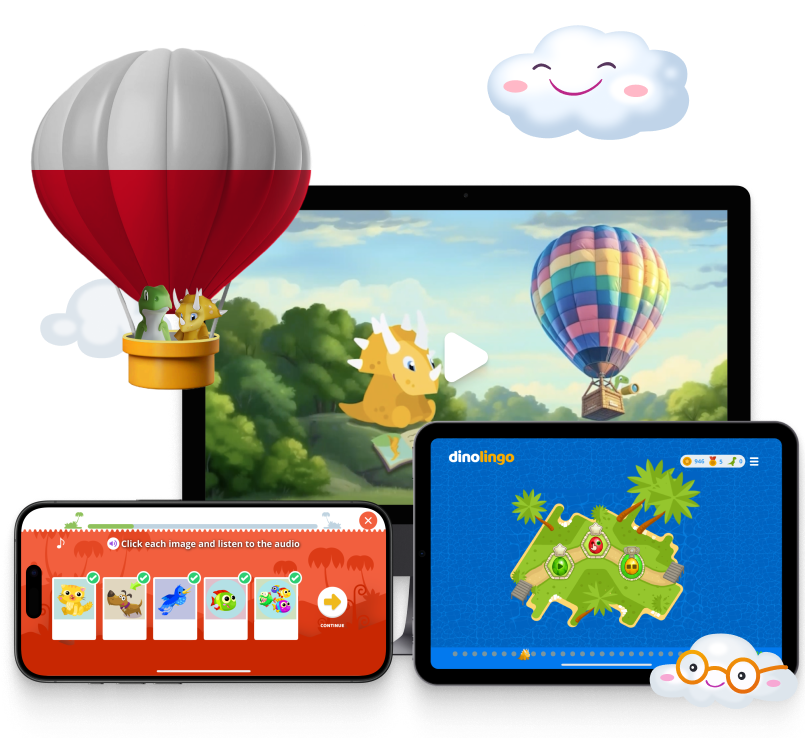
Celebrating holidays is a great way to teach children about language and tradition. With Dinolingo, kids can explore Polish culture through games, songs, and stories that align perfectly with these festive traditions. Whether it’s singing a Christmas carol or learning the word for “egg” during Easter, Dinolingo helps children engage with Polish in a fun and meaningful way. The program brings seasonal vocabulary and joyful expressions to life through games, songs, and stories for ages 2 to 14.
Polish holidays are full of light, love, and learning. Every celebration is a new chance to practice language and build beautiful memories.