Discover the charming and timeless names Polish families love the most! From classic saints’ names to modern favorites, Poland offers a beautiful variety of options for baby girls and boys. Whether you’re curious about Polish culture or choosing a name for your child, this list is a perfect place to start. From there, this guide opens the door to the wider world of Poland: its language, legends, food, festivals, and the playful ways kids can begin to speak Polish themselves.
Most Popular Polish Names for Kids
Polish names often carry deep roots in faith, history, and family tradition. Many come from saints, royalty, or beloved figures in Polish legend, while others are simply timeless favorites that families pass down through generations. Names like Wojciech, Stanisław, Kazimierz, Jan, and Adam have long been popular for boys, while girls are often given names such as Maria, Anna, Katarzyna, Zofia, and Wiktoria. You will also notice that Polish has warm, affectionate nicknames for almost every name, a reflection of how expressive and family-centered the culture is.
Getting to Know Poland
Where Is Poland?
Poland is a country located in Central Europe. It shares borders with Germany, the Czech Republic, Slovakia, Ukraine, Belarus, Lithuania, and the Baltic Sea. Poland is made up of sixteen regions, called voivodeships, each with its own cultural traditions and local specialties. The capital city, Warsaw, is the largest city in the country and serves as the political and economic center.
A Long and Resilient History
Poland has one of the oldest recorded histories in Europe, with its roots going back to the 10th century. Over the centuries, it developed a strong identity, influenced by both Western and Eastern European cultures. However, in 1795, Poland was partitioned and lost its independence as it was divided among Russia, Austria, and the Kingdom of Prussia. For more than 120 years, Poland did not exist as a country. In 1918, after World War I, it officially regained independence and became a sovereign nation once again.
Poland’s modern history includes both hardship and resilience. During World War II, it suffered greatly, but after decades of political change, Poland is now a democratic country and a member of the European Union.
Legends and Symbols of Poland
Poland’s origins are rooted in legend, one that has been passed down through generations and continues to shape the country’s national identity. Stories like these are more than just folklore. They help children understand the values and identity of a culture.
How Poland Got Its Name
The story begins with three brothers: Lech, Czech, and Rus. As the tale goes, they were out hunting together when each decided to follow a different path. Rus journeyed east and is said to have founded Russia. Czech traveled west and eventually founded Czechoslovakia. But it was Lech who took a different direction, one that would change the course of history for Poland.
While exploring the northern forests, Lech came across a magnificent white eagle. The bird, proud and powerful, sat atop a tall oak tree, silhouetted against the golden evening sun. Lech was mesmerized by the scene. He took it as a sign and decided to settle there, naming the area Gniezno, which means “nest” in Polish. This symbolic name honored the eagle and the land’s new beginning.
The White Eagle and Other National Symbols
Lech’s choice of the white eagle as a symbol became deeply embedded in Polish culture. The national symbol of Poland is a white eagle, a majestic bird that has been used on flags, coins, and official emblems throughout Poland’s long and complex history. Depending on the ruling power at different times, the eagle was sometimes shown with or without a crown. Today, the crowned white eagle remains the official coat of arms of Poland, representing strength, independence, and heritage.
Poland’s national anthem is Dąbrowski’s Mazurka, also known by its first line: “Poland Has Not Perished Yet.” The lyrics reflect the hope and determination of the Polish people, even during difficult times.
The Warsaw Mermaid
The capital city of Poland, Warsaw, is represented by the symbol of a mermaid. This mythical creature is seen holding a sword and shield, said to protect the city and its people. You’ll find statues and artworks of the Warsaw mermaid throughout the city, especially near the Old Town.
The Trumpeter of Krakow
Every hour in Krakow’s Main Square, a trumpeter plays the same melody from the top of St. Mary’s Basilica. The tune is interrupted mid-note and never completed. This tradition honors a legend from centuries ago. According to the story, the original trumpeter spotted invaders approaching and sounded the alarm to warn the townspeople. He managed to alert many citizens who escaped, but he was struck by an arrow before finishing the tune. Today, the unfinished melody commemorates his heroic act.
Fast Facts About Poland
- Language: Polish is the official language of Poland and is spoken by over 40 million people.
- Nobel Winners: Poland has produced 17 Nobel Prize winners, including famous names like Wisława Szymborska and Marie Curie.
- English Words with Polish Origins: Words like “schlub” and “schmuk” have roots in Polish Yiddish dialects and made their way into the English language.
Places to Visit in Poland
Poland is full of historical charm and breathtaking nature. If you’re planning a virtual journey or teaching your child about Polish culture, here are some must-see places that kids will find fascinating.
Warsaw and Krakow: Where History Lives On
The capital city, Warsaw, and the historic city of Krakow are two of Poland’s most famous destinations. Both cities feature castles and Old Town areas that look just like they did centuries ago. Walking through their cobblestone streets is like stepping into a storybook, perfect for helping children imagine life in the past. Warsaw is also the ideal place to learn everyday Polish words inspired by city life:
- Miasto – City
- Pałac – Palace
- Zamek – Castle
- Park – Park
- Ulica – Street
- Most – Bridge
- Rzeka – River
- Pomnik – Monument
- Tramwaj – Tram
- Rynek – Market square
Try using them in short phrases: To jest park w Warszawie. (This is a park in Warsaw.) or Gdzie jest tramwaj? (Where is the tram?)
Zakopane: The Mountain Town of Traditions
Nestled at the base of the Tatra Mountains in southern Poland, Zakopane is a beautiful small town where traditional wooden houses, mountain culture, and folk art are still alive. It’s also a popular destination for winter sports and mountain hikes. Nearby, the Wieliczka Salt Mine offers a unique adventure underground, with tunnels, chambers, and even sculptures, all made entirely of salt!
The Northern Coast: Gdansk and Sopot
Poland borders the Baltic Sea in the north, where towns like Gdansk and Sopot attract visitors with their charming ports and sandy beaches. Families enjoy boat rides, waterfront walks, and fresh seafood by the sea.
Traditional Polish Food
Poland is famous for its hearty and flavorful traditional foods. Many of these dishes are passed down through generations and still enjoyed in homes, restaurants, and celebrations across the country. Food is a fun and tasty way to learn about a new culture.
Kielbasa and Bigos
One of the most iconic foods in Poland is kielbasa, a type of sausage that comes in many varieties. It can be smoked, fresh, spicy, or mild. Kielbasa is often served with bread, pickles, or mustard and is a must at holidays and picnics.
Another classic dish is Bigos, also called Hunter’s Stew. It’s a warm, rich meal made with sauerkraut, different meats, and spices. It’s usually served with potatoes or bread and is especially popular in winter.
More Savory Favorites
- Pierogi are delicious dumplings filled with mashed potatoes, cheese, onions, meat, or fruit. They can be boiled or fried and are a favorite for both children and adults.
- Barszcz is a bright red beet soup often served with sour cream or dumplings. It’s a common holiday dish.
- Gołąbki are cabbage rolls stuffed with rice and meat, then baked in tomato sauce.
Polish people also enjoy dark rye breads, potatoes, and fresh vegetables daily. In many homes, the main meal (obiad) is served in the early afternoon, around 1 or 2 p.m. Later in the evening, families usually eat a smaller supper of sandwiches, salads, or soup.
Sweet Treats and Dessert Words
Desserts are a big part of Polish culture and a delicious way for kids to learn new words. From creamy cakes to fruit-filled pastries, sweet treats help children practice describing colors, textures, and tastes. Here is a tasty starter vocabulary:
- Ciasto – Cake
- Lody – Ice cream
- Czekolada – Chocolate
- Sernik – Cheesecake
- Pączek – Doughnut
- Truskawka – Strawberry
- Bita śmietana – Whipped cream
- Słodki – Sweet
- Smakować – To taste
- Deser – Dessert
Try this phrase: Deser jest bardzo słodki! (The dessert is very sweet!) Then play a guessing game: describe a dessert and have kids name the Polish word, like “It’s round, filled with jam, and fried!” (Pączek!)
How Poles Communicate
Polish culture places great importance on how people interact, both in words and gestures. From storytelling over tea to subtle body language, the way Poles express themselves reflects a deep appreciation for relationships, warmth, and tradition.
Talkative by Nature
Poles are generally seen as expressive and talkative, especially within close circles like family and friends. Conversations are often animated, emotional, and deeply engaging. It’s common to discuss personal matters openly, and long discussions over meals or tea are a beloved tradition, especially among women. These talks serve as a way to stay connected, exchange news, and share opinions on everything from politics to daily life. Children grow up hearing lively stories, songs, and proverbs passed down through generations.
Greetings and Gestures
In addition to words, nonverbal communication plays a vital role in Polish culture. A handshake may be used in formal settings, but among friends and family, a warmer gesture is preferred: the three-kiss greeting. This involves a kiss on each cheek (right-left-right) and is used by both men and women when saying hello or goodbye. It’s a symbol of affection and respect. Poles also value eye contact, which is seen as a sign of honesty and attentiveness.
Respect and Personal Space
While Poles are emotionally open with loved ones, they also tend to be respectful of personal boundaries in public. Formality is maintained when meeting new people, often through polite expressions like “Dzień dobry” (Good day) and the use of honorifics such as Pan (Mr.) or Pani (Ms.). A nod, a firm handshake, or a warm smile can say just as much as spoken words. Poles are attentive listeners, and it’s common to wait until the other person finishes speaking before responding, which shows mutual respect.
Your First Polish Words
Starting with the basics is the best way to learn a new language, and Polish is full of fun, friendly words kids will love. The first words a child learns help them feel confident, connect Polish with real life, and build vocabulary they can use right away. Here are 15 essential beginner words:
- Cześć – Hi / Hello
- Dzień dobry – Good morning / Good day
- Mama – Mom
- Tata – Dad
- Tak – Yes
- Nie – No
- Proszę – Please / Here you go
- Dziękuję – Thank you
- Lubię – I like
- Nie lubię – I don’t like
- Kot – Cat
- Pies – Dog
- Woda – Water
- Chleb – Bread
- Kolor – Color
Practice using these in simple sentences like: Lubię chleb. (I like bread.) or To jest mój pies. (This is my dog.)
Magic Words: Kindness in Polish
Kindness is a superpower, and words are how we share it. In Polish, simple polite expressions can feel magical to young learners, helping them connect, show respect, and brighten someone’s day. These polite words are perfect to practice every day:
- Proszę – Please
- Dziękuję – Thank you
- Przepraszam – Sorry
- Nie ma za co – You’re welcome
- Cześć – Hi
- Do widzenia – Goodbye
- Dzień dobry – Good day
- Dobranoc – Good night
- Jak się masz? – How are you?
- Miłego dnia! – Have a nice day!
Try this phrase: Miłego dnia, proszę pani! (Have a nice day, ma’am!) With every gentle word, kids make the world a little brighter, starting with a simple proszę.
Polish Proverbs and Tongue Twisters
Polish is rich with short, wise proverbs that carry big lessons. These little sayings help children learn common sentence structures and rhythm, understand morals and life lessons through language, and feel proud as they repeat real Polish sayings.
Popular Polish Proverbs
- Lepszy wróbel w garści niż gołąb na dachu. A sparrow in the hand is better than a pigeon on the roof. (Be content with what you have.)
- Nie chwal dnia przed zachodem słońca. Don’t praise the day before sunset. (Wait until something is truly finished.)
- Bez pracy nie ma kołaczy. Without work, there are no sweet rolls. (No reward without effort.)
- Cicha woda brzegi rwie. Still water runs deep. (Calm people can be strong or surprising.)
- Kto rano wstaje, temu Pan Bóg daje. God helps those who wake up early. (Being an early riser pays off.)
Tongue Twisters You’ll Love
Tongue twisters are more than just silly fun. They are a great way for kids to strengthen pronunciation and fluency, hear and repeat sounds in a fun context, and build confidence in speaking Polish aloud. Here are some beginner-friendly favorites:
- Król Karol kupił królowej Karolinie korale koloru koralowego. King Karol bought Queen Karolina coral-colored beads.
- Stół z powyłamywanymi nogami. A table with broken legs.
- Chrząszcz brzmi w trzcinie w Szczebrzeszynie. A beetle buzzes in the reeds in Szczebrzeszyn.
A few key words to listen for: Król (King), Królowa (Queen), Korale (Beads), Stół (Table), Nogi (Legs), Chrząszcz (Beetle), and Trzcina (Reeds). Start slow, then make it a game: who can say it fastest without stumbling? With each stumble and smile, kids get closer to sounding like Polish pros.
Polish Traditions Through Music and Holidays
Polish Easter for Curious Kids
Easter in Poland is filled with bright colors, meaningful traditions, and playful customs. It combines cultural stories, symbols, and hands-on activities, from painting eggs to splashing water. Here is some holiday vocabulary to bring the celebration to life:
- Pisanki – Painted eggs
- Koszyczek – Basket
- Baranek – Lamb (symbol of Easter)
- Święconka – Blessing of the basket
- Wielkanoc – Easter
- Woda – Water
- Poniedziałek Wielkanocny – Easter Monday
- Zajączek – Easter bunny
- Jajko – Egg
- Kwiaty – Flowers
Example phrase: Pisanki są kolorowe! (The Easter eggs are colorful!) On Easter Monday, families celebrate Śmigus-dyngus by splashing water (woda) on each other, a joyful custom kids love to act out.
Say It with Polish Polka
The joyful beat of Polish polka music isn’t just for dancing. It’s also a playful way for kids to learn Polish words. Combining music and movement helps children practice verbs and action words, connect language to rhythm and motion, and discover Polish culture in a fun way. Here are words straight from the polka floor:
- Muzyka – Music
- Taniec – Dance
- Rytm – Rhythm
- Krok – Step
- Obrót – Spin
- Ręce – Hands
- Nogi – Legs
- Szybko – Fast
- Wesoły – Cheerful
- Strój – Costume
Say it aloud: Taniec jest szybki i wesoły! (The dance is fast and cheerful!) Create a short routine using words like krok, obrót, and ręce, and say each word out loud with every move.
Smart Ways Kids Can Learn Polish
Kids don’t need hours of study to start speaking Polish. They just need the right tricks. With small but smart steps, learning can fit into playtime, storytime, or even a walk outside. Smart learning encourages regular exposure in short, playful bursts, builds memory through songs, movement, and color, and makes language feel like a game, not a chore. Try these tiny tips that really work:
- Label Your World – Put sticky notes with Polish words on everyday objects (drzwi – door, okno – window).
- Use Rhymes and Songs – Songs are catchy. Try ones that include numbers, body parts, or colors.
- Create a Polish Routine – Say a few words at the same time each day, during meals, bedtime, or getting dressed.
- Repeat with a Twist – Use the same word in new ways. Example: pies (dog) becomes pies biega, duży pies, śpiący pies.
You can also play games like “Spin and Speak,” where kids spin a paper spinner with categories such as animals, colors, and food, then say a matching word in Polish. Or fill a “Magic Word Jar” with slips of paper, pick one word a day, and use it three times. Tiny moments matter. With playful routines and mini language games, those small tricks add up to big success.
Bring Polish to Life with Dinolingo
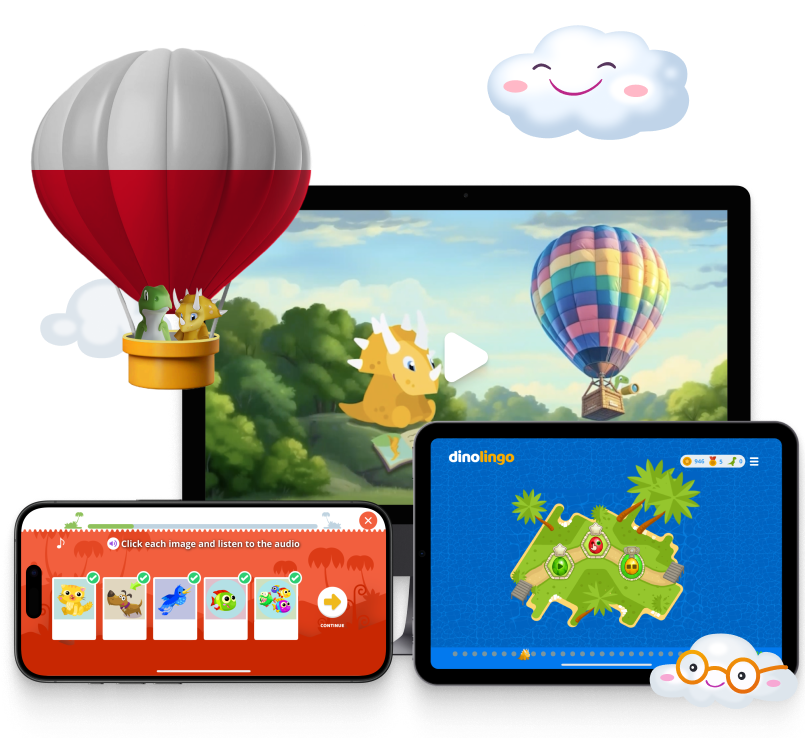
From the legend of Lech and the white eagle to pierogi, polka, and your first 15 words, Poland’s language and culture are full of wonder for young learners. When children learn Polish, it’s not just about vocabulary. It’s also about understanding how to communicate like a native speaker. With Dinolingo, kids aged 2 to 14 can explore legends, songs, proverbs, food, and everyday phrases through interactive videos, games, stories, and printable worksheets on the web, Android, and iOS. Parents also have access to a progress-tracking panel, making it easy to follow their child’s language learning journey from home. By combining language learning with cultural awareness, children become not just bilingual, but also bicultural, ready to connect more deeply with others and speak with confidence.