What Does “Gezellig” Really Mean? The Dutch Word You’ll Love
“Gezellig” is one of the most famous Dutch words and also one of the hardest to translate! It’s not just a feeling or a place, it’s a whole atmosphere. For kids learning Dutch, understanding gezellig helps them connect language with comfort, joy, and togetherness. Once you fall in love with this one word, the rest of Dutch starts to feel just as warm: from the soft, friendly accents of Belgium to silly tongue twisters, tasty snacks, and adventures along the canals.
What Does “Gezellig” Mean?
There’s no perfect English translation for gezellig. It can mean:
- Cozy
- Friendly
- Warm atmosphere
- Pleasant time with others
You can use it to describe a place, a person, a moment, or even an object that makes you feel good.
How Kids Can Use “Gezellig”
Here are a few ways kids might hear or use the word:
- Het is gezellig hier! (It’s cozy here!)
- We hebben een gezellige avond gehad. (We had a lovely evening.)
- Mijn oma is heel gezellig. (My grandma is very warm and kind.)
It’s a word that makes Dutch feel personal and connected.
Activities to Feel “Gezellig” While Learning
“Create a Gezellig Corner.” Build a small cozy reading nook with soft pillows, books, and snacks. Label it mijn gezellige hoekje (my cozy corner) and use it during Dutch reading or listening time.
“Gezellig Moments Collage.” Ask your child to draw or cut out pictures of things that feel gezellig to them. Talk about each image using Dutch phrases like een gezellige kat (a cozy cat) or een gezellige vriend (a nice friend).
How Kids Speak Dutch in Belgium: What Makes It Unique
That same warmth carries across the border. Dutch is spoken in both the Netherlands and Belgium, but kids in each place use different words and phrases. In Belgium, they speak a version called Flemish Dutch, or Vlaams, that sounds soft, friendly, and full of regional charm!
Why Learn Belgian Dutch?
Learning Flemish Dutch gives kids:
- A wider understanding of how language varies by region
- Insight into Belgian culture and daily life
- Fun, new words that may not be used in the Netherlands
It’s also perfect for families living in Belgium or traveling to Flanders!
Unique Flemish Dutch Words and Phrases
- Goesting – Craving or desire (Ik heb goesting in een koekje! – I want a cookie!)
- Amai! – Wow! / Oh my!
- Smakelijk – Enjoy your meal
- Septiek – Septic tank (often used casually for feeling bad)
- Frigo – Fridge (instead of koelkast)
- Nu direct – Right now
- Zwijg eens – Be quiet (friendly tone, not rude!)
These words help kids speak more like their Belgian peers. To practice, try a few simple games. In “Say It the Belgian Way,” give your child a Dutch word from the Netherlands and the Flemish version, then switch between the two: koelkast vs. frigo, zin hebben vs. goesting hebben. In a “Mini Flemish Market” roleplay, set up a pretend market stall and use Belgian words like smakelijk, amai, and goesting while serving food, candy, or toy snacks. From amai! to goesting, Belgian Dutch is full of warmth and expression, and learning a few Flemish words lets kids enjoy the rich variety of Dutch.
From “Scheveningen” to “Zeven Zagen”: Dutch Tongue Twisters You’ll Love
Once kids enjoy the sounds of Dutch, tongue twisters become a fun and challenging way to master pronunciation. Dutch has some delightfully tricky phrases that are perfect for learners who want to play with language while building fluency.
Why Use Tongue Twisters?
Tongue twisters help kids:
- Improve pronunciation and articulation
- Hear subtle differences between Dutch sounds
- Gain confidence in speaking quickly and clearly
Even one line repeated daily can make a noticeable difference in clarity and fluency.
Fun and Popular Dutch Twisters
Start with short, playful phrases before moving to longer challenges:
- Scheveningen – Famous for testing pronunciation of the Dutch “sch” sound
- Zeven zwanen zwommen in de zee (Seven swans swam in the sea)
- De kat krabt de krullen van de trap (The cat scratches the curls from the stairs)
- Als vliegen achter vliegen vliegen, vliegen vliegen vliegensvlug (If flies fly after flies, flies fly lightning-fast)
These silly sentences create opportunities to laugh, repeat, and practice out loud. Try the “Repeat the Twister” game: say the twister slowly and clearly once, let your child repeat it after you, then speed up together and track how many times they can say it correctly in a row. Or play “Twister Theater,” letting kids act out tongue twisters with puppets or toys. A toy cat, for example, can krabt de krullen van de trap. Acting builds memory and adds even more fun. Dutch tongue twisters may sound silly, but they’re serious tools for building fluency.
Dutch Snacks You’ll Love: How to Order Them Like a Local
Few things feel more gezellig than sharing a snack, and snacks are a big part of Dutch culture that kids love! Whether it’s crispy friet or a sweet stroopwafel, learning how to name and order snacks in Dutch turns everyday cravings into language learning fun. Talking about food is natural and exciting for children, and snack words help kids build useful everyday vocabulary, connect words with taste, smell, and experience, and feel confident ordering or roleplaying in Dutch.
Popular Dutch Snacks to Know and Say
- Stroopwafel – Syrup waffle
- Friet – Fries (also called patat)
- Kroket – Breaded meat snack
- Bitterballen – Mini fried meatballs
- Poffertjes – Mini pancakes
- Kaassoufflé – Fried cheese pastry
- IJsje – Ice cream
- Snoep – Candy
You can use these in pretend cafés, cooking play, or snack time chats. For a “Dutch Snack Menu” roleplay, create a simple menu with pictures and Dutch names: one person is the snack seller, the other orders with Mag ik een stroopwafel, alsjeblieft? (May I have a stroopwafel, please?). In the “Taste & Rate” game, try Dutch snacks, real or pretend, and rate them in Dutch: Lekker! Niet mijn favoriet. (Tasty! Not my favorite.) You can even make a chart. With tasty words, pretend play, and a little creativity, kids can learn to talk like locals with a stroopwafel in hand!
Canal Adventures in Dutch: Talk About What You See and Hear
From a cozy snack stop, it’s a short walk to the water. Whether in Amsterdam or in a picture book, canals are full of fascinating things to see and great words to learn in Dutch. Boats, ducks, bridges, and bells turn every water adventure into a fun language lesson. Kids learn best when they’re curious, and on the water they observe real things they can name in Dutch, use words in natural, playful settings, and build listening and speaking skills outdoors. Even a short walk along a canal, or a pretend one at home, can be a rich learning moment.
Dutch Canal Words to Teach First
- Gracht – Canal
- Brug – Bridge
- Boot – Boat
- Water – Water
- Eend – Duck
- Fiets – Bicycle
- Klapbrug – Drawbridge
- Bel – Bell
Encourage your child to spot and name what they see: Ik zie een brug! (I see a bridge!). Play the “I Spy in Dutch” canal game while looking at canal scenes, real or in books: Ik zie iets dat blauw is… (I see something that is blue…), then use the word together. Or try a “Canal Boat Adventure” roleplay: set up chairs like a boat, pretend to cruise through canals, and point out things you “see” with phrases like Kijk! Een eend! (Look! A duck!). Canals are more than pretty, they’re full of teachable moments, and with a little imagination and a few Dutch words, any canal becomes a floating classroom.
Warm Learning with Dinolingo
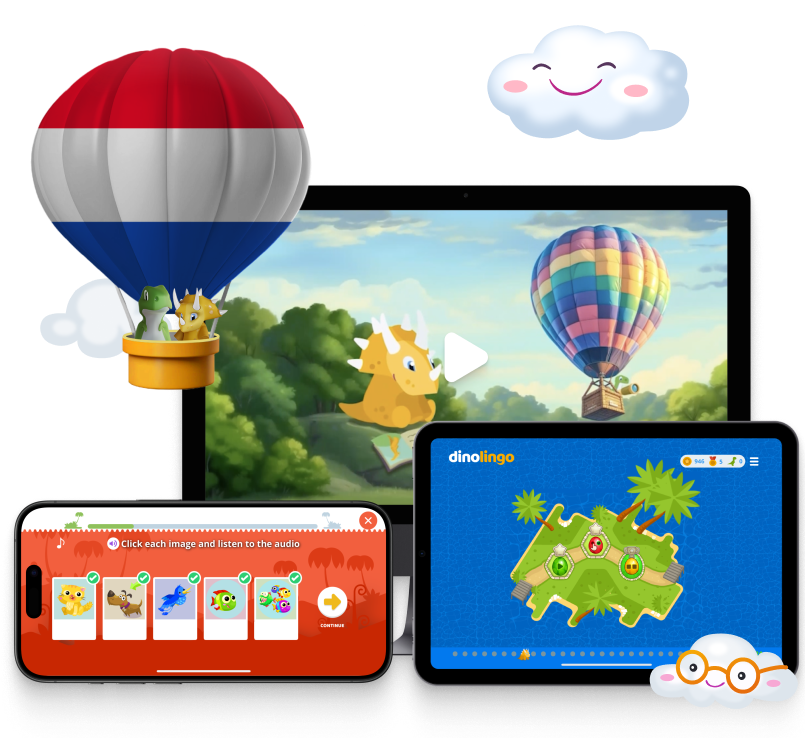
Dinolingo helps kids explore words like gezellig through real-life scenes, emotions, and fun activities. In their Dutch for kids course, learners ages 2–14 engage with language in a way that feels truly gezellig. The platform brings food-themed words like snoep, ijsje, and kaas to life through storytelling, visuals, and games, and introduces places like canals, cities, and parks through visual storytelling, motion, and sound. Through native pronunciation and built-in rewards, children get a feel for rhythm and intonation while staying motivated. While the program uses standard Dutch, it builds a strong foundation in pronunciation, conversation, and vocabulary, so kids can spot and enjoy regional variations like Flemish with ease.
Final Thoughts
“Gezellig” is more than a word, it’s a Dutch way of life. By learning how to feel and use it, and by exploring Flemish words, playful tongue twisters, tasty snacks, and canal adventures, kids gain a deeper connection to both the language and the culture.
Sources