Colorful Bulgarian Traditions Kids Will Love
Bulgarian culture has developed over many centuries. It’s full of colorful traditions, ancient rituals, and joyful celebrations that are still alive today. Many of these customs are tied to Orthodox Christianity, while others come from Bulgaria’s deep folk roots. Even the way people nod their heads is delightfully surprising here. Let’s explore some of the most unique and exciting parts of Bulgarian culture together!
Fire Dancing: Dancing on Hot Coals!
One of the most fascinating Bulgarian traditions is fire dancing, also called nestinarstvo. This magical dance happens at night, on glowing hot coals! The fire-dancers spend the day preparing inside a chapel while holding icons of Saint Konstantin and Saint Elena, listening to bagpipes. When the music starts at night, they dance barefoot on fire, yes, real fire, while holding the saint’s image. Amazingly, they don’t get burned. It’s a beautiful mix of faith, music, and bravery.
Mummery: Bulgaria’s Version of Halloween
Around New Year’s, Bulgarians celebrate a tradition called mummery (kukeri). In this event, men wear handmade masks and costumes to scare away bad spirits. They dance, jump, and make noise to chase away evil and bring in a happy, healthy new year. It’s very similar to Halloween, but with dancing instead of trick-or-treating!
Saint Lazar’s Day: Welcoming Spring
Saint Lazar’s Day is a joyful spring celebration held a week before Easter. On this day, girls wear traditional clothing and walk through their neighborhood, singing songs and giving blessings. People decorate their doors with willow wreaths, which are believed to bring luck and good health for the whole year.
Martenitsa: A Bracelet for Good Luck
One of the most famous Bulgarian traditions is the Martenitsa. It’s a red-and-white bracelet or brooch that people give each other on March 1st, during the Baba Marta (Granny March) holiday. Bulgarians wear Martenitsa until they see the first stork or a blooming tree, signs that spring has arrived. It’s a symbol of hope, health, and new beginnings.
The Rose Valley and Festivals
Did you know that Bulgaria produces most of the world’s rose oil? In the region called the Rose Valley, rose picking is a big event. Every year, there are rose festivals with dancing, music, and flower crowns. It’s a great way for children and families to celebrate Bulgarian nature and culture.
Traditional Bulgarian Dance and Music
Folk music and dance are still an important part of Bulgarian life. Two popular dances are called Horo and Rachenitsa. These dances are performed in circles or lines, and everyone, kids and adults, joins in during celebrations and festivals. The music is lively, with instruments like the bagpipe (gaida) and drums.
It’s All in the Head: Unique Bulgarian Nods
Bulgarian traditions are not only about festivals and dances. They also show up in the way people talk with their bodies. In most places, people nod their heads up and down to say “yes” and shake side to side for “no.” But in Bulgaria, it’s the opposite, and that’s just the beginning!
In Bulgarian culture, people shake their heads left and right to mean “yes” and nod up and down to mean “no.” This fun switch can be surprising for visitors but is completely normal in Bulgaria. Kids love learning this because it feels like a silly trick, but it’s a real part of how people communicate.
Bulgarian body language goes beyond the head, too. Here are a few gestures to watch for:
- Raising the eyebrows quickly: can mean “I agree” or “I understand”
- Touching your forehead: might show surprise or deep thinking
- Hand gestures: used often when talking with excitement or emphasis
Learning these small things helps kids understand not just what people say, but how they say it.
Creative Activities to Try at Home
A great way to bring these traditions to life is to act them out together. Try the Yes or No Game: take turns asking questions and answering with Bulgarian head movements. Can others guess what you mean?
You can also try Gesture Storytime: tell a short story with gestures instead of words, and add Bulgarian expressions as you go. Exploring gestures this way is a fun, surprising way to understand how language works, not just in speech but in action.
Learn About Bulgarian Culture with Dinolingo
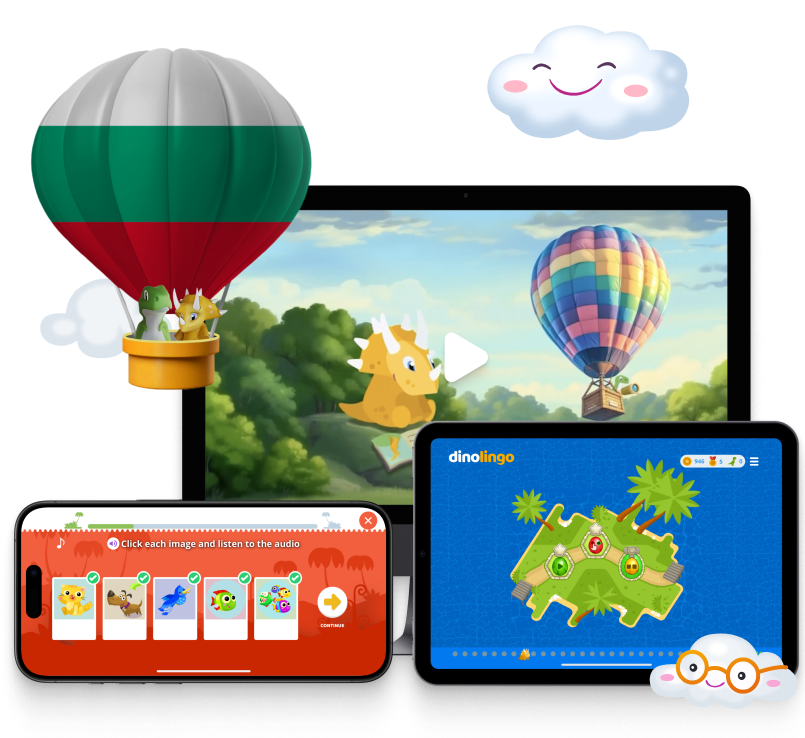
Exploring traditions like fire dancing, Martenitsa, rose festivals, and even Bulgaria’s upside-down nods helps kids connect with Bulgaria’s rich history. With Dinolingo’s Bulgarian program, your child can learn the Bulgarian language and culture through fun videos, games, stories, and songs, along with animations that include gestures and daily interactions. These real-life touches help children connect to the culture behind the language. It’s perfect for children ages 2 to 14 and works on web, iOS, and Android, with printable resources for offline fun. You can even track your child’s learning progress with the built-in parent dashboard.