Beautiful Albanian Names and Their Meanings
Albanian is one of Europe’s oldest languages, and everything about it tells a story, starting with the names people carry. This guide walks families through Albanian names and their meanings, then opens out into the sounds, colors, places, music, culture, and legends that make Albanian such a rewarding language for children to explore. Whether your child is just curious or ready to start learning, there is something here to spark their imagination.
Names That Tell a Story
Albanian names are not just sounds, they tell stories about history, nature, and values. Some names go all the way back to ancient times. For example, Pirro, Gjergj, Arber, Donika, Vojsava, and Teuta are names from the old Illyrian tribes, the ancestors of modern Albanians.
Names Inspired by Nature
In Albania, it’s common for people to be named after beautiful places. Names like Korab, Drin, Sazan, Valbona, and Shkëlzen come from mountains, rivers, and regions in the country. Nature is everywhere in Albanian names.
Names with Powerful Meanings
Many Albanian names express ideas that are important to families. For example:
- Besnik means “faithful”
- Krenar means “proud”
- Shpresa means “hope”
- Perparim means “progress”
There are also names that come from seasons, animals, or things seen as good and kind.
Foreign Influences in Names
Albanian names have also changed over time. During the time of the Ottoman Empire, many people took names like Hasan, Rexhep, or Gjyle, which come from Turkish and Arabic roots. In the 1990s, when Albania opened up to the world, names from TV shows, football players, and other Western cultures became popular, like Samanta, Johnny, Bernadino, and Albertino.
Today’s Most Popular Names
Even though many different names are used in Albania today, many families are choosing to return to traditional Albanian names.
Popular girl names include:
Afërdita, Albana, Alketa, Adelina, Blerta, Donika, Era, Vera, Valbona, Lindita, Shpresa, Pranvera, and Mimoza.
Popular boy names include:
Agim, Alban, Arber, Dritan, Gjergj, Drilon, Ilir, Fatmir, Krenar, Ylli, Luan, and Besnik.
The Secret Sounds of Albanian: Ë, Ç, and XH
Once children love the names, they are often curious about how to say them. Albanian has some special letters that sound totally different and totally fun. These secret-sounding letters make the language unique and musical. Let’s help kids discover how to say them with confidence.
Here are three important Albanian letters kids will love:
- Ë ë (uh): This letter is soft and gentle. Try it in tërë (tuh-ruh, whole) or më (muh, me).
- Ç ç (ch): Sounds just like the English “ch” in chocolate. Try çaj (chai, tea) or çelës (cheh-less, key).
- XH xh (j): This one sounds like the “j” in jungle. Try xhaketë (jah-keh-tuh, jacket) or xham (jahm, glass).
These sounds don’t exist in English the same way, so they’re like a secret code only Albanian learners know. To practice, make a list of words with Ë, Ç, and XH, then hunt for them in books or songs, say them out loud, and clap on the special sound. You can also draw each letter on its own card, match it to a word and picture, and hang the cards up to build memory and confidence. Once kids learn these sounds, they become language superheroes.
Colors in Albanian: Bright, Bold, and Easy to Learn
Colors are another easy and joyful place to begin. They are everywhere on clothes, toys, books, and in nature, and learning the color words helps kids describe the world around them while practicing those new sounds. Here are some common colors in Albanian:
- e kuqe (eh KOO-cheh): red
- blu (bloo): blue
- jeshile (yeh-SHEE-leh): green
- e verdhë (eh VEHR-thuh): yellow
- e bardhë (eh BAR-thuh): white
- e zezë (eh ZE-zuh): black
- roze (ROH-zeh): pink
- portokalli (por-toh-KAH-lee): orange
These words are fun to say and even more fun to use when noticing what’s around you. Try a color scavenger hunt: pick a color word in Albanian and find three objects around the house that match it, saying the word out loud each time. Or make a rainbow with paper or crayons and label each section with the color name in Albanian. Colors help kids describe their world, and learning them in Albanian makes every day a little brighter.
Where in the World Is Albanian Spoken?
Albanian isn’t just spoken in Albania. Kids will be amazed to learn how far the language travels and where they might hear it outside of the classroom.
Where Albanian is official:
- Albania: Of course, the heart of the language.
- Kosovo: Albanian is one of the two official languages.
- North Macedonia: In many areas, Albanian is widely spoken alongside Macedonian.
Other countries with Albanian speakers:
- Montenegro
- Serbia
- Italy: Especially in the south, where Arbëresh communities live
- Greece
- Germany, Switzerland, and the U.S.: Large Albanian-speaking communities
It’s exciting for kids to see how languages travel across borders, and Albanian is no exception. To make it hands-on, print a map and color in all the countries where Albanian is spoken, adding flags and fun stickers for extra flair. You can also make a pretend passport and stamp it for each new place your child learns about. Language is more than just words, it’s a way for kids to feel connected to people, places, and cultures around the globe.
Albanian Culture: A Heritage as Old as Europe Itself
Albania is one of the oldest countries in Europe. Albanians have their own unique language, stories, music, and customs that go back thousands of years. Even though they were ruled by many different empires in the past, like the Greeks, Romans, Byzantines, Ottomans, and Italians, they have kept many of their original traditions alive.
The Double-Headed Eagle
If you’ve ever seen the Albanian flag, you’ll remember the black double-headed eagle on a red background. This powerful symbol represents Albania’s strength and independence, and it can be seen on flags, buildings, and even clothing.
Folklore, Handcrafts, and Old Buildings
Folklore plays a big role in Albanian life. Stories, dances, songs, and plays are passed down from parents to children. You can see beautiful traditional clothing, hand-woven items, and wooden carvings decorated with special Albanian patterns. These designs show the creativity and spirit of the Albanian people. All across Albania, you’ll also find ancient ruins and buildings. Some were built by the Illyrians, Albania’s earliest known people. Others were made by the Greeks and Romans, and many of these structures are still standing today.
Daily Life and Interesting Customs
- In Albania, nodding your head actually means “no”, and shaking your head means “yes”, the opposite of what many people are used to.
- Close friends often greet each other with a kiss on the cheek, while handshakes are more common in formal settings.
- Albanians are warm and emotional, especially with friends and family.
- If you’re eating out with an Albanian family, don’t be surprised if they insist on paying the bill. It’s part of their strong tradition of hospitality.
- Education is very important. Many kids grow up learning not just Albanian but also at least one foreign language.
- In some parts of Albania, arranged marriages are still practiced, often with the belief that it helps families grow closer and stronger.
Unique Traditions and Surprising Facts
Albania has some very interesting customs that make it stand out. Even though Albania was once mostly Muslim, today 74% of Albanians are atheists, which means they do not practice any religion. In fact, Albania was the only officially atheist country in the world during its communist era.
In some rural areas, ancient traditions are still respected. One of the most famous is The Code of Lekë Dukagjini, also known as the Kanun. This was a set of traditional rules that guided Albanian families, especially about marriage and family honor. According to the Kanun, people didn’t choose their husbands or wives for love, their parents decided for them. Another old tradition is the use of separate rooms for men and women when visiting someone’s home. In these cases, men gather in a special room called the Oda, and women are not allowed to enter it. This custom is rarely followed today, but it still exists in some remote villages.
Albanian Music and Instruments for Children
Traditional Albanian music, also known as folk music, is one of the country’s richest cultural treasures. It offers a unique soundscape filled with distinctive melodies, vibrant rhythms, and traditional instruments that vary from region to region. Introducing children to this heritage through music can be a delightful and educational experience.
Albania’s musical tradition is often divided between the northern and southern parts of the country, each with its own instruments and styles. A defining feature of southern Albanian music is polyphony, a beautiful and complex form of music where several independent vocal or instrumental parts blend together. This style is especially common in the regions south of the Shkumbini River.
In the north, children may hear the powerful sounds of the lahutë (a single-stringed instrument similar to a lute) and çifteli (a plucked instrument with two strings). These instruments often accompany epic songs about historical heroes and mountain life. Meanwhile, in the south, the music tends to be more gentle and melodic, using saze, small ensembles made up of instruments like clarinets, violins, accordions, and traditional flutes.
Other traditional instruments include:
- Bicula: a double flute played in harmony
- Zumarja: a wind instrument with a reed
- Fyelli: a simple shepherd’s flute
- Sharkia: a multi-stringed plucked instrument
As music evolved through the 19th century, a new genre called civic folk music emerged in cities such as Korçë, Shkodër, and Elbasan. This genre blended imported instruments with local ones and introduced songs that reflected everyday life in urban communities. Musical themes also differ by region. In the north, children may hear ballads of bravery and resistance, while in the south, they’re more likely to learn lullabies, love songs, and playful tunes for weddings and work. From epic mountain songs to gentle ballads, Albanian music is a fascinating journey, and one that children of all ages can enjoy.
Amazing Albania: Fun Facts and Must-See Places for Kids
All of this culture comes alive in the places where Albanians have lived for centuries. Here are some of the country’s most famous spots to visit, each one a doorway into Albanian history and nature.
- Kruja Castle: Located in the city of Kruja, this ancient castle was the center of the heroic battle led by Skanderbeg, Albania’s national hero. It is one of the most important symbols of Albanian history and a popular place for tourists.
- Butrint Archaeological Site: In the south of Albania, near the city of Saranda, lies Butrint, an ancient Roman city. Today, it is one of the most important archaeological sites in the Balkans and a UNESCO World Heritage Site.
- Rozafa Fortress: Near the city of Shkodër, Rozafa Fortress stands tall on a rocky hill. It offers amazing views and is full of legends. The fortress is closely tied to Albania’s folklore and is a must-see for history lovers.
- Mount Dajti National Park: Just outside the capital city of Tirana, Mount Dajti National Park is a peaceful and quiet place with forests, flowers, and fresh air. It’s perfect for hiking, picnics, and enjoying nature.
- The Ionian Coast: Albania has beautiful beaches, especially along the Ionian and Adriatic coasts. These places are great for swimming, relaxing, and enjoying the sunshine. Towns like Himarë, Dhërmi, and Ksamil are popular summer destinations.
Famous Albanian Stories That Spark Imagination
Stories and legends have always been a big part of Albanian culture. These epic tales are told by grandparents, remembered by children, and passed down from one generation to the next. Most of these stories are about the battle between good and evil, and they usually end with good winning in the end. Let’s explore two of the most famous Albanian legends.
The Story of Doruntine and Her Brother Constandin
One of Albania’s best-known legends is “Besa e Konstandinit”, Constandin’s Promise. Doruntine was the only daughter in a family with 12 brothers. One day, she married a foreign prince and moved far away. Everyone in the family was against the marriage except her youngest brother, Constandin, who promised their mother that he would bring Doruntine back whenever she wanted to see her. Sadly, soon after, all the brothers, including Constandin, died in a war.
The mother was heartbroken. She missed her daughter and felt betrayed by Constandin’s broken promise. In her deep sadness, she shouted a powerful curse: “Why didn’t you keep your promise, even from the grave?” That night, something incredible happened. Constandin rose from the dead, found Doruntine during an Easter celebration, and brought her back home on horseback. Doruntine didn’t know he had died. When they arrived, he told her he had to take care of the horse, but instead, he returned to his grave. Only later did Doruntine and her mother realize what had truly happened. This powerful story teaches the Albanian value of “Besa”, meaning keeping your word no matter what.
The Legend of Rozafa Castle
Another famous epic is the Legend of Rozafa, a woman remembered for her sacrifice. Long ago, three brothers tried to build a castle on a hill, but each night the walls they built during the day collapsed. A wise old man told them that the castle would only stand if they sacrificed someone by burying them inside the wall. The brothers agreed that the next wife to bring them lunch would be the one.
The two older brothers warned their wives. But the youngest brother kept his word and said nothing. The next day, it was his wife, Rozafa, who brought the food. She accepted her fate but made one last request:
“When you wall me in,
Leave my right eye out to see my son,
My right hand to caress him,
My right breast to feed him,
And my right foot to rock his cradle.”
They granted her wish. The castle was finally completed, and it still stands today in the city of Shkodra, the same Rozafa Fortress you can visit. This story reminds people of the love of a mother and the power of keeping promises. Stories like these help children understand Albanian values like family, bravery, and honor. If your child is learning Albanian, hearing these tales can make the experience more exciting and meaningful.
How to Learn Albanian for Children
Learning Albanian might seem like a big adventure for children at first, especially if they’ve never heard the language before, but with the right mix of fun, repetition, and age-appropriate methods, kids can start picking up Albanian words, sounds, and even sentences faster than you’d expect. Here are practical, playful ways to weave Albanian into everyday life.
- Read fairy tales and storybooks in Albanian. Get books with good illustrations, point out familiar objects, ask questions, and use voices for characters. Encourage kids to act out stories, change endings, or retell favorite parts.
- Use puppets and plush toys that speak Albanian. Puppets can act out stories, sing songs, or have simple conversations.
- Visit the zoo and name animals in Albanian. Read about animals together first, then name them at the zoo and describe them with colors and adjectives. Later, draw pictures and talk about what you saw.
- Count in Albanian with hide and seek. Start with 1 to 10, then expand. Counting down also reinforces number recall.
- Play board games and flashcard games. Snakes and ladders, memory match, and Go Fish make learning fun, while flashcards help with vocabulary and phonics.
- Create a progress chart. Track learned words and phrases with a sticker chart, and celebrate milestones with praise and small rewards.
- Listen to Albanian songs and watch cartoons. Play children’s songs in the background or in the car, and find cartoons in Albanian on YouTube, where visuals help kids follow along.
- Set monthly language goals. Break goals into monthly steps to stay motivated and give children a sense of accomplishment.
- Use YouTube and online playlists. Follow playlists of Albanian learning videos that include songs, stories, crafts, and tutorials.
- Join online groups and use local resources. Communities and forums offer support and ideas, and public libraries often have Albanian books and cultural events.
- Use DVDs, CDs, and streaming radio. Language-learning DVDs, car CDs, or streaming Albanian radio provide consistent listening exposure.
- Use printables, picture dictionaries, and alphabet books. Coloring, tracing, and matching activities build vocabulary and fine motor skills, and visual dictionaries are perfect for early learners.
- Include kinesthetic activities. Coloring, sketching, dancing, and acting out stories let kids learn while being active.
- Decorate with posters and reward with stickers. Posters showing colors, numbers, or Albanian cities serve as daily cues, and stickers with Albanian words of praise reinforce positive behavior.
- Arrange playdates, video chats, and family time. Set up playgroups with other families, use video calls with Albanian-speaking relatives, and involve grandparents or an Albanian-speaking caregiver.
- Cook Albanian food and visit restaurants and markets. Cooking traditional recipes and naming ingredients is a sensory-rich way to learn vocabulary, and cultural centers may host Albanian events.
- Make language part of daily life. Use a “word of the day”, keep a personalized learning notebook, and look for natural, playful chances to use Albanian.
- Explore lessons, homeschool options, or language camps. Online lessons, storytime, comic books, festivals, crafts, and summer camps all offer structured, festive learning.
Learning Albanian can be a joyful, shared experience when approached with creativity and consistency. Whether through books, songs, play, or tech tools, giving children daily exposure to Albanian helps them build confidence and curiosity. With patience and the right resources, your child can grow up bilingual and culturally enriched.
Learn More About Albanian Culture with Dinolingo
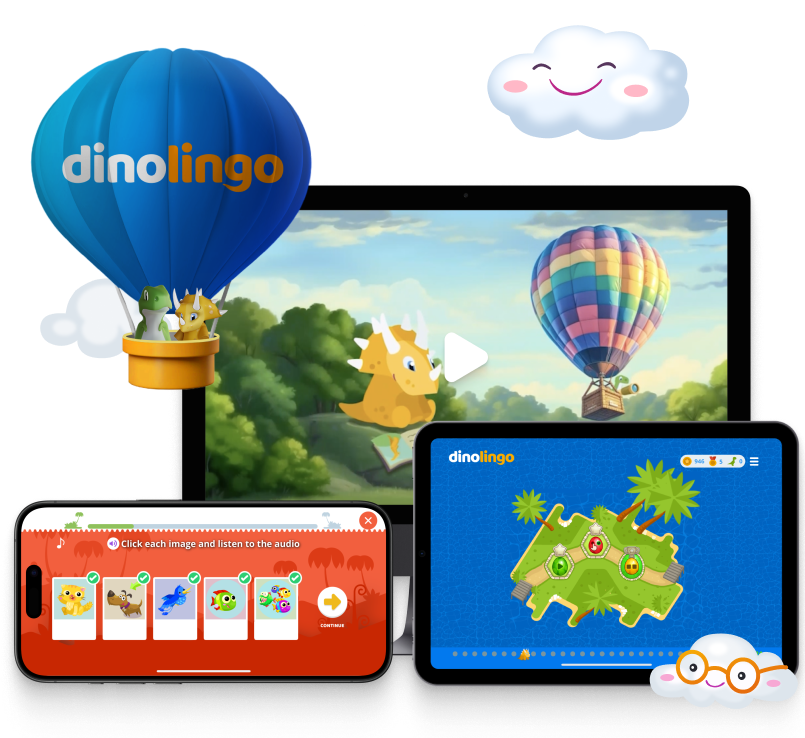
If you want your child to learn more about Albania and its beautiful language, Dinolingo is a great place to start. Dinolingo offers a complete online Albanian program for kids aged 2 to 14, with fun and interactive lessons that include videos, songs, games, stories, and flashcards. The platform adapts to different learning styles and age groups, parents can track progress through the built-in dashboard, and because it is 100% ad-free, kids can safely explore the culture and language at their own pace, all designed to help children love learning Albanian.
I feel that is certainly the most important info for me. And i’m satisfied mastering your post. Nonetheless need to paying attention on some standard issues, The internet site taste is best, the reports is at point of reality wonderful : Deb. Excellent approach, regards