Why Greek Is One of the Coolest Languages to Learn
The Greek language is one of the oldest languages still spoken today. It dates back to the 15th century B.C., making it an incredible tool for understanding ancient history, mythology, and modern European culture.
Today, Greek is the official language of Greece and Cyprus, and also one of the 23 official languages of the European Union. It’s spoken by more than 25 million people around the world, not just in Greece, but also in Greek communities in the U.S., Canada, Australia, and beyond! This guide pulls together everything a child needs to fall in love with Greek: the alphabet, everyday phrases, the words hiding inside English, plus a tour through myths, philosophy, food, islands, and the playful way Greek words change.
Starting Out: The Alphabet and Everyday Phrases
The Greek Alphabet
Greek has 24 letters, written in both lowercase and uppercase forms. Many of these letters look different from English, but some are familiar too! Learning the alphabet is the first step to reading Greek books, signs, and stories.
Easy Greek Phrases for Kids
Here are some everyday Greek words and phrases children can learn to say hello, introduce themselves, and be polite in Greek:
- Welcome – Kalos Ilthes / Kalos Orises
- Hello – Yia / Yia sou
- How are you? – Ti kaneis?
- Fine, thank you – Kala, efkharisto
- Please – Parakalo
- What is your name? – Pos se lene?
- My name is… – Me lene…
- Where are you from? – Apo pou ise?
- I am from… – Ime apo…
- Nice to meet you – Kharika gia ti gnorimia
- Good Morning – Kalimera
- Good Afternoon – Kalo Apogevma
- Good Evening – Kalispera
- Good Night – Kalinihta
- Goodbye – Andio
- Thank you – Efkharisto
- You’re welcome – Parakalo
- Sorry – Sighnomi
- Excuse me – Me singhoris
- Bon Appétit – Kali orexi
These phrases are a great way to build confidence and start understanding how Greek people communicate every day.
Did You Know? Thousands of English Words Come from Greek!
Over 50,000 English words have Greek roots. Many of these are used in science, medicine, and philosophy. Here are just a few examples that kids might recognize:
- Alphabet – Alphavitos
- Democracy – Dimokratia
- Idea – Idea
- Logic – Logici
- Rhythm – Rythmos
- Therapy – Therapia
- Museum – Mousio
- Philosophy – Philosophia
- Fantasy – Fantasia
- Zodiac – Zodiacos
Learning Greek helps children understand not only a new language, but also where many of the words they already know come from!
Greek Through Myths and Heroes
Few languages come with their own cast of gods, monsters, and heroes. Greek myths are packed with action and big personalities, which makes them a perfect way for bold kids to pick up powerful new words. Let’s start in the sky with the king of the gods.
Big Words from the Sky: Zeus
Zeus isn’t just the king of the gods, he’s also a perfect way to start learning Greek! His name, powers, and epic stories are packed with language kids will love to explore. He appears in many stories, which makes him easy to remember, his powers inspire exciting vocabulary and visuals, and his family connects to many other words and gods.
- Δίας (Días) – Zeus
- κεραυνός (keravnós) – Thunderbolt
- ουρανός (ouranós) – Sky
- σύννεφο (sýnnefo) – Cloud
- αστραπή (astrapí) – Lightning
- άνεμος (ánemos) – Wind
Try this phrase: Ο Δίας πετάει κεραυνούς! (Zeus throws thunderbolts!) To make these words stick, build flashcards for each of Zeus’s powers and symbols with pictures and Greek words, then play Thunderbolt Tag, where one child is Zeus and tags others while shouting thunder words like κεραυνός and αστραπή.
Strong Words with Hercules
Hercules isn’t just strong, he’s smart, bold, and a fantastic guide for learning Greek! Through his mighty labors and fearless heart, kids can explore powerful Greek words that inspire courage and action. His stories are full of action and challenge, his vocabulary reflects strength, bravery, and cleverness, and kids can act out scenes to connect words to movement.
- Ηρακλής (Iraklís) – Hercules
- δύναμη (dýnami) – Strength
- γενναίος (gennaíos) – Brave
- τέρας (téras) – Monster
- άθλος (áthlos) – Labor/task
- νίκη (níkē) – Victory
Try this phrase: Ο Ηρακλής είναι πολύ δυνατός! (Hercules is very strong!) For a heroic activity, write simple challenges (jump, lift, roar!) on Hercules Challenge Cards and pair each with a Greek word so kids act them out while saying it aloud. Or draw a Monster Maze with hidden monsters and use words like τέρας or νίκη as kids guide their hero through.
Warrior Words and Wise Sayings
Greek isn’t just a language, it’s a legacy of heroes and thinkers. From the battlefield to the classroom, young learners can explore two exciting sides of Greek through powerful warrior words and thoughtful sayings. This mix combines action and reflection for all learning styles, teaches words tied to emotion, bravery, and wisdom, and connects kids to both history and values.
- πολεμιστής (polemistí̱s) – Warrior
- ασπίδα (aspída) – Shield
- ξίφος (xífos) – Sword
- μάχη (máchē) – Battle
- θάρρος (thárros) – Courage
Pair those brave words with sayings that carry big meaning:
- Η γνώση είναι δύναμη. (Knowledge is power.)
- Μίλα με σεβασμό. (Speak with respect.)
- Η αλήθεια πάντα νικά. (Truth always wins.)
Try this phrase: Ο πολεμιστής έχει θάρρος και σοφία. (The warrior has courage and wisdom.) Make a cardboard shield for a Shield & Say craft, write one brave Greek word on it, and practice saying it while pretending to defend with courage. Then build a Wisdom Wall of sticky notes with short Greek sayings, reading one aloud each day and talking about what it means.
Greek Words for Big Ideas
Greece gave the world its first great thinkers, so the language is full of words for ideas, questions, and values. These words help kids think out loud and grow in confidence, all while learning vocabulary.
Think Like Socrates
Socrates may have lived a long time ago, but his way of asking questions is still perfect for curious kids. With just a few Greek words, kids can start thinking, speaking, and learning like little philosophers. This approach encourages curiosity and open-mindedness, builds conversation skills with questions and answers, and makes kids feel confident expressing ideas.
- σκέψη (sképsi) – Thought
- λόγος (lógos) – Word, reason
- ερώτηση (erótisi) – Question
- απάντηση (apántisi) – Answer
- φίλος της σοφίας (fílos tis sofías) – Lover of wisdom (Philosopher)
Try this phrase: Ο Σωκράτης έκανε πολλές ερωτήσεις. (Socrates asked many questions.) Play Ask Like Socrates by choosing a simple object, like a ball, and asking questions about it in Greek with help: What is it? How do we use it? What makes it fun? Then form a Philosopher’s Circle, give kids a big idea like “What is friendship?” and let them share and listen using words like λόγος or σκέψη.
Simple Philosophy Words
Philosophy sounds like a big word, but it starts with simple thoughts and questions. Greek is the perfect language to introduce kids to powerful ideas like truth, beauty, and kindness. These words connect language with deep thinking from a young age, encourage reflection and emotional growth, and build a foundation of values through vocabulary.
- αλήθεια (alítheia) – Truth
- καλοσύνη (kalosýni) – Kindness
- ομορφιά (omorfiá) – Beauty
- δικαιοσύνη (dikaíosyni) – Justice
- σκέψη (sképsi) – Thought
- σοφία (sofía) – Wisdom
Try this phrase: Η καλοσύνη είναι σημαντική. (Kindness is important.) Make Kindness Cards where kids draw or write acts of καλοσύνη and practice saying the word as they share their ideas. Or play Truth or Not?, saying a sentence and asking if it’s αλήθεια or not, which introduces both language and logic in a fun way.
Everyday Greek Through Food and Culture
Some of the best Greek words come straight from the kitchen and from everyday traditions. Linking language to flavors, smells, and family beliefs gives kids exciting experiences to attach new vocabulary to.
Sweet Words: Say “Glyko”
Sweet treats are everywhere in Greece, from honey-dipped pastries to creamy puddings. Learning their names helps kids connect fun with language: sweet words link language to exciting experiences, introduce simple food-related vocabulary, and add joy and flavor to learning time.
- γλυκό (glyko) – Sweet/dessert
- μέλι (meli) – Honey
- παγωτό (pagotó) – Ice cream
- κέικ (kéik) – Cake
- μπισκότο (biskóto) – Cookie
- σοκολάτα (sokoláta) – Chocolate
Try this phrase: Μου αρέσει το παγωτό σοκολάτα! (I like chocolate ice cream!) For a Dessert Word Match, draw or print images of popular sweets and match each one with the correct Greek word written underneath. Kids can also create a pretend Dream Dessert Menu with pictures and Greek names for their favorite treats.
Let’s Make Tzatziki: Kitchen Words
Cooking is a hands-on way to learn new words, and Greek food is full of flavor and fun! Making tzatziki introduces kids to easy, useful vocabulary right from the kitchen. Cooking connects words with real-life actions, engages all five senses for deeper memory, and builds independence and confidence in language and life.
- τζατζίκι (tzatzíki) – Tzatziki
- γιαούρτι (yaoúrti) – Yogurt
- αγγούρι (angoúri) – Cucumber
- σκόρδο (skórdo) – Garlic
- λάδι (ládi) – Oil
- αλάτι (aláti) – Salt
Try this phrase: Φτιάχνουμε τζατζίκι με γιαούρτι και αγγούρι! (We’re making tzatziki with yogurt and cucumber!) Play Mix It in Greek by giving kids each ingredient with its Greek name on a label, saying each word together as they add and stir. Then make a Greek Recipe Card craft, drawing the ingredients with their Greek words to take home.
The Evil Eye: Words and Beliefs
Have you ever seen a shiny blue eye charm on a bracelet or keychain? In Greece, it’s more than just decoration, it’s a symbol of protection! In Greek it’s called το μάτι (to máti), meaning “the eye.” People believe too much praise or a jealous look can bring bad luck, unless you’re protected by something like a blue eye charm, a garlic bulb in the house, or a whispered blessing from grandma. These traditions are centuries old and still part of daily life in many homes.
Here are some words tied to the belief:
- το μάτι – the eye (evil eye)
- ξεμάτιασμα – the act of “un-eyeing” someone (with a special prayer or charm)
- φτου φτου (ftou ftou) – sound made to “spit away” bad luck!
To explore this folklore, Make Your Own Mati using blue beads or paper to create protective eye charms kids can hang on a bag or in their room. Then play Say It in Greek, practicing words like to máti or ftou ftou and acting out what each one means. Superstitions like the evil eye show us how language, belief, and tradition work together.
Greek Words Out in the World: Islands and Museums
Real places make the best classrooms. Whether splashing on a beach or wandering past ancient treasures, kids can use Greek words in the very settings that inspired them.
Say It on Santorini: Island Words
Santorini is one of Greece’s most magical islands. With its white houses, blue domes, and sparkling sea, it’s a perfect setting to learn new Greek words through fun and adventure. Islands are great for language learning because they are full of real-world words and scenes, connect language with nature and travel, and help kids use vocabulary in new places.
- νησί (nisí) – Island
- παραλία (paralía) – Beach
- ήλιος (ílios) – Sun
- νερό (neró) – Water
- καΐκι (kaíki) – Boat
- ηφαίστειο (ifaísteio) – Volcano
Try this phrase: Το νησί έχει όμορφες παραλίες. (The island has beautiful beaches.) For My Greek Beach Day, kids draw their dream Santorini beach with a boat, sun, and waves, labeling each part in Greek. Or set up an Island Treasure Hunt, hiding pictures of island items like a sun, boat, or beach around the room for kids to find and name aloud.
At the Museum: Ancient Objects, New Words
Museums are magical places where history, art, and language come together. For kids learning Greek, a museum visit is the perfect setting to explore exciting new words and real-life stories. Museums bring words to life with real visuals and objects, encourage curiosity and storytelling, and help kids connect history and language.
- μουσείο (mousío) – Museum
- αγγείο (angío) – Vase
- γράμμα (grámma) – Letter
- τοίχος (tíchos) – Wall
- χάρτης (chártis) – Map
- τέχνη (téchni) – Art
Try this phrase: Το μουσείο έχει πολλά αγγεία. (The museum has many vases.) Kids can Create Their Own Exhibit by drawing a museum room with items like a vase, statue, or map, labeling each in Greek and presenting it like a tour guide. Or play Guess the Greek Word, showing photos of ancient Greek objects and saying the word for kids to match.
How Greek Words Work: Magic and Many Sounds
Once kids know plenty of Greek words, the next bit of fun is noticing how those words behave. Greek words shift their shape and even their sound, and spotting these patterns turns learning into a game.
Greek Words That Change Like Magic
Greek words are full of surprises, especially when it comes to how they change! Little changes at the end of a word can tell you who’s doing something, when it’s happening, and more. Greek words often change form depending on person (I, you, we, they), tense (now, before, later), and number (one or more than one). These changes are called inflections, and they help Greek speakers understand each other clearly.
Start with the root word γράφω (gráfo) – I write:
- γράφεις (gráfeis) – You write
- έγραψα (égrapsa) – I wrote
- γράφουμε (gráfoume) – We write
Even a tiny change can mean a big difference! Try Word Change Cards: write root words on one set of cards and endings like -εις, -ουμε, -ει on another, then mix and match to make new meanings. Or play Action Detective, saying a changed Greek verb and letting kids guess who did it and when it happened.
Same Words, New Sound: Regional Greek
Greek isn’t the same everywhere in Greece! From Crete to Thessaloniki, the same word might sound a little different, and that’s part of the fun. In different parts of Greece, people speak with different accents or even use unique local words. For example:
- “Kalimera” (good morning) might sound slightly sharper or softer depending on the region
- Crete has a unique rhythm and even extra expressions
- Northern Greece might have longer vowel sounds or “rolled” r’s
These changes don’t make communication hard, they just make Greek richer and more colorful. Learning regional Greek is like solving a puzzle with sound, it shows kids how culture shapes language, and it helps them become better listeners and speakers. Try a Regional Recording Challenge, playing audio clips of Greek spoken in different areas for kids to guess or mimic. Or play One Word, Many Sounds, choosing a simple word like “hello” or “thank you” and learning how it sounds across Greece.
Let Kids Explore Greek with Confidence
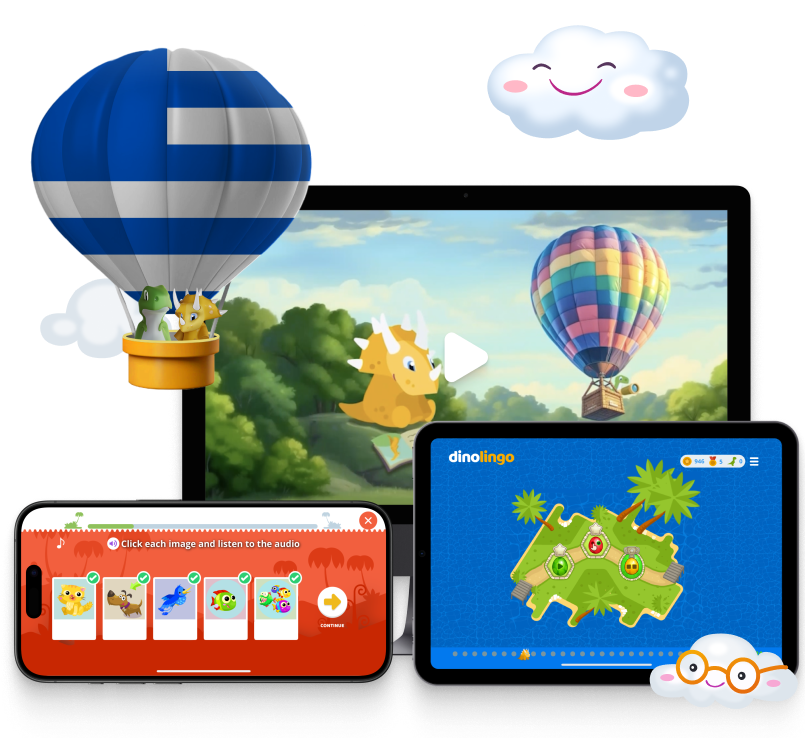
Whether it’s saying “hello” to a Greek-speaking friend, ordering a γλυκό, or reading signs while traveling, learning simple Greek words opens up a whole new world. Dinolingo’s Greek program offers fun and interactive lessons for children. Through animated videos, songs, and games, kids can hear real Greek words and practice speaking in a playful and effective way, from myths and philosophy to food, islands, and folklore.
Give your child the gift of a new language, and a window into one of the richest cultures in the world!