What’s a Hangul? The Korean Alphabet Made Simple
Hangul (한글) is the name of the Korean alphabet, and it’s one of the simplest and smartest writing systems in the world! It was created to be easy to learn, even for children, and today it’s a fun first step into Korean. Hangul is the writing system used in both South Korea and North Korea, and kids there start learning it from a very young age.
Where Hangul Came From
So, where did this clever alphabet come from? Back in 1443, during the Joseon Dynasty, a wise king named Sejong the Great wanted everyone in his country to be able to read and write easily. At the time, people had to use complicated Chinese characters, and that made it really hard for everyday people to learn. So King Sejong created Hangul, a brand-new alphabet designed to be simple and logical. And guess what? It worked, and it is still used every day across Korea.
What Makes Hangul So Special?
One of the best things about Hangul is that it was made to be easy to learn, even for kids. The shapes of the letters are based on how your mouth and tongue move when you say them. That means the letters aren’t random: they actually look like the sounds they make!
Another fun fact? Hangul is very organized. There are 14 basic consonants and 10 basic vowels, and once kids know those, they can read tons of words:
- 14 basic consonants, like ㅎ (g/k), ㄴ (n), and ㅂ (b/p)
- 10 basic vowels, like ㅏ (a), ㅗ (o), and ㅣ (i)
When you put them together, you can build Korean words! It’s like building blocks: just mix and match consonants and vowels to create syllables like 가 (ga), 나 (na), or 바 (ba).
How Hangul Works
Unlike English, which writes letters in a line, Hangul stacks its letters into blocks. Each block forms a syllable, and learning to read it feels like solving a puzzle. Every Korean syllable is made of 2 or 3 pieces:
- A consonant
- A vowel
- Sometimes a final consonant at the bottom
For example, here is how the word Hangul itself is built:
- ㅎ + ㅏ + ㄴ = 한 (han)
- ㄱ + ㅡ + ㄹ = 글 (geul)
Put them together and you get 한글 (Hangul)!
Is Hangul Difficult for Kids?
Not at all! In fact, Korean kids often learn to read and write Hangul before they even start school. It’s so simple that you can learn to read basic words in just a few days. There are even fun Korean songs that teach the alphabet step by step. And because Hangul uses patterns and symmetry, it feels more like a fun puzzle than a boring rulebook.
Fun Alphabet Activities for Beginners
Block Builder Game
Draw boxes on paper and have kids build Hangul syllables using cut-out letters.
Hangul Letter Hunt
Show kids simple Korean words and ask them to spot and name letters they’ve learned.
Learning the Alphabet Opens a Door to Korean Culture
When you learn Korean, you don’t just learn words: you learn culture, too. Once kids can read a few syllables of Hangul, those same letters start to unlock real Korean words, and some of the most beautiful ones describe Korean life and tradition. One of the most colorful words you can actually wear is hanbok (한복), Korea’s traditional clothing.
Hanbok: A Word Full of History and Style
Hanbok is colorful, flowing, and full of meaning. People wear it during important holidays like Chuseok (Korean Thanksgiving) or Seollal (Lunar New Year). The word itself combines “han” (Korean) and “bok” (clothing), the same “han” that appears in Hangul.
Kids’ hanboks are often extra bright, with pinks, blues, greens, and golds that sparkle. Boys and girls both wear hanboks, and they look like royalty in them!
Creative Culture Activities to Try
Design Your Own Hanbok. Provide kids with coloring sheets or paper dolls and let them design hanboks in wild colors and patterns.
Korean Holiday Dress-Up. Have a pretend celebration day where kids wear paper hanboks and learn simple Korean greetings.
Practice Hangul and Korean Culture with Dinolingo
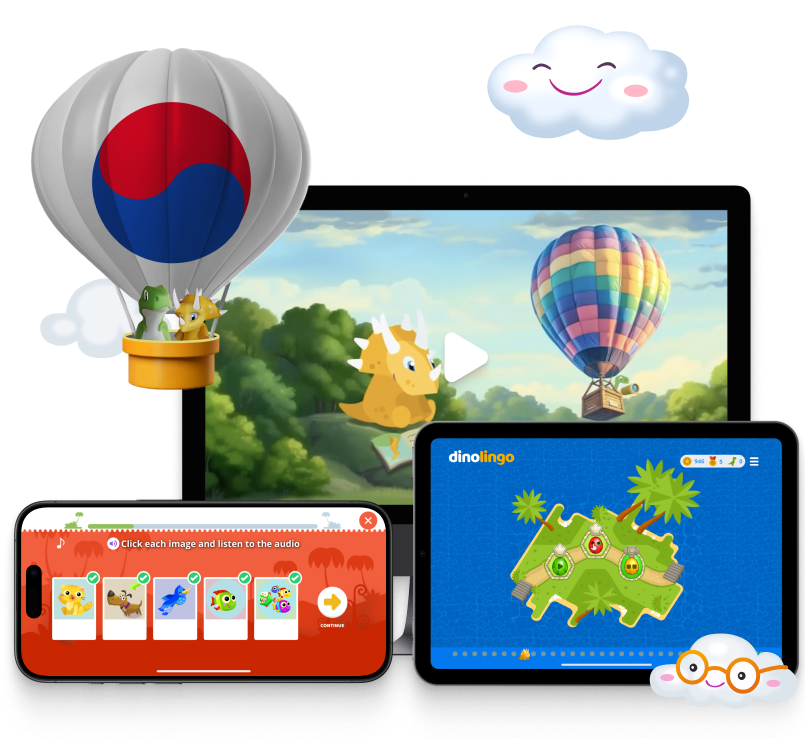
If your child wants to learn Korean, Dinolingo is a great place to start. Dinolingo introduces Hangul through stories, games, and repetition, so kids ages 2–14 can learn letter sounds naturally while watching animations, singing songs, and using flashcards that show Korean words in both Hangul and English. Dinolingo makes learning Hangul exciting with:
- Animated videos and fun songs
- Printable worksheets and games
- A playful reward system
- A learning path designed just for kids ages 2–14
Cultural elements like the hanbok come alive through videos, songs, and vocabulary games, so kids get to see, hear, and learn Korean the way it’s used in real life, including holiday words, clothes, and customs. Available on iOS, Android, and web browsers, Dinolingo also includes printable worksheets so kids can practice writing Hangul by hand, giving them the chance to experience language with culture all in one place.
Conclusion
Hangul is more than just an alphabet: it’s a smart and creative invention that helps people of all ages read and write Korean. For kids, it’s a great way to explore a new language, enjoy Korean culture like the colorful hanbok, and feel proud of learning something special. So grab your pencil or open your tablet, and start your Hangul adventure today!
Sources: