Traditional Korean Songs That Kids Still Love Today
Korean children’s songs are a beautiful blend of tradition, storytelling, and rhythm. Passed down through generations, these melodies reflect the emotions, nature, humor, and values of Korean culture. Music has always been one of the warmest doorways into the Korean language, and that doorway stretches from centuries-old folk tunes all the way to the global K-pop hits kids hum today. In this guide, we will explore 10 beloved traditional Korean songs that continue to captivate children with their playful lyrics and timeless charm, then see how modern K-pop carries the same spark into a child’s first Korean words.
10 Traditional Korean Songs Kids Still Love
1. Kobulang Halmeoni (The Hunched Grandmother)
This humorous and iconic folk song tells the story of a hunched grandmother making her way over twelve hills with her little dog. Its repetitive structure and quirky lyrics make it especially fun for young children to sing along, and the imaginative visuals offer room for creativity and play.
2. Saeya Saeya (Bluebird, Bluebird)
A gentle and poetic folk song, “Saeya Saeya” warns a bluebird not to sit in the mung bean field lest the mung bean blossoms fall. Its lyrics are deeply symbolic and are often interpreted as a reflection of Korean history and longing. The haunting melody makes it both a cultural and emotional piece.
3. Gom Semari (Three Bears)
One of the most well-known Korean children’s songs, “Gom Semari” introduces a family of three bears, father, mother, and baby, each with different traits. The song’s simplicity, paired with motions and hand gestures, makes it a favorite among preschoolers.
4. Maegieuichuok (Memories of Mae-Gi)
A nostalgic ballad that recalls the sounds of the waterwheel and the memory of a loved one named Maegi. This song evokes strong imagery and emotion, offering children a glimpse into the past and the importance of memory and place.
5. Jeulgeowoon Naeuijip (My Joyful Home)
This classic song praises the joy and peace of one’s own home, no matter how small. It emphasizes the emotional comfort and beauty of family life, making it a great teaching tool about values such as contentment and belonging.
6. Dongnehanbaqui (Let’s Walk Around the Village)
A cheerful morning song encouraging children to explore their neighborhood. The lyrics invite flowers and pets to join in the stroll, making it a song filled with positivity, curiosity, and interaction with nature.
7. Clementine (Korean version)
This song is a Korean adaptation of the American folk ballad “Oh My Darling, Clementine,” and tells the story of a simple life by the sea. It reflects how Korean culture often blends with global influences while maintaining its own identity.
8. Gunbam Taryeong (Chestnut Song)
A spirited and rhythmic song often sung during harvest or festive occasions. It celebrates youth, the changing seasons, and a playful connection to the countryside. Its recurring chorus and traditional feel make it a fun sing-along.
9. Goyohan Bam (Silent Night)
This beloved Christmas carol is known worldwide, and its Korean version is just as serene and beautiful. It tells the story of Jesus’ birth in a reverent and melodic way, bringing holiday cheer to Korean households.
10. Jingle Bell (Korean version)
Another international favorite, the Korean version of “Jingle Bells” captures the excitement of snowy days and sledding. It’s commonly sung during winter celebrations and helps children connect joyfully with global holiday traditions.
From Folk Songs to K-Pop: Say It Like BTS
The same love of melody that keeps traditional songs alive also powers today’s biggest Korean exports. K-pop songs like the ones by BTS are full of catchy words and phrases that are perfect for young Korean learners. They are fun, emotional, and often very simple, which makes them a great way for kids to start speaking Korean right after they have warmed up on the classics above.
Catchy Words That Stick
These words pop up in K-pop hits all the time, and they are easy enough for a child to repeat after just one listen:
- 사랑 (sarang) = Love
- 친구 (chingu) = Friend
- 행복 (haengbok) = Happiness
- 미안해 (mianhae) = I’m sorry
- 고마워 (gomawo) = Thanks
Singing along helps with pronunciation and rhythm while making language learning exciting, the very same benefits children get from the folk songs in the first half of this guide.
Sing and Learn Activities
Lyric Match-Up. Print out short K-pop lyrics with missing words and let kids match the Korean words they have learned. This works just as well with a traditional favorite like “Gom Semari” if you want to mix old and new.
K-pop Karaoke Time. Choose kid-friendly K-pop songs and let children sing along, focusing on words like “사랑” or “친구.”
Singing and Learning with Dinolingo
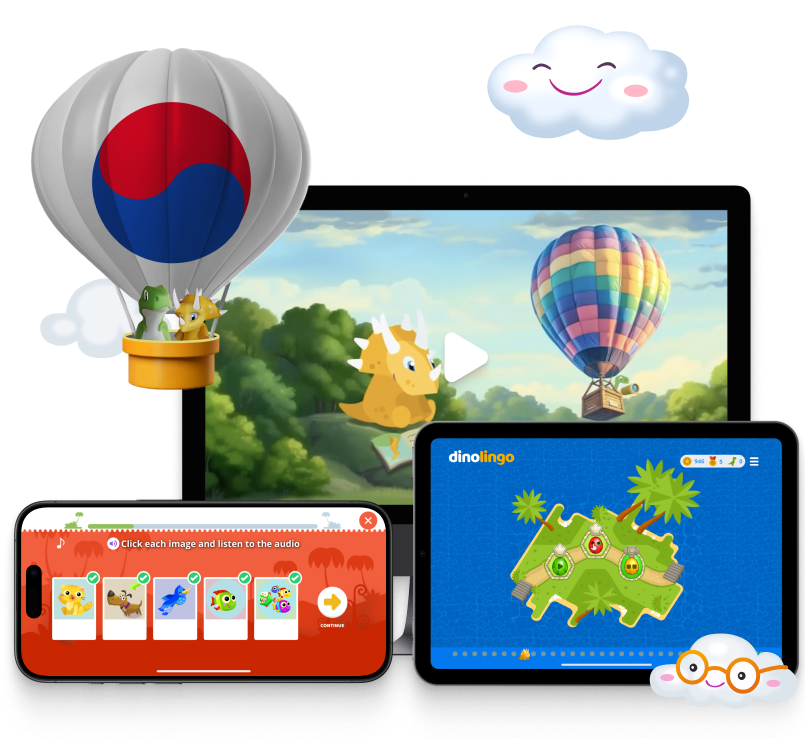
Introducing children to Korean through both traditional songs and modern K-pop is a fun and effective way to support language learning. With Dinolingo, kids ages 2 to 14 can explore Korean through interactive games, songs, and stories, building vocabulary through repetition and play. Just like K-pop stars use simple and powerful words, Dinolingo reinforces these through stories and animations. Whether they are clapping along to “Gom Semari” or singing “사랑” with their favorite group, Dinolingo makes Korean accessible and joyful. The platform works on web, iOS, and Android, and includes offline options like worksheets and flashcards plus a parent dashboard for tracking progress.
Conclusion
Korean songs for children go beyond melody: they are cultural stories, playful lessons, and emotional connections. From a hunched grandmother climbing twelve hills to a BTS chorus about love and friendship, these tunes let children improve their Korean language skills while building an appreciation for Korean heritage and storytelling. Whether at home or in the classroom, they make learning feel like play.
Sources