The 10 Easiest Russian Words for Kids (And How to Say Them)
Russian may look different, but some words are super friendly for beginners, especially kids! The trick is to start with words that are short, fun to say, and easy to remember. Learning Russian doesn’t have to start with hard grammar or complicated rules. These simple words are used often in everyday life and help kids feel like they’re really speaking Russian from the very first day.
Easy Words Kids Can Say Today
Here are ten Russian words that young learners usually love and can pronounce right away:
- мама (mama – mom)
- папа (papa – dad)
- кот (kot – cat)
- собака (sobaka – dog)
- да (da – yes)
- нет (nyet – no)
- привет (privet – hi)
- пока (paka – bye)
- молоко (moloko – milk)
- вода (vada – water)
These words follow easy pronunciation patterns, and many of them sound similar to their English equivalents, which makes them easier to recall.
Start with What They Already Know
The best way for kids to begin is with words they already use every day. Children naturally remember words that connect to their lives, so everyday nouns, feelings, and family words make the best entry point. Beyond the first ten, here are more beginner-friendly words drawn from greetings, playtime, and mealtime:
- дом (dom – house)
- игра (igra – game)
- еда (yeda – food)
- друг (droog – friend)
- спасибо (spasiba – thank you)
These words show up in greetings, playtime, mealtime, and everyday conversations. Once kids hear and use them in real-life contexts, they stick. Repetition is important, but using the words in real situations makes learning meaningful. For example, saying “Спасибо, мама!” (Thank you, Mom!) at dinner builds natural language use.
Small Words, Big Meaning
You don’t need fancy vocabulary to say something meaningful in Russian. The beauty of the language lies in how simply big ideas can be expressed. For kids who love to think and ask questions, many Russian words are short but carry a lot of weight:
- Я (ya – I)
- Ты (ty – you)
- Есть (yest’ – there is / to eat)
- Можно? (Mozhno? – May I?)
These simple words let kids ask for things, express feelings, and understand conversations without needing long or complex sentences. Russian doesn’t require “filler” words like English does. A sentence like Я хочу пить (Ya khochu pit’ – I want to drink) is short, to the point, and totally understandable. For young learners, this makes speaking less stressful and more intuitive. Kids often feel confident early on because they can use full sentences from day one.
Learning Through Sound and Play
For children, learning these words works best when paired with sound and repetition. Listening to a native speaker say the word, then repeating it while pointing to an object or image, builds both vocabulary and memory.
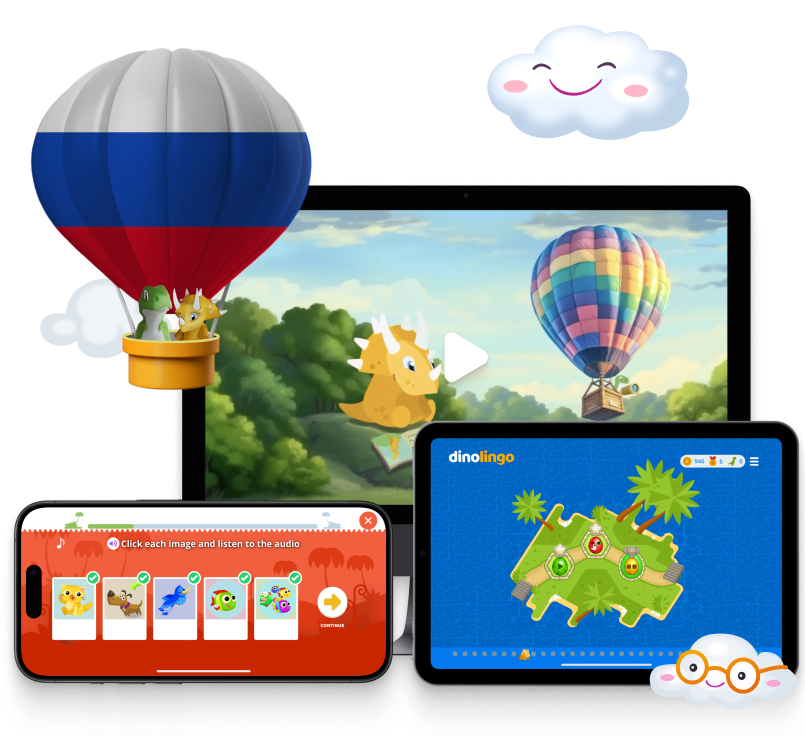
Kids using Dinolingo get to hear these words spoken clearly while seeing them in colorful animated stories, songs, and games. This mix of sound, visuals, and fun helps them learn naturally, like they learned their first language. The platform focuses on high-utility phrases and vocabulary that appears over and over in playful settings, which makes Russian feel useful, not abstract, for kids ages 2 to 14.
Creative Activities to Try
Russian Word Flashcards
Create a set of flashcards with the Russian word on one side and a picture on the other. Play memory games or match the word to the correct image.
Label Your World
Place sticky notes with Russian words on items around the house: дверь (door), стол (table), молоко (milk). See how many your child can say throughout the day!
Say It Out Loud Challenge
Say each of the 10 words together, then ask your child to act them out. Can they say “молоко” while pretending to drink milk? This keeps things playful and engaging.
Russian Role Play
Use stuffed animals or dolls to create little scenes. “Дружок хочет воды” (Droozhok wants water). Kids get to use new words in pretend conversations.
Build-a-Sentence Blocks
Write simple Russian words on small blocks or cards. Let your child combine them to create short sentences. Example: Я + люблю + кошку (I love the cat).
“Say It Short” Game
Ask your child to describe something using as few words as possible in Russian! For example: “Ты рад?” (Are you happy?) “Да!” (Yes!)
By starting with what they already understand, kids can feel confident and proud even after just a few words. Speaking simply isn’t just easy, it’s smart. And Russian is the perfect language for curious kids ready to say more with less.