
Korean culture is rich with traditional folktales that not only entertain but also teach important values like kindness, honesty, and humility. When teaching Korean to children, these stories become powerful tools for language learning. Through simple narratives and meaningful messages, kids can connect with Korean language and culture in a joyful way. This guide brings together beloved Korean tales adapted for young learners, along with proverbs, manners, and even a famous Korean place to explore, so children can experience the heart of Korea while building their vocabulary.
Beloved Korean Folktales for Kids
These classic tales are short, touching, and easy for children to follow. Each one carries a gentle lesson and introduces new Korean words and ideas in a fun, natural way.
Heungbu and Nolbu
Once upon a time, there were two brothers, Nolbu and Heungbu. Nolbu was rich but greedy, while Heungbu was poor yet kind-hearted. One day, Heungbu found a sparrow with a broken leg. He gently cared for the bird until it healed and flew away. Later, the sparrow returned with three gourd seeds. When Heungbu planted them, giant gourds grew, and inside them were gold coins and treasures.
Hearing this, Nolbu became jealous. He broke a bird’s leg on purpose, hoping for riches. The sparrow returned with seeds, but when Nolbu opened the gourds, monsters leapt out and scared him terribly. Nolbu learned a valuable lesson: kindness brings rewards, but greed leads to trouble.
Three Years Hill (Samnyeon Gogae)
In a small village, there was a hill called “Three Years Hill.” It was believed that anyone who fell down this hill would have only three years left to live. One day, an old man tripped and fell, and he became very anxious. His health started to decline from worry.
A clever young boy visited the man and said, “Don’t worry! If falling once gives you three years, then falling twice must give you six years!” The old man laughed and decided to fall down again and again. He no longer worried, and soon he felt healthy again. This story teaches children not to fear small mistakes and not to let worry take over.
Small Nose and Big Mouth
An old man with a tiny nose and his wife with a very large mouth were once invited to dinner. They felt embarrassed about how they looked. The man made a bigger nose out of candle wax, and the woman stitched her mouth to look smaller.
At the dinner, the man stood near the stove and his fake nose melted. His wife laughed, and her stitches came apart. Ashamed, they lowered their heads. But their neighbors told them, “We like you for your kindness, not for your appearance.” The couple learned that being kind matters more than how you look.
The Tale of Chunhyang: Korea’s Beloved Love Story
One of Korea’s most well-known and cherished stories is The Tale of Chunhyang. This traditional folktale is not only romantic but also teaches important values like loyalty, courage, and justice. It has been told in many books, films, and TV shows, and is a wonderful way for children to learn about Korean culture and storytelling.
Yi Mongryong is the son of a wealthy and respected family. One day, he meets a kind and beautiful girl named Sung Chunhyang. Although she is from a lower social class, Mongryong falls in love with her right away. They dream of being together, but Mongryong must first travel to the capital city, Hanyang, to take an important government exam. While he is away, a powerful and dishonest local official named Byun Hak-do also wants Chunhyang to be his wife. But Chunhyang stays loyal to Mongryong and refuses. Angered by this, Byun punishes her and has her imprisoned.
Mongryong returns after passing his exam and becoming an important government officer. When he hears about what happened, he bravely exposes Byun’s wrongdoing and rescues Chunhyang. In the end, justice is served, and the two lovers are finally married. The Tale of Chunhyang is more than just a love story. It shows how standing up for what’s right and staying loyal to loved ones are values that matter, no matter your age.
More Korean Stories to Explore
- The Blind Man’s Daughter
- The Goblin’s Club
- The Three Questions
- The Farmer and the Mother Tiger
- The Governor
- The Special Medicine
- The Tiger and the Candied Fruit
- The Man, the Tiger, and the Rabbit
- Why the Sea Is Salty
- The Two Brothers
Each of these stories is simple, touching, and filled with lessons kids can understand and remember. They also introduce new Korean words and phrases in a fun and contextual way.
Top 30 Korean Proverbs for Kids to Learn and Love
Just like folktales, Korean proverbs are short, wise, and often funny. They’ve been passed down for generations and are a wonderful way for kids to learn the rhythm, culture, and heart of the Korean language. From clever animal sayings to everyday life advice, these expressions are easy to remember and fun to use.
Popular Korean Proverbs for Kids
Here are some favorites that kids love:
- 원숭이도 나무에서 떨어진다. – “Even monkeys fall from trees.” (Everyone makes mistakes!)
- 낮말은 새가 듣고 밤말은 쥐가 듣는다. – “Birds hear the words spoken in the day, mice hear the words spoken at night.” (Be careful what you say!)
- 세 살 버릇 여든까지 간다. – “A habit from age three lasts until eighty.” (Good habits start early!)
- 콩 심은 데 콩 나고 팥 심은 데 팥 난다. – “Plant beans and you get beans, plant red beans and you get red beans.” (You get what you give!)
- 가는 말이 고와야 오는 말이 곱다. – “If the outgoing words are kind, the incoming words will be kind too.” (Speak kindly and others will too!)
- 티끌 모아 태산. – “Gather dust to make a mountain.” (Small efforts add up to big results!)
- 고생 끝에 낙이 온다. – “After hardship comes happiness.” (Keep going, good times are ahead!)
- 백문이 불여일견. – “Seeing once is better than hearing a hundred times.” (Experience is the best teacher!)
- 웃는 얼굴에 침 못 뱉는다. – “You can’t spit on a smiling face.” (Kindness disarms people!)
- 소 잃고 외양간 고친다. – “Fixing the barn after losing the cow.” (Don’t wait until it’s too late!)
Proverbs About Animals
Korean proverbs often use animals to teach lessons. Kids find these especially fun:
- 하룻강아지 범 무서운 줄 모른다. – “A one-day-old puppy doesn’t fear the tiger.” (The young are fearless!)
- 개구리 올챙이 적 생각 못한다. – “The frog doesn’t remember being a tadpole.” (Don’t forget where you came from!)
- 우물 안 개구리. – “A frog in a well.” (Someone who doesn’t see the bigger world!)
- 호랑이도 제 말 하면 온다. – “Even the tiger comes when you talk about it.” (Speak of the devil!)
- 꿩 대신 닭. – “A chicken instead of a pheasant.” (When you can’t have the best, take the next best thing!)
Proverbs About Hard Work and Patience
- 천리 길도 한 걸음부터. – “Even a journey of a thousand miles begins with a single step.”
- 뜻이 있는 곳에 길이 있다. – “Where there is a will, there is a way.”
- 공든 탑이 무너지랴. – “A tower built with care will not collapse.” (Hard work pays off!)
- 시작이 반이다. – “Starting is half the task.” (Just begin!)
- 아는 것이 힘이다. – “Knowledge is power.”
Proverbs About Friendship and Family
- 친구 따라 강남 간다. – “Following a friend to Gangnam.” (Friends influence where you go in life!)
- 피는 물보다 진하다. – “Blood is thicker than water.” (Family bonds are the strongest!)
- 가까운 이웃이 먼 친척보다 낫다. – “A close neighbor is better than a distant relative.”
- 웃음은 최고의 명약. – “Laughter is the best medicine.”
- 말 한마디에 천냥 빚을 갚는다. – “One word can repay a debt of a thousand coins.” (Words have great power!)
Because they’re short and often funny, proverbs are perfect for memorization. They use real sentence structures, cultural references, and often have a rhythm that makes them easy to remember. For kids learning Korean, proverbs are a fun way to pick up new vocabulary and understand how Korean people think and express ideas.
Korean Manners and Language: What Every Kid Should Know
Learning about manners and communication is just as important as learning words when studying a new language. Korean culture has special ways of speaking and acting that show respect, especially to elders. Understanding these customs helps the stories and proverbs above come alive.
Hangul: Korea’s Own Alphabet
A long time ago, Koreans used Chinese characters in writing. But in the 15th century, King Sejong created Hangul, a unique Korean alphabet that is still used today. Hangul is simple, scientific, and made for everyone to learn easily, even kids!
Honorifics: Speaking with Respect
In Korean, how you speak depends on who you’re talking to. There are special word endings called honorifics, which are added when speaking to someone older or someone you respect. These polite forms help show kindness and humility, and they’re a big part of Korean language learning.
Gestures Matter
In Korea, gestures are also an important part of manners. For example, you should never call someone over by waving with your palm up. This is used only for animals like dogs. Instead, keep your palm facing down and move your hand gently. It’s also considered more respectful to use your right hand when passing something, such as food or a gift.
Personal Space and Touch
Koreans value personal space, especially in public. Hugging and casual touching are not common, especially between people who don’t know each other well. A polite bow or small wave is usually enough when greeting someone.
Everland: Korea’s Most Exciting Place for Young Explorers
Stories and language come alive when children connect them to real places. Did you know that one of the most exciting places in South Korea is a giant theme park? It’s called Everland, and it’s filled with fun for the whole family! From wild roller coasters to a zoo and a water park, Everland is a place where children can play, learn, and explore all in one day.
The World’s Longest Wooden Roller Coaster
One of the park’s biggest attractions is the T Express, a wooden roller coaster that’s the longest in the world! It stretches over 5,800 feet and includes a super steep 77-foot drop. If you love a little thrill, this ride is a must-try! Everland also has four other roller coasters, including one that goes as fast as 52 miles per hour.
More Than Just Rides
But Everland isn’t only about roller coasters. The Everland Speedway is a real racetrack that hosts big racing events. Kids and adults can even try driving like real racers (with supervision, of course!). There’s also a large zoo where you can see animals from all over the world, and a water park to cool off in summer.
Learn While You Play
Everland is a perfect example of how learning can be fun. Children can discover Korean culture, animals, science, and teamwork, all through games, rides, and adventures. It’s more than just a park; it’s an experience full of magic and discovery.
How to Use These Stories at Home
You can read these tales with your child or watch animated versions available on the Dinolingo platform. Reading together helps with vocabulary retention, while listening improves pronunciation and understanding. These stories are also great conversation starters about kindness, honesty, and creativity. Pair them with a few proverbs and a chat about Korean manners, and your child gets language, culture, and values all at once.
Learning Korean with Dinolingo
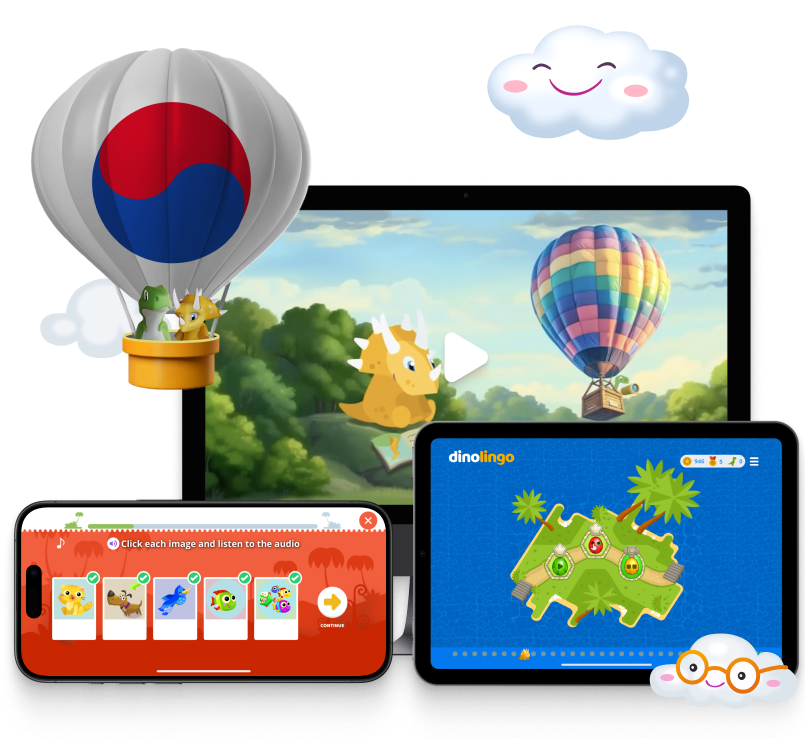
If you’re looking for an engaging way for your child to learn Korean, Dinolingo offers a full Korean language course for kids aged 2–14. With animated stories, songs, games, and flashcards, children stay motivated while building their vocabulary and grammar naturally. Dinolingo works on web, iOS, and Android platforms and includes a parent dashboard, offline options, and reward-based learning to make language learning fun and effective. Try Dinolingo Korean for Kids free for 7 days!

i like it. It’s full of value.
wow i love this website i’m a korean teenage girl with blonde hair and green eyes because my dad is english. but i knoe so much now
love it
my grandma before she died of spinocerebellar degeneration
she used read me these stories
that so sad
like it
oh, nice. Maybe do you know where to find it in Korean? I’m learning Korean language and would be good to practice to read
This story is kind of violent but i think its ok.
do you know anything about “another bright day?”