
How Japanese Names Work—Written, Read, and Full of Meaning
Have you ever wondered how names work in Japanese? In Japan, names carry a lot of meaning and tradition. From the order they are written to the beautiful natural words used in family names, Japanese naming customs are full of fascinating details. This guide walks through how Japanese names are written and read, the words hidden inside them, the family terms children use every day, and the wider culture of Japan that gives those names their meaning.
How Japanese Names Are Written and Read
Before looking at what names mean, it helps to understand the order and structure Japanese names follow. A few simple rules explain most of what you will see.
Family Name Comes First
In Japanese, just like in many other Asian cultures, the family name comes before the given name. So instead of saying “Yuki Tanaka,” in Japan, you would say “Tanaka Yuki”.
No Middle Name? No Problem!
Unlike in many Western countries, Japanese people usually don’t have middle names. A full Japanese name typically includes only a family name and a given name.
Writing in Romaji (Latin Alphabet)
When writing their names using the Latin alphabet (called Romaji), Japanese people often switch the order to match the Western style: given name first, then family name. Japanese itself is normally written with three sets of characters, called hiragana, katakana, and kanji, so a single name can be written in more than one way depending on the situation.
The Meanings Hidden in Japanese Names
One of the most charming things about Japanese names is that so many of them describe the natural world. Once children learn a few key words, they start spotting them inside names everywhere.
Nature-Inspired Last Names
Many Japanese family names are inspired by nature. For example:
- Kawa (river)
- Yama (mountain)
- Mori (forest)
- Hana (flower)
Some common last names and their meanings include:
- Sato (helping wisteria)
- Yamamoto (mountain base)
- Kobayashi (small grove)
How Common Are Some Names?
According to researchers, just the top 20 surnames cover about 17% of the Japanese population! The most common surnames in Japan include Sato, Suzuki, Tanaka, Takahashi, and Watanabe. The full list of the most commonly used family names, written in kanji, looks like this:
- Sato (佐藤)
- Suzuki (鈴木)
- Takahashi (高橋)
- Tanaka (田中)
- Watanabe (渡辺), and many more!
A more detailed study by Lauderdale and Kestenbaum (2000) listed 50 of the most frequent Japanese surnames, helping researchers better understand cultural and regional naming trends.
Name Endings: Girls vs. Boys
Given names also tell a story. Japanese names often end in certain syllables based on gender. For example:
Boys’ names:
- -o (e.g., Haruto)
- -ta (e.g., Kenta)
- -shi (e.g., Takeshi)
- -hiko, -ro, -suke
Girls’ names:
- -ko (e.g., Hanako)
- -mi (e.g., Naomi)
- -ka (e.g., Erika)
- -yo, -e
These endings often reflect softness, strength, beauty, or tradition.
Family Words: The Names Children Use Every Day
Names are not only surnames and given names. The words children use for the people closest to them are some of the first Japanese words they learn. Talking about family is one of the first real-world conversations children can have in a new language. Creating a visual family tree and playing matching games makes Japanese kinship terms, like おかあさん (okāsan, mother) and いもうと (imōto, younger sister), stick in young minds through hands-on fun.
Japanese Family Tree Vocabulary
Build your tree step by step, starting with the nuclear family, then adding extended relatives. Always say the term aloud and point to each picture.
Parents
- おとうさん (otōsan, father)
- おかあさん (okāsan, mother)
Siblings
- おにいさん (onīsan, older brother)
- おねえさん (onēsan, older sister)
- おとうと (otōto, younger brother)
- いもうと (imōto, younger sister)
Grandparents
- おじいさん (ojīsan, grandfather)
- おばあさん (obāsan, grandmother)
Extended Family
- おじさん (ojisan, uncle)
- おばさん (obasan, aunt)
- いとこ (itoko, cousin)
Family Activities and Games
Family-Tree Craft. Draw a large tree on poster board with blank branches. Print or draw photos and icons for each family member, then label each with its Japanese name. Have kids glue pictures in the right spot as they say each term aloud, for example 「おじいさん」 (grandfather).
Match-the-Name Game. Create two sets of cards, one with pictures and one with Japanese terms. Lay all cards face down. Children flip one picture and one word at a time, trying to match pairs. When they match 「いもうと」 with the little-sister picture, they keep the pair and repeat the word aloud.
Practice Corner. Keep a mini “Family Word Wall” in your living area. Each day, pick one relative, such as おねえさん or おばあさん, and challenge everyone to use that word at least five times in sentences or greetings. Mix these hands-on activities with interactive follow-ups, and your child will soon introduce 「わたしのかぞく」 (my family) with pride and ease.
A Window Into Japan: The Culture Behind the Names
Names like Yama (mountain) and Kawa (river) make a lot more sense once you picture the country itself. Japan is a country full of surprises, from snowy mountains and crowded cities to quiet temples and futuristic trains. For children learning Japanese, exploring the culture and geography of Japan can make language learning more exciting and meaningful. Here is a closer look at this fascinating island nation.
Geography and Nature
Japan is made up of over 3,000 islands, located in the Pacific Ocean off the east coast of Asia. Most people only know the four biggest islands: Honshu, Hokkaido, Kyushu, and Shikoku. A lot of Japan is covered in forests and steep mountains, which means not all of the land is suitable for building homes or cities. Japan is also famous for having earthquakes and volcanoes, because it sits on a very active part of the Earth’s crust. Despite these challenges, Japanese people have adapted in amazing ways! It is easy to see why mountains, rivers, and forests turn up so often in family names.
Population and Cities
More than 110 million people live in Japan, making it the 10th most populated country in the world! Since much of the land isn’t livable, Japanese cities can get really crowded. The capital city, Tokyo, is home to about 8 million people, and around 30 million live in the Tokyo metro area. Other large cities include Osaka and Yokohama. These cities are full of life, with high-tech buildings, unique design, and bright neon lights that make Japan’s cityscapes world-famous.
The Japanese Flag
The Japanese flag is called the sun-mark flag or sun disc. It has a simple but powerful design: a red circle on a white background, symbolizing the sun. In Japanese culture, the sun is seen as a source of strength and energy.
Japanese Food
Japanese food is known for being both healthy and delicious! Meals often include rice or noodles, paired with fish or meat. Since Japan is surrounded by the sea, seafood is a huge part of daily life. People also love warm soups like miso or ramen, and bread has become more popular over the last century. Japanese spices and sauces like soy sauce, wasabi, and miso give their food a special flavor that’s different from other Asian cuisines.
Currency and Language
Japan uses the Japanese yen (¥). Even though Japan is a relatively small country, the yen is one of the strongest and most respected currencies in the world, just like the U.S. dollar or the euro. The official language is, of course, Japanese, spoken by over 99% of the population. Japanese writing uses hiragana, katakana, and kanji, the same three scripts that give names their written form. Today, most schools in Japan also teach English as a second language to help students become part of the global community.
Music and Dance
Japan has a long history of music and dance. Traditional music includes instruments like the koto, shamisen, and taiko drums. In modern times, Japan is famous for J-pop, as well as its love for Western music. Many global artists include Japan in their tours! From traditional melodies to upbeat pop songs, music is a big part of life in Japan.
Tanabata: Star Names and a Festival of Wishes
Some of the most beautiful Japanese words appear in the country’s festivals, where stars themselves carry names. Every summer, Japanese people come together to celebrate Tanabata, a festival based on the romantic legend of two stars: Orihime (the weaving princess) and Hikoboshi (the cowherd). According to the story, the Milky Way separates them for most of the year, but on the 7th day of the 7th lunar month, they are allowed to reunite, if the skies are clear.
This reunion is said to light up the sky with a river of stars, which to the human eye appears like a celestial bridge. Inspired by this, families write their wishes on colorful strips of paper (tanzaku) and hang them on bamboo branches, hoping their dreams will come true. Along the way, children pick up Tanabata words such as hoshi (star), negai (wish), and tanzaku (wish strip).
A City of Wishes: Sendai’s Tanabata Festival
One of Japan’s largest and most beloved Tanabata festivals is held in Sendai, especially known for its grand decorations. In 2011, just months after the Great Tohoku Earthquake, the festival was celebrated on a smaller scale but carried a powerful message of hope. More than 3,000 bamboos lined the streets, decorated with handmade ornaments and streamers created by over 80,000 school children. A large banner in downtown Sendai read “Let’s return to smile,” reflecting the community’s resilience and spirit. Even though attendance dropped to 1.75 million visitors (600,000 fewer than previous years), the emotional impact of that year’s celebration was unforgettable.
Tanabata is more than a festival, it is a story of love, patience, and hope. It reminds children and adults alike that even if two stars can only meet once a year, their bond remains strong across time and space.
Songs for Japan: When Music Crossed Borders
That same year showed how deeply Japan is woven into the wider world. On March 11, 2011, a powerful earthquake followed by a massive tsunami struck Northern Japan, causing deep sorrow and destruction. It was one of the most heartbreaking moments in the country’s recent history. The entire world watched in shock, but also responded with kindness, support, and solidarity. One beautiful way people chose to help was through music.
The world’s biggest music companies, EMI, Universal, Sony, and Warner, came together to create a special album called Songs for Japan. All profits from this album were donated to support the victims of the disaster in the Tohoku region, helping families rebuild their lives, homes, and hopes. This touching collection includes songs of comfort, strength, and unity, performed by world-famous artists from different genres and backgrounds. Many of the songs were already beloved worldwide, and one, Lady Gaga’s Born This Way, was released especially for this cause.
Some Artists and Songs from the Album
- John Lennon – Imagine
- U2 – Walk On
- Bob Dylan – Shelter From The Storm
- Lady Gaga – Born This Way
- Beyoncé – Irreplaceable
- Bruno Mars – Talking to the Moon
- Katy Perry – Firework
- Rihanna – Only Girl (In the World)
- Justin Bieber – Pray
- Adele – Make You Feel My Love
- Elton John – Don’t Let the Sun Go Down on Me
- Queen – Teo Torriatte (Let Us Cling Together), a beautiful song with parts sung in Japanese
- …and many more.
Each of these songs was chosen for its message of love, healing, and togetherness. Whether it was through inspiring lyrics, gentle melodies, or emotional power, the album became more than just music: it became a symbol of global compassion. Listening to music is also a great way to learn a new language, and even a single word, like ai (love), can open the door to a whole culture.
Learning Names and Culture with Language
Japanese names aren’t just beautiful: they also help children connect with Japanese culture and language patterns. Recognizing name parts like yama (mountain) or kawa (river) helps young learners discover how everyday words appear in names. The same is true of festivals, family words, and songs. When children learn a language like Japanese, they are not just memorizing words, they are stepping into stories, legends, and traditions that have shaped generations.
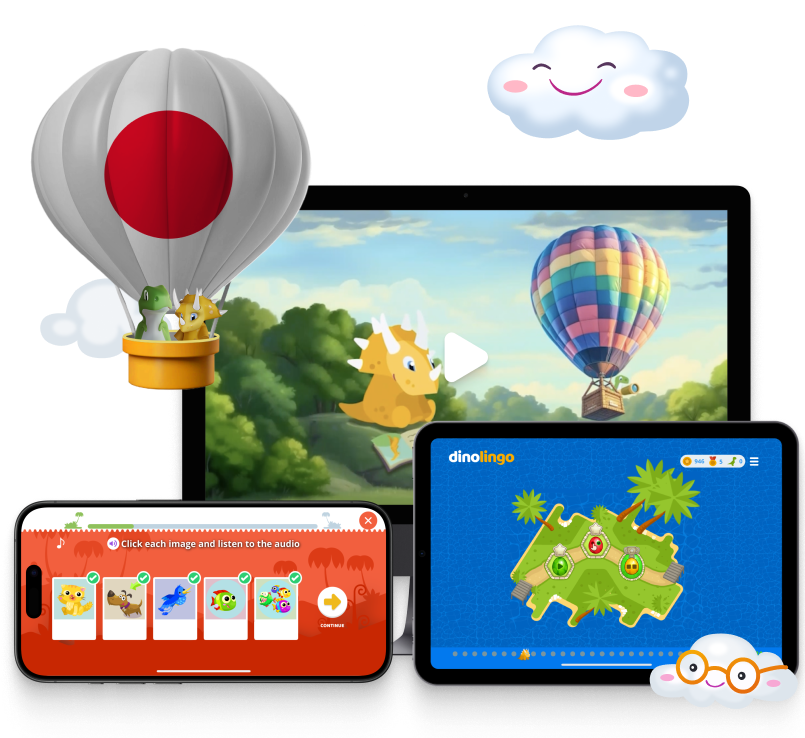
If your child is curious about Japanese names and culture, the Dinolingo Japanese program offers a great way to start. With videos, flashcards, songs, and stories, kids can learn Japanese naturally while having fun. A single family subscription unlocks 50+ languages and 40,000+ activities for up to six children, with age-specific paths for Pre-readers (2–5), Elementary (6–10), and Tween/Teen (11–14). Perfect for ages 2 to 14, Dinolingo works on web, Android, and iOS, plus it includes offline learning options and a parent dashboard to track progress.
I love the valuable details you actually deliver to the content articles. I will save the website and appearance yet again here often. We’re very specified I’ll be educated numerous innovative products appropriate right here! Best of luck for an additional!
I quite like reading through a post that can make people think.
Also, thanks for allowing for me to comment!