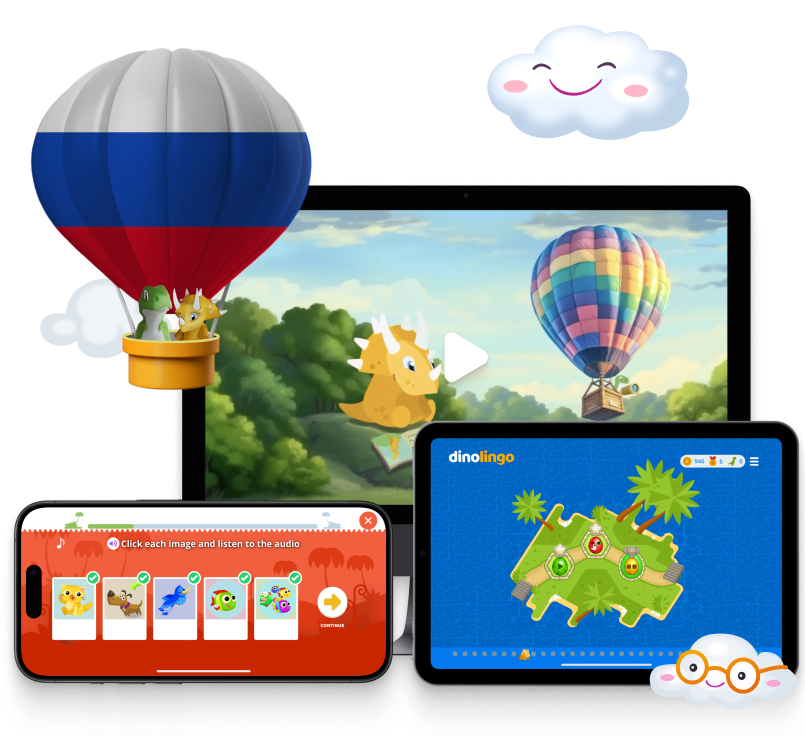
Have you ever wondered how Russian names work? In many countries, people use a first name and a last name, and sometimes a middle name. In Russia, most people use three parts, and each part tells a story about family and tradition. Dinolingo is a language-learning platform for ages 2-14 with 50 languages, and learning how names work is a fun, cultural way to start exploring Russian. This guide goes far beyond names: it gathers Russian sounds, grammar, numbers, geography, history, food, music, and practical teaching tips into one playful tour your whole family can follow.
Russian names: how the three-part system works
Russian names usually have three parts: a given name, a patronymic, and a family name. This structure helps people show respect, family connections, and even a bit of formality in daily life. The patronymic is the most unique part for many learners because it is formed from the father’s first name. For boys, a patronymic often ends in -ovich or -evich, and for girls, it often ends in -ovna or -evna. If a father is named Viktor, his son might be Viktorovich, and his daughter might be Viktorovna. It is a simple system, but it carries a lot of meaning because it connects children to their family history.
This naming pattern shows up in school, in formal settings, and in respectful conversation. Adults may use the patronymic to address teachers, elders, or professionals. Kids usually use first names with friends, but they quickly notice the respectful forms around them. This is a great way to teach kids that language is tied to culture. If you want a broader cultural picture, see Russian culture for kids and connect naming traditions to stories, holidays, and family life.
russian name: first, patronymic, family
A single Russian name tells you more than one thing. The first name shows identity, the patronymic shows family connection, and the surname shows the broader family line. This can make introductions more respectful, especially in formal contexts. Kids can practice this by making a simple name card: one line for the first name, one line for the patronymic, and one for the surname. This small activity helps them see the structure and remember the pattern.
russian language hello: greetings that use names
Greetings can be formal or casual depending on the setting. In a formal setting, people may use a first name and patronymic together as a respectful greeting. In a casual setting, friends may use a short version of the first name or a nickname. This is a good way to show kids that greetings change based on who you are talking to. Pair this with simple phrases from polite Russian words so kids understand how respect and kindness show up in language.
Russian names in daily life and culture
Russian names often have short forms and affectionate forms. For example, Aleksandr can become Sasha, and Anastasia can become Nastya. These shorter versions are not just nicknames; they can show closeness, affection, and personality. That is why kids hear multiple versions of the same name in stories and songs. Learning these variations helps children understand relationships and tone in Russian. It also helps them recognize names when they appear in books or cartoons.
Names also connect to history and celebration. Many families choose names that honor grandparents or reflect cultural traditions. Some names have meanings that relate to hope, faith, or love, and those meanings can become part of family stories. You can pair a name lesson with cultural activities like Name Day celebrations or holiday vocabulary. This is a natural bridge to broader topics like history, holidays, and local traditions.
russian alphabet handwriting: spelling names with confidence
Learning to write names in Cyrillic is a fun way to practice the Russian alphabet. Start with a short list of common names and focus on letter shapes that appear often. Writing a name is a quick, meaningful task, so kids stay engaged. You can connect this to alphabet practice with Russian letters kids love and make a simple chart that shows the name in Latin letters and Cyrillic side by side.
easy russian words: add name-related vocabulary
Build a short vocabulary list that connects to names and family. Words like mother, father, sister, and friend help kids talk about the people behind the names. This creates a small, practical vocabulary set they can use right away. You can reinforce these words with games and songs from learn Russian for kids so language practice stays consistent and fun.
Why Russian is a smart language for kids to know
Names are a personal doorway into Russian, and the language they open is one of the most useful on the planet. If your child wants to stand out, open new doors, and explore exciting global opportunities, learning Russian is a smart place to start. With more than 250 million speakers and growing cultural relevance, Russian is more than a beautiful language, it is a future-ready skill.
Russian is one of the most widely spoken languages in the world, and it is used not only in Russia but across Eastern Europe and Central Asia. From art and literature to space science and international politics, Russian shows up in all kinds of important conversations. It is also one of the six official languages of the United Nations, alongside English, Arabic, Chinese, French, and Spanish, so it appears in global meetings, documents, and communication between countries. For kids, early exposure to Russian can spark a lifelong curiosity about the world and give them a head start in education and careers that value global thinking.
Why start so young? Children’s brains are naturally wired for language. Starting between ages 2 and 14 gives them the best chance to develop native-like pronunciation, grammar intuition, and confidence. Tools like Dinolingo are built for this learning window. With access to 50+ languages, including Russian, Dinolingo offers 40,000+ games, videos, flashcards, and worksheets, letting kids learn through play while parents track progress with the Parent Dashboard.
Here is a fun head start: you probably already know a few Russian words. Words like vodka, tsar, tundra, and sputnik have made their way into English and many other languages. These words reflect Russian history, geography, and science, and they show how much Russian culture has influenced the world.
Try this: print a world map and mark where Russian is spoken, then explore flags, foods, and animals from these places while learning new Russian words. You can also make a future vision board where your child imagines what knowing Russian might let them do, from traveling and reading Russian fairy tales to becoming an astronaut, with Russian words added to the collage.
Start with sounds: the Cyrillic alphabet and Russian pronunciation
Before diving into long words or tricky grammar, there is one secret that makes everything simpler for kids: start with the sounds. One of the most unique things about Russian is its alphabet. Instead of the Latin letters used in English, Russian uses the Cyrillic script, which includes 33 letters. Some of them look like English letters but sound completely different. For example, the Russian letter “Р” is actually pronounced like “R,” not “P.” Learning this alphabet is like unlocking a secret code, especially fun for kids who enjoy puzzles and patterns.
The sound-first secret
Unlike English, Russian is a very phonetic language, and most letters make only one sound. That means once you know the sounds of each letter, you can read almost anything out loud. For example, the Russian letter “м” sounds just like “m,” and “а” sounds like “a” in “car.” Kids can learn to pronounce whole words just by sounding out the letters. This sound-based approach helps young learners build confidence, and since many Russian words look like puzzles at first, breaking them down by sound gives children a real sense of achievement.
A great way to start is by learning simple, high-frequency words that kids already use every day:
- мама (mama – mom)
- папа (papa – dad)
- кот (kot – cat)
- да (da – yes)
- нет (nyet – no)
Strong sounds that are easier than English
Russian uses crisp consonants and open vowels, and many of them are easier than their English cousins. For example:
- д sounds like d in “dog”
- т sounds like t in “top”
- о is pronounced like awe, not oh
Learning how each letter sounds helps kids speak words clearly from the beginning. Instead of memorizing, they can feel the rhythm of the language. Children are also great at mimicry, so when they listen to native Russian speakers through songs or videos, they naturally copy the accent and tone. Even repeating short phrases like привет (privet – hi) or как дела? (kak dyela? – how are you?) helps kids sound more fluent faster.
Soft and strong: Russian accent styles
Russian sounds can be soft like a whisper or strong like a drum, and that is part of what makes the language so unique. In Russian, stress can fall on different syllables, and consonants can be soft or hard. These changes can even affect a word’s meaning. For example, мама (mama – mom) puts the stress on the first syllable, while молоко (moloko – milk) puts the stress on the last syllable. Soft sounds happen when certain vowels follow consonants, like н versus нь. It is a small change, but kids can hear the difference with practice.
Fun games to try: in a Soft vs. Hard Sound Match-Up, say a pair like лук (luk – onion) and люк (lyuk – hatch) and let your child guess which one is soft. In an Accent Detective game, pick a word with two or three syllables and have kids clap when they hear the stressed syllable, trying it with молоко, машина, or кошка. You can also play a Sound Match Hunt: hide letter cards around the house, call out a sound like “Buh” for б, and have your child find the matching card. On Dinolingo, kids aged 2 to 14 listen to native pronunciation in songs, stories, and games, making it easy to hear soft and strong sounds naturally.
Russian grammar that is actually easy
Grammar can feel intimidating, especially in a new language. But here is a fun surprise: some parts of Russian grammar are much easier than in English. One of the most kid-friendly examples is that Russian does not have words like “the” or “a” at all. In Russian, you simply say the word without needing a little helper in front. Instead of saying the cat, you just say кошка (koshka), and it still makes sense. That means kids do not need to memorize when to use “a” versus “an” or “the” versus nothing at all.
There are more easy wins, too:
- No verb “to be” in the present tense. Instead of saying “She is a teacher,” you just say “She teacher.”
- Russian has fewer verb tenses, which means fewer patterns for beginners to learn.
- Word order is flexible, so kids can understand and be understood even if they mix things up a bit.
This kind of structure helps children focus on meaning over memorization, so they can express ideas faster without getting stuck on small grammar words. Turn it into a game with a Drop the “The” Challenge: write English sentences like “The dog is big” and let your child rewrite them in Russian without the extra words. Or play Mini Grammar Detective, giving your child two Russian sentences that use the same word in different places and asking them to spot the pattern. For kids ages 2 to 14, platforms like Dinolingo break grammar into bite-sized, age-appropriate chunks so even pre-readers can start understanding Russian.
Counting in Russian: one, two, three the fun way
Counting is one of the first things kids learn in any language, and in Russian it is just as fun. With easy-to-say number words and lots of ways to use them in daily life, Russian numbers are a great starting point for young learners. Here is how to count from one to ten:
- 1 – один (a-deen)
- 2 – два (dva)
- 3 – три (tree)
- 4 – четыре (chee-TY-re)
- 5 – пять (pyat’)
- 6 – шесть (shest’)
- 7 – семь (syem’)
- 8 – восемь (VO-syem’)
- 9 – девять (DYE-vyat’)
- 10 – десять (DYE-syat’)
Russian numbers may look long, but once you hear them aloud a few times, they are surprisingly easy to remember, especially when paired with fun activities. Counting becomes more engaging when kids can move, sing, or see what they are counting, so try counting snacks at snack time or steps during a walk. In a Jump and Count game, call out each Russian number as your child jumps, claps, or skips. In a Number Match game, draw or print cards with Russian numbers and match them to pictures with the same number of objects, for example matching три (3) to a group of three apples. On Dinolingo, kids learn to count with animated characters, songs, and interactive games that reinforce pronunciation and number recognition.
The geography of Russia: big, bold, and beautiful
Russia is not only the biggest country in the world, it is also home to some of the most breathtaking natural landscapes on Earth. From icy forests to endless plains, from towering mountains to deep blue lakes, this land is full of surprises waiting to be explored. In fact, Russia is the only country in the world with territory touching 12 different seas, from the Baltic to the Bering Sea.
Steppes, Siberia, and the Siberian tiger
Much of Russia is covered by large, flat grassy areas called steppes. These wide-open plains stretch for miles and are perfect for grazing animals and growing crops, and they have shaped the country’s rural culture for centuries. About 75% of Russia is part of a region called Siberia. This huge area is known for being extremely cold, especially in winter, but it is full of life. It is covered in dense pine forests called taigas, which are home to incredible wildlife. One of the most famous animals from this region is the Siberian tiger, the largest type of wild cat in the world, a symbol of strength and beauty.
Lakes, rivers, and record-breaking mountains
In the heart of Siberia lies Lake Baikal, the deepest and one of the oldest lakes on the planet. It holds more freshwater than any other lake in the world. Russia is also home to Europe’s two largest lakes, Lake Ladoga and Lake Onega, and to many important rivers including the Volga, Lena, Ob, Amur, Yenisey, and Irtysh. Russia’s highest point is Mount Elbrus, which stands at a towering 5,642 meters, taller than any mountain in Europe. It is part of the Caucasus Mountains, which separate Europe from Asia. Another famous range is the Ural Mountains, often seen as the natural border between Europe and Asia, while the Altay Mountains in southern Siberia are known for their beauty and ancient myths. On platforms like Dinolingo, kids can explore Russian nature, animals, and landscapes while picking up new words and phrases.
Fascinating Russian cities to learn about and visit
Russia is full of amazing cities waiting to be explored. From grand palaces to colorful cathedrals, these destinations give kids a taste of Russia’s rich and diverse character, and exploring them becomes even more fun when children can recognize words and phrases in Russian.
St. Petersburg
Often called Russia’s cultural capital, St. Petersburg is a beautiful city filled with palaces, cathedrals, and world-famous art. With a population of around 5 million people, it is the second-largest city in Russia. Children and adults alike will enjoy seeing the stunning Winter Palace and the peaceful Kazan Cathedral, and one of the city’s biggest highlights is the Hermitage Museum, home to a giant collection of incredible artworks from all over the world.
Moscow
Moscow is not just the capital of Russia, it is also the heart of politics, science, and history. With more than 10 million people, it is one of the ten largest cities on Earth. Moscow is packed with famous landmarks like the colorful domes of St. Basil’s Cathedral and the grand Kremlin. It is a city where ancient history meets modern skyscrapers, and there is always something exciting to discover.
Yekaterinburg
Yekaterinburg is a fun and surprising city, especially for curious young travelers. It is the fourth largest city in Russia and full of theaters, libraries, and quirky monuments, like a statue honoring Michael Jackson or a giant keyboard sculpture. With a population of over 1.4 million, this city blends traditional Russian culture with a playful modern twist.
Kazan
Kazan is located where the Volga and Kazanka Rivers meet. It is the capital of the Republic of Tatarstan and is known for its peaceful blend of different religions and cultures. One of the most interesting places to visit is the Temple of All Religions, a colorful building designed by an artist who wanted to unite spiritual ideas from all over the world. Kazan has over 1 million residents and is a city full of inspiration and imagination.
Time travel through Russian history
The history of Russia is a story full of battles, emperors, invasions, and amazing changes. From small kingdoms to a giant empire, from royal families to revolutions, Russia has gone through centuries of transformation to become the country we know today. History might sound like a big topic, but it is full of colorful stories, powerful leaders, and exciting events that kids can understand and enjoy, and you can learn Russian words along the way.
The beginning: princes and Vikings
The early days of Russia started like many other countries, with groups of people settling in the land and forming communities. Around the ninth century, a group of Viking-like people from Scandinavia, called the Varangians, crossed the Baltic Sea and entered Eastern Europe. Led by a man named Oleg, they took control of Kiev and started a trade route that would last more than 300 years. Oleg’s grandson, Vladimir I, became the ruler in the year 989. Later, another ruler named Yaroslav helped make the kingdom stronger, but after his death, battles for power broke out and foreign invaders started arriving.
The Mongols and the rise of Moscow
During the 1200s, the Mongols invaded and destroyed many major cities, creating an empire known as the Golden Horde. After the Mongols, the Swedes and Livonians also tried to conquer Russia, but one city, Moscow, grew stronger during this time. A ruler named Ivan IV, also known as Ivan the Terrible, helped unify the Russian lands into one powerful state. When his son Fyodor ruled, followed by King Godunov, other countries like Poland also took over parts of Russia. Eventually, a new family called the Romanovs began ruling, and they stayed in power for over 300 years.
Peter the Great and the building of St. Petersburg
One of the most famous Russian rulers was Peter the Great, known in Russian as Пётр Великий (Pyotr Velikiy). He wanted to modernize Russia and make it more like countries in Europe. He even moved the capital city from Moscow to a new city he built himself, St. Petersburg, located by the Gulf of Finland. Peter brought new ideas, built ships, and changed how the Russian government worked, and when he died in 1725, Russia was already becoming a strong European power. After Peter, many rulers came and went, but in 1761 Catherine the Great became empress and continued to modernize the country, opening museums, founding colleges and libraries, and supporting education and the arts.
Wars, revolutions, and a changing empire
In the 1800s, rulers like Nicholas I and Alexander II led the country as Russia kept expanding its land and influence. But trouble came when Japan attacked and Russia faced challenges at home. By 1912, political groups like the Bolsheviks and Mensheviks formed, and a few years later food shortages and economic problems led to the end of the monarchy. This was the era of революция (revolyutsiya – revolution): in 1917 big changes happened in how Russia was governed. After a short period with a temporary government, Vladimir Lenin and the Bolsheviks took control. This led to a civil war in Russia, but by 1920 the Bolsheviks had won and a new type of government began.
The Soviet era and the World Wars
Lenin died in 1924, and after a power struggle, Joseph Stalin became the leader. He made many changes, including government-run farms and strict control over people’s lives, and religion was limited while freedom of speech was reduced. The country was known as the Советский Союз (Sovetskiy Soyuz – Soviet Union) for much of the 1900s. In 1941, Germany attacked the Soviet Union during World War II. The Russian army fought back and pushed the Germans out, and by the end of the war Russia had become one of the two superpowers in the world, along with the United States. However, most of the country’s money was spent on the military, and ordinary people often had little food and lost many freedoms.
From the Cold War to modern Russia
After Stalin died in 1953, leaders like Khrushchev, Brezhnev, Andropov, and Chernenko each tried to make changes, but it was Mikhail Gorbachev, in 1985, who brought the biggest shift, introducing “openness” and “restructuring” to allow more freedom and better living conditions. In 1989 open elections were held, and by 1991 the Soviet Union came to an end. A new leader, Boris Yeltsin, helped create the Russian Federation. The famous Soviet flag came down, and the tricolored Russian flag was raised. Today, in Russian сегодня (segodnya), Russia is a modern country with cities, schools, and technology kids can relate to, and it continues to be a global power with a rich and complicated history behind it.
A few Russian words make perfect companions for time travel: история (istoriya – history), время (vremya – time), лидер (lider – leader), and страна (strana – country). Try drawing a mini timeline with big events like the first tsars, the Soviet Union, and modern-day Russia, and label each one in Russian. On Dinolingo, historical themes, famous figures, and national traditions are woven into lessons through videos, games, and storytelling to help children grow curious and culturally aware.
The Russian flag and its colors
Flags are not just pretty, they tell stories, and the Russian flag is full of meaning. It is a fun way for kids to learn colors, history, and pride through language. The Russian flag has three horizontal stripes:
- белый (belyy – white)
- синий (siniy – blue)
- красный (krasnyy – red)
These colors have been used for hundreds of years. Some people say they represent nobility, honesty, and courage, but they also just look bold and beautiful. A few flag-related words are great to learn alongside them: флаг (flag – flag), цвет (tsvet – color), страна (strana – country), and Россия (Rossiya – Russia). To bring it to life, print an outline of the Russian flag and ask your child to color in each stripe while saying the color word in Russian, or make mini flags, wave them around the house, and practice saying “Россия!” or “флаг!” together with pride.
The sounds of Russia: traditional music
Music is a powerful part of any culture, and in Russia it tells stories of faith, seasons, love, and history. Russian music is known for its heterophonic nature, which means many voices sing the same melody but each with their own slight variations, creating a rich and layered sound.
The heartbeat of folk tradition
Traditional Russian music is mostly folk music, passed down through generations in villages and towns. There are two main types: ritual songs, which are sung during weddings, harvests, or holidays, and nonritual songs, which are sung for entertainment, storytelling, or personal expression. Instrumental pieces are also a big part of Russian musical life, especially during festivals and dances. Most traditional Russian instruments are wind instruments, chosen for their clear and resonant tones, and some of the most common include:
- Schwam – a type of reed instrument similar to an oboe
- Horn trumpet – often used in military or ceremonial music
- Svirel – a wooden flute with a soft, sweet tone
- Kugikly – panpipes made of reeds or wood
These instruments were often handmade and used during village gatherings, seasonal rituals, or to accompany dancing. Russian music often feels deeply personal and spiritual. Whether it is a slow ballad sung around a fire or a lively wedding dance, each piece is filled with emotion, and in many regions songs are tied closely to religion and community identity. For children learning Russian, music offers one of the most fun and effective ways to absorb the language. Songs stick in the memory, help with pronunciation, and teach rhythm and vocabulary. Platforms like Dinolingo include a wide selection of Russian children’s songs, complete with subtitles, animations, and interactive activities, so kids can sing along while picking up new words and cultural insights at the same time.
Traditional Russian food and tea culture
Food in Russia is not just about flavor, it is deeply tied to the country’s history, climate, and way of life. From warm soups in freezing winters to long, thoughtful tea ceremonies, every meal tells a story. A traditional Russian meal often includes fish, potatoes, fresh or pickled vegetables, and thick slices of dark bread, ingredients that reflect the hearty, simple, and comforting nature of Russian cuisine designed to keep people full and warm during long winters. One of the most iconic dishes is borscht, a bright red soup made from beets, usually served hot and sometimes with sour cream on top. It is loved not only in Russia but across Eastern Europe, and while the ingredients may vary from home to home, the soup always brings families together.
The art of Russian tea time
Tea holds a special place in Russian culture. It is not just a drink, it is a ritual. Russians often drink tea after meals or during social visits, and they take their time enjoying it. At the center of this tradition is the samovar, a special tea water heater that keeps water hot for hours and has a spout to easily pour it into cups. Interestingly, the word “samovar” means “boils itself” in Russian. Russian tea is not usually made directly in the cup. Instead, a strong tea concentrate called zavarka is first brewed in a small pot, and when it is time to drink, a small amount of zavarka is poured into each cup, followed by hot water from the samovar. This allows everyone to adjust the strength of their tea to their own taste. Exploring these food and tea traditions through programs like Dinolingo is a meaningful way for children to connect with the language, because it is not just about vocabulary, it is about understanding how people live.
How to teach kids Russian: a fun and practical guide
Teaching Russian to kids can be a joyful and rewarding experience, especially when you focus on playfulness, creativity, and real-life engagement. Russian may seem complex at first, but with the right methods children can pick it up naturally and confidently. Motivation is the first and most important step. When children feel excited about learning, their progress grows quickly. Offer small rewards for learning extra words or phrases, like a Russian chocolate, a trip to a Russian restaurant, or a visit to a favorite park. For younger children, surprise elements in games, like peekaboo, help maintain focus, and fun games like hide and seek (counting in Russian), memory card games, or Russian word scavenger hunts make learning active and entertaining.
Keep it short, simple, and consistent
Avoid overwhelming your child. Break tasks into small, manageable pieces, because teaching just a few new Russian words at a time helps children enjoy learning and builds their confidence. Names are a perfect place to anchor this routine because they are personal: kids love to talk about their own names, their friends, and family members. Set a five-minute routine where you say a name, spell it, and use it in a sentence. As kids grow more confident, add a greeting or a short phrase. To keep things interesting, rotate themes: one week focus on first names, another week on patronymics, then practice surnames, linking the vocabulary to a real event with Russian celebration words. Short routines beat long sessions every time, especially for ages 2 to 14.
Practice makes progress
To make language learning stick, regular practice is key. Even if you do not speak Russian, you can point to objects and ask “What is this in Russian?” or play guessing games, and drawing objects based on their Russian names is a creative option. Encourage interactions with Russian-speaking friends and families, or visit local Russian cultural spaces like restaurants, schools, or community centers. Flash cards create mental associations between words and visuals, so use ready-made Dinolingo flash cards or make your own with pictures and Russian words. Music and visuals help children remember vocabulary, so play Russian songs and watch children’s cartoons, and once your child knows some basic Russian, add Russian storybooks to your routine, replacing certain English words with Russian words during storytime for a gentle introduction.
A few final tips for parents help tie everything together:
- Watch Dinolingo Russian videos regularly.
- Use Russian posters, flags, and alphabet charts at home.
- Visit Russian-speaking places in your area.
- Let your child play with Russian puzzles, toys, and learning games.
- Encourage group learning with other kids who are also learning Russian.
Dinolingo makes learning Russian easy and exciting for kids aged 2 to 14. With animated videos, flashcards, games, songs, and interactive lessons, Dinolingo creates a joyful language environment, whether your child is learning to read the Cyrillic alphabet or practicing everyday phrases. By creating a rich, interactive language environment and keeping a sense of fun, your child will not only learn Russian but love the journey too.
FAQ
1. Why do Russian names have three parts?
The three-part system shows a person’s first name, family connection through the patronymic, and their family surname.
2. What is a patronymic?
A patronymic is a middle name formed from the father’s first name, often ending in -ovich or -ovna.
3. Do kids use patronymics at school?
Students might hear patronymics in formal settings, but friends usually use first names or short forms.
4. Are Russian nicknames official?
Short and affectionate forms are common in daily life, but official documents use full names.
5. Can one Russian name have many versions?
Yes. A name can have a formal form, a short form, and several affectionate variations.
6. How can kids practice Russian names?
Use name cards, spelling practice in Cyrillic, and simple greetings that include names.
7. Are Russian names tied to culture?
Yes. Names often reflect family history, cultural traditions, and regional preferences.
8. Do Russian surnames change for girls and boys?
Many Russian surnames change endings to reflect gender, such as -ov and -ova.
9. What ages are best to start learning Russian names?
Children can start as early as age 2 with simple names and greetings, then build over time.
10. How can Dinolingo help with Russian names?
Dinolingo offers kid-friendly lessons, songs, and games that make name practice easy and fun.
Final Thoughts Russian names are more than just labels. They are full of tradition, meaning, and personality, and they open the door to a whole culture: its sounds and alphabet, its easy grammar, its numbers, its vast geography, its long history, its flag, its music, and its food. Once kids learn the three-part name system and hear affectionate forms, they start to notice names in stories, history, and everyday conversation. With a simple routine and the right tools, learning Russian becomes a fun cultural adventure.
Sources